Synthesizing Vision: Algorithmic Chart Pattern Recognition with Python
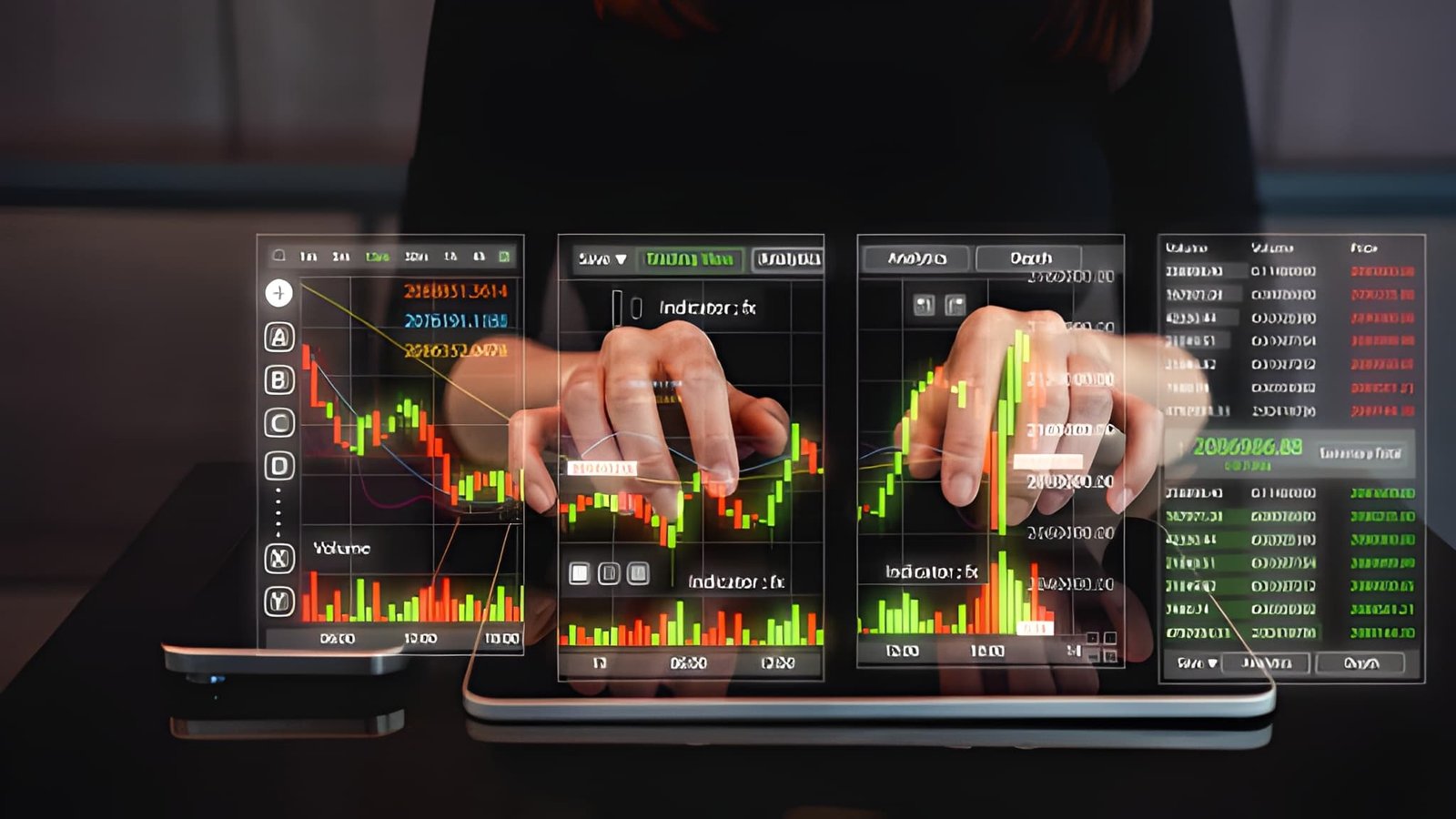
For decades, technical analysis remained a subjective endeavor. Traders spent hours squinting at flickering screens, attempting to identify "Head and Shoulders" patterns or "Ascending Triangles" based on visual intuition. This manual approach is inherently flawed by human cognitive bias, emotional interference, and an inability to process multiple assets simultaneously. The transition to Algorithmic Pattern Recognition shifts the discipline from subjective art to objective science.
By utilizing Python, traders can codify visual patterns into discrete mathematical rules. An algorithm does not "see" a triangle; it calculates the convergence of two linear regression lines through a series of local price extremas. This methodology allows for the scanning of thousands of instruments in milliseconds, providing the quant trader with a scale and speed that no discretionary trader can match.
Structuring Financial Data Pipelines
The quality of your pattern recognition algorithm is inextricably linked to the quality of your data. In Python, we primarily work with OHLCV (Open, High, Low, Close, Volume) data structures. However, raw data often contains noise—erroneous ticks or low-liquidity gaps—that can create "ghost" patterns.
Preprocessing is required to ensure the algorithm identifies significant structural pivots rather than minor fluctuations. Techniques such as Moving Average Smoothing or Kernel Density Estimation help in filtering out the noise while preserving the primary price trend. In the Python ecosystem, the Pandas library is the workhorse for these operations, allowing for vectorization of calculations that would otherwise require slow, manual loops.
1. Time-Series Alignment: Ensuring all data points are synchronized across different time zones and handling missing candle data points through interpolation.
2. Noise Reduction: Applying filters like the Savitzky-Golay filter to smooth price curves without significantly shifting the location of peaks and troughs.
3. Feature Engineering: Generating auxiliary data points like the Average True Range (ATR) to normalize pattern detection across highly volatile and calm market regimes.
Geometric Pattern Recognition Logic
The core of the algorithm lies in its ability to detect Local Extremas. To find a pattern like a Double Bottom, the code must identify two distinct price troughs at roughly the same horizontal level, separated by a peak (the neckline).
The algorithm uses a "rolling window" approach to find these points. For every point in the series, the code looks at n candles to the left and right. If the current point is lower than all neighbors, it is classified as a local trough. Once these troughs are identified, the algorithm calculates the slope and distance between them to verify if they fit the geometric constraints of the target pattern.
Uses Scipy.signal.find_peaks to find local maxima. The width and prominence parameters allow the user to control the significance of the detected points.
Calculates the slope between multiple peaks to identify descending resistance lines. A triangle is confirmed when the support and resistance slopes are converging.
The Essential Python Quant Toolkit
The Python ecosystem provides a specialized set of libraries designed for financial engineering. Selecting the right combination is critical for both development speed and execution performance.
| Library | Functional Role | Alternative |
|---|---|---|
| Pandas | Data manipulation and time-series alignment | Polars (for large datasets) |
| TA-Lib | C-optimized technical indicator calculations | Pandas-TA |
| Scipy | Signal processing and extrema detection | Numpy.gradient |
| Backtrader | Strategy backtesting and event simulation | VectorBT |
| Plotly | Interactive visualization of detected patterns | Matplotlib |
Calculating Pivot Points and Fractals
A pattern is simply a collection of pivot points. In algorithmic terms, we often use Williams Fractals or ZigZag Indicators to simplify price action into a series of straight lines.
By reducing a complex 1,000-candle chart into a series of 20 significant pivots, the computational complexity of the recognition engine drops significantly. The algorithm then iterates through these pivots to find specific sequences. For example, a Head and Shoulders is defined by a sequence of: Peak (Left Shoulder), Higher Peak (Head), and Lower Peak (Right Shoulder), with the two intervening troughs forming a roughly horizontal "Neckline."
Step 1: Identify five consecutive local extremas (Peak 1, Trough 1, Peak 2, Trough 2, Peak 3).
Step 2: Verify that Peak 2 is the highest of the three peaks (The Head).
Step 3: Ensure Peak 1 and Peak 3 are within a specific percentage tolerance of each other (The Shoulders).
Step 4: Check that Trough 1 and Trough 2 are nearly level to confirm the Neckline stability.
Validation through Volatility Filters
A pattern detected in isolation is a weak signal. To increase the Profit Factor, we must validate the pattern using external filters. The most effective filters in algorithmic trading are volume expansion and volatility normalization.
A breakout from a "Triangle" pattern should be accompanied by a significant increase in volume relative to the average volume of the previous 20 candles. Furthermore, we use the Average True Range (ATR) to set dynamic stop losses. If the pattern is 50 points high, but the ATR is 100, the pattern is likely just "noise" within the current volatility regime and should be ignored.
Statistical Backtesting and Expectations
Before deploying an algorithm, we must subject it to rigorous statistical testing. We do not look for a strategy that is always right; we look for a strategy with a Positive Expectancy.
Expectancy = (W * Aw) - ((1 - W) * Al) Expectancy = (0.45 * 1200) - (0.55 * 600) Expectancy = 540 - 330 = +210 per trade
In this scenario, even though the algorithm loses more than half the time, it is highly profitable over a large sample size because the wins are twice as large as the losses. Algorithmic trading allows you to maintain the discipline required to execute this mathematical reality without the hesitation that plagues human traders during a losing streak.
Automated Risk and Execution Models
The final stage of the pipeline is the Execution Engine. Once a pattern is detected and validated, the code calculates the position size based on the current account equity and the distance to the stop loss.
Automated execution ensures that the trade is entered at the exact moment the breakout occurs. This prevents Slippage, which can decimate the profitability of patterns that rely on sharp, sudden moves. By connecting the Python script to a broker API (such as Interactive Brokers or Alpaca), the entire lifecycle—from raw data ingestion to trade exit—becomes a closed-loop, emotionless system.
In conclusion, algorithmic chart pattern recognition in Python represents the ultimate evolution of technical analysis. It allows the trader to step away from the noise of the screen and focus on the architecture of the system. By combining geometric logic with statistical validation and automated risk management, you transform the chaotic world of financial markets into a manageable, mathematical process.
The journey from a discretionary chartist to a quant trader is one of continuous refinement. As you build your recognition engine, prioritize clean data, simple logic, and rigorous testing. The markets are constantly changing, but the geometric structures created by collective human psychology remain remarkably consistent—you just need the code to see them clearly.