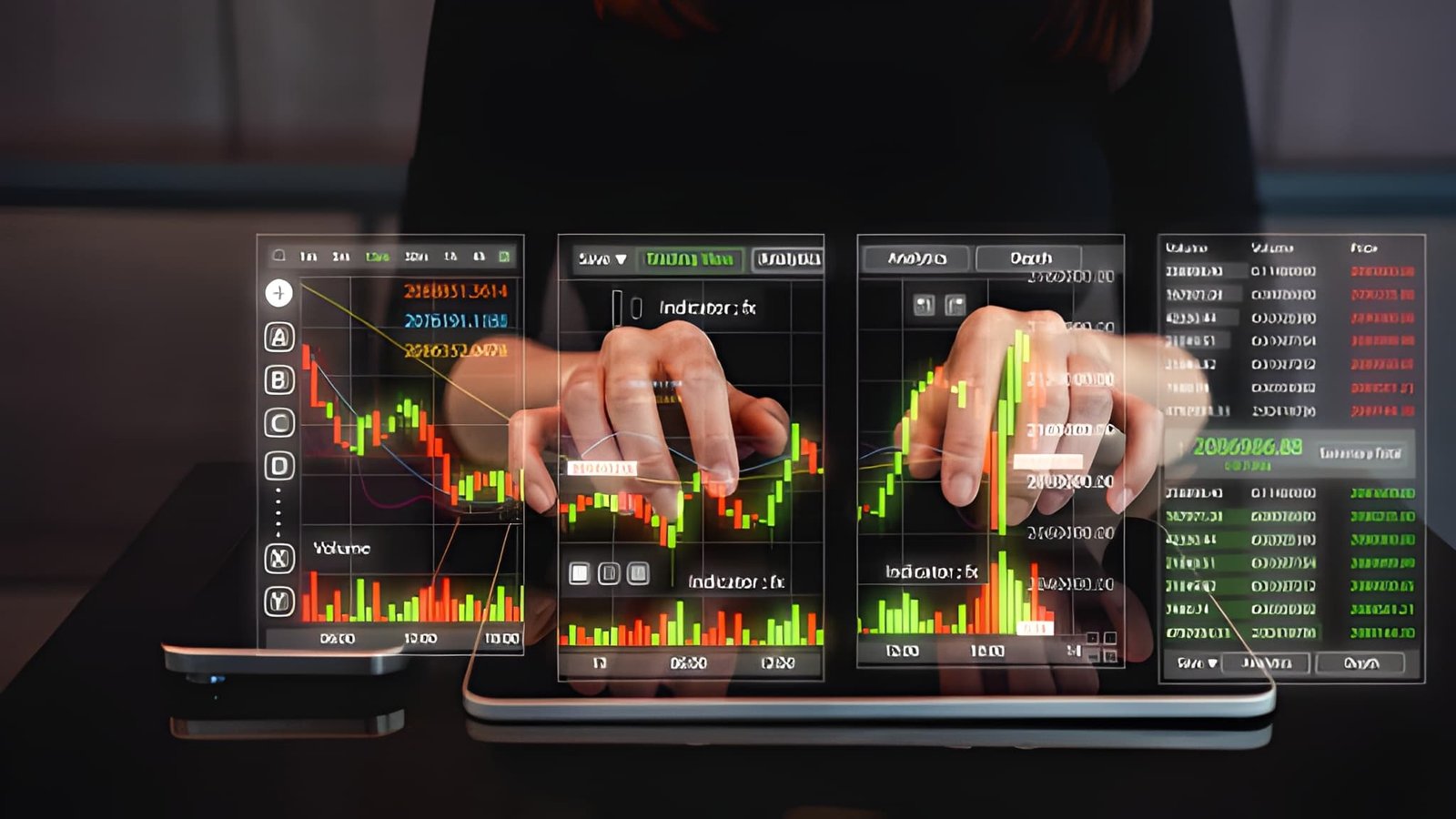
Technical Trading Mastery: The Art and Science of Price Action
A comprehensive exploration of market mechanics, behavioral charting, and systematic execution for the modern active participant.
The Philosophy of Price Action
Technical analysis frequently faces skepticism from proponents of pure fundamental research. However, the mastery of technical trading requires an understanding that price is the ultimate consensus. Every piece of public information, every earnings report, every geopolitical tension, and every interest rate decision eventually filters through the collective psyche of market participants and manifests as a single data point: the price.
The core philosophy of technical trading rests on the concept that markets are social systems. Human behavior—driven by the alternating currents of fear and greed—tends to follow repeatable patterns. These patterns are not magical; they are the visual representation of institutional accumulation, retail panic, and professional distribution. To master technical trading is to learn the language of the tape and to interpret these behavioral cycles before they reach their peak.
The Market Discounting Principle
Market participants often ask "Why is the price moving?" The technical master understands that by the time the "Why" becomes public knowledge, the move is often exhausted. We operate on the premise that the chart already knows the news. Our objective is to identify the divergence between what the market is saying and what the crowd is hearing.
Identifying Market Phases
One of the most common mistakes in active trading is applying the wrong strategy to the wrong market phase. A trend-following strategy will decimate a trader’s capital in a range-bound market, just as an oscillator-based mean reversion strategy will fail during a parabolic breakout. Mastery begins with identifying the Wyckoff Cycle.
| Market Phase | Behavioral Logic | Optimal Strategy |
|---|---|---|
| Accumulation | Institutions buying quietly from panicking retail sellers. | Patience / Position Building |
| Markup (Trending) | Demand exceeds supply; the public begins to notice the move. | Trend Following / Pullbacks |
| Distribution | Institutions selling their positions to late-entering retail buyers. | Profit Taking / Hedging |
| Markdown (Crashing) | Liquidation of remaining positions; widespread fear. | Short Selling / Cash Reserve |
Traders must utilize multi-timeframe analysis to confirm these phases. A markup phase on a daily chart may appear as a distribution phase on a 5-minute chart. The master trader aligns the shorter-term execution with the longer-term structural phase to ensure the path of least resistance.
The Hierarchy of Indicators
Indicators are often misunderstood as predictors. In reality, every indicator is a derivative of price and time. They do not tell us what will happen; they tell us what is happening now in a mathematically smoothed format. Mastery requires a balanced setup—using one indicator from each primary category to avoid redundant signals.
1. Lagging Indicators (Trend Confirmers)
Moving Averages (SMA/EMA) and the MACD fall into this category. They are slow to react but high in reliability. They ensure the trader is on the correct side of the major trend. A common professional setup involves the 50-period and 200-period moving averages. When the shorter average crosses the longer, it signals a structural shift in momentum.
2. Leading Indicators (Momentum Oscillators)
The Relative Strength Index (RSI) and Stochastic Oscillator are designed to identify exhaustion. In a trending market, these indicators provide the "entry" on a pullback. In a ranging market, they signal the "turn" at the boundaries. However, a master knows that "overbought" can stay overbought for weeks during a strong bull run; these indicators must never be used in isolation.
The most powerful use of any indicator is identifying divergence. If price makes a new high but the RSI makes a lower high, it suggests that the "energy" behind the move is dissipating. This is a primary warning signal that the current markup phase is entering a distribution phase.
Volume and Liquidity Dynamics
If price is the "What," volume is the "Why." Volume represents the degree of conviction behind a price move. A price breakout on low volume is often a "bull trap"—a temporary move driven by retail excitement that institutions will soon fade. Conversely, a breakout on high volume indicates that institutional capital is committed to the move.
The Volume Profile and the Point of Control
Modern technical mastery incorporates the Volume Profile, which shows volume at specific price levels rather than just time intervals. This allows traders to see the "Point of Control" (POC)—the price where the most trading activity has occurred. These levels act as magnetic zones. When price is above the POC, the market is bullishly biased; when below, the sentiment is bearish.
Understanding liquidity is equally critical. In high-volatility environments, the bid-ask spread can widen, leading to slippage. Master traders identify "Liquidity Gaps"—areas on the chart where price moved so fast that very little volume was transacted. These gaps act as "windows" that price often revisits and "fills" before continuing its primary trend.
High-Probability Pattern Logic
Patterns are the geometric shapes formed by price action that represent a struggle between bulls and bears. We categorize these patterns into two main groups: Continuation and Reversal.
Candlestick patterns offer a more granular look at this struggle. A "Pin Bar" or "Hammer" indicates that a price level was rejected violently. When these candlesticks appear at major support or resistance levels, they provide the most reliable signals in the technical toolkit.
Risk Ratios and Expectancy
Trading is not about being right; it is about the math of being wrong. A trader who is right 40% of the time can be significantly more profitable than one who is right 70% of the time, provided their Average Win is much larger than their Average Loss. This is the concept of Positive Expectancy.
The Professional Positioning Formula
Master traders never risk a fixed number of shares; they risk a fixed percentage of their total equity.
- Risk Amount: Typically 1% of total capital. This preserves the "psychological capital" needed to keep trading after a loss.
- Stop Loss: Must be placed where the technical thesis is invalidated, not at an arbitrary dollar amount.
- Profit Target: Should ideally be at least 2x the distance of the stop loss (a 2:1 Reward/Risk ratio).
Maintaining the Psychological Edge
The chart is a mirror. Most traders fail not because their strategy is flawed, but because they cannot follow it. The "Recency Bias" causes traders to change their strategy after three losses, right before the strategy enters its most profitable window. The "Endowment Effect" causes traders to hold onto losing positions because they have emotionally "owned" the asset.
Technical mastery requires Process-Oriented Thinking. We do not evaluate ourselves based on the outcome of a single trade (which is subject to market variance), but on the quality of our execution. Did we follow the plan? Did we manage the risk? If the answer is yes, then the trade was a success, regardless of whether it hit the stop loss or the profit target.
The Discretionary Trader
Relies on "feel" and individual chart interpretation. High flexibility, but high emotional stress and difficult to reproduce over time.
Best For: Seasoned veterans with decades of screen time.
The Systematic Trader
Relies on fixed rules and data-driven triggers. Removes emotion, ensures consistency, and allows for rigorous backtesting.
Best For: Institutional-scale capital and those seeking long-term sustainability.
Technical trading mastery is the pursuit of statistical probability over human emotion. It is the realization that the chart is a living document of human history—a record of where capital has been and a roadmap of where it is likely to go. By mastering the hierarchy of indicators, the logic of patterns, and the cold mathematics of risk, a trader transforms from a gambler into a disciplined market operator. Remember: the market does not owe you a profit; it only offers you an opportunity. Your mastery lies in your ability to wait for that opportunity and execute it without hesitation.