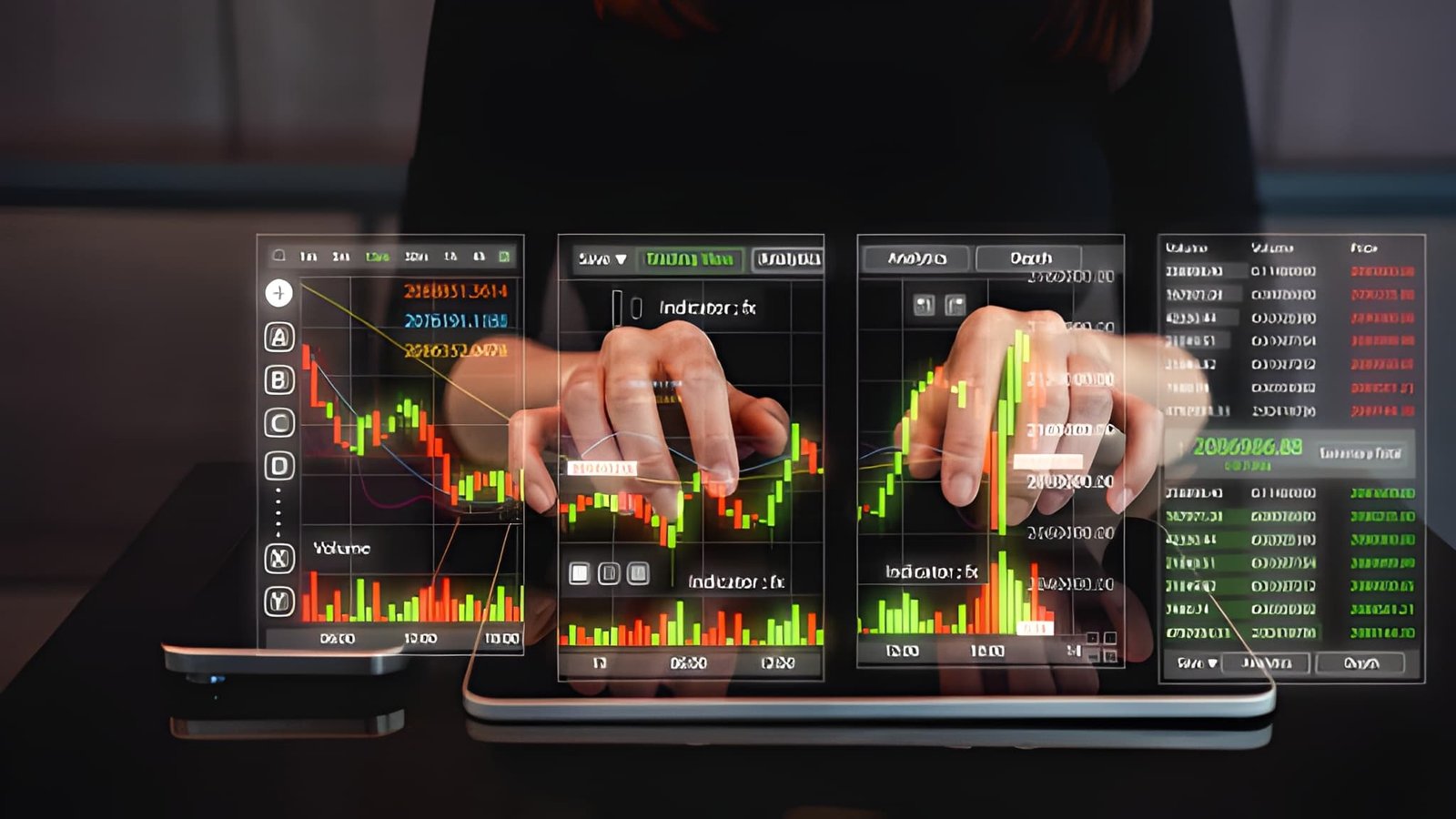
Technical vs. Principal Analysis: Decoding the Market’s DNA
A comprehensive exploration of price-action psychology versus intrinsic value modeling.
In the arena of global finance, two primary schools of thought dominate the decision-making process for traders and investors alike. Technical analysis and fundamental analysis (often referred to as principal analysis in institutional circles) represent two distinct lenses through which market participants view the world. While one focuses on the "what" and the "how" of price movement, the other obsessively pursues the "why" behind the value of an asset. Understanding these frameworks is not merely an academic exercise; it is the prerequisite for developing a sustainable edge in the markets.
The Core Philosophy
Technical analysis assumes that all known information is already reflected in the price. Therefore, studying the price itself—and its historical patterns—is the only way to predict future movement. Conversely, principal analysis assumes the market is often wrong in the short term, and that by studying economic factors, financial statements, and management quality, an investor can find the "true" value of an asset.
Technical Analysis: The Psychology of Price
Technical analysis is essentially the study of human behavior as expressed through price charts. It operates on three fundamental premises: the market discounts everything, price moves in trends, and history tends to repeat itself. Because humans tend to react to fear and greed in predictable ways, price charts form recognizable patterns that technicians exploit.
For the technical trader, the "fundamentals" are irrelevant because they are already baked into the current bid and ask. If the Federal Reserve raises rates, the technician doesn't care about the economic theory; they care about how the price of the USD reacts to the level of support or resistance it was already approaching. They use indicators like Moving Averages, RSI (Relative Strength Index), and Fibonacci retracements to find points where supply and demand are likely to reach an equilibrium or a tipping point.
Principal Analysis: The Search for Intrinsic Value
Principal or fundamental analysis is the art of determining the "Intrinsic Value" of a security. This methodology looks beyond the ticker symbol to examine the underlying business, its industry, and the broader macroeconomic environment. For an equity analyst, this involves a deep dive into the three main financial statements: the Balance Sheet, the Income Statement, and the Cash Flow Statement.
In the context of Forex, fundamental analysis shifts to national health indicators. Instead of earnings per share, analysts track GDP growth, interest rate differentials, trade balances, and political stability. The goal is to determine if a currency is overvalued or undervalued relative to its peers based on its purchasing power and economic output.
Comparison: Goals, Timeframes, and Data
| Feature | Technical Analysis | Fundamental (Principal) Analysis |
|---|---|---|
| Primary Data | Price, Volume, Open Interest | Financial Statements, Economic Data, Management |
| Core Objective | Timing and Momentum | Intrinsic Value and Quality |
| Time Horizon | Minutes, Days, Weeks | Months, Years, Decades |
| Philosophy | "The market is the truth." | "The market is often irrational." |
Essential Toolkit for Each Method
Technical Toolbox
- Candlestick Patterns: Gauging immediate sentiment through Dojis, Hammers, and Engulfing bars.
- Oscillators: Measuring overbought or oversold conditions (Stochastics, RSI).
- Trendlines: Identifying the path of least resistance.
- Volume Profile: Understanding where the most significant "business" was conducted.
Principal Toolbox
- DCF Models: Discounted Cash Flow analysis to find current value.
- Ratio Analysis: P/E, Debt-to-Equity, and ROE (Return on Equity).
- Moat Analysis: Evaluating competitive advantages (Brand, Network Effect).
- Macro Indicators: Tracking Yield Curves and Inflation rates.
The Hybrid Approach: "Technimentals"
Modern professionals rarely stick to just one school of thought. The most successful institutional desks use a hybrid approach. They use fundamental analysis to select what to buy (the asset with the most significant value gap) and technical analysis to decide when to buy it (the moment the price breaks out of a consolidation pattern).
Imagine a scenario where a currency is fundamentally undervalued because its central bank is about to hike rates. A pure technician might miss the "why," while a pure fundamentalist might buy too early during a downward spike. The hybrid trader waits for the fundamental news to break and then enters only when the price breaks above a specific moving average, confirming that other market participants have also recognized the value.
Valuation Modeling Examples
To understand principal analysis, one must understand how value is calculated. Unlike technical analysis, which is visual, principal analysis is mathematical. Below is a simplified example of how an investor might view the value of a dividend-paying asset.
Value of Asset = D1 / (k - g)
D1 = Expected Dividend next year ($5.00)
k = Required Rate of Return (10%)
g = Growth Rate of Dividend (4%)
Calculation:
Value = $5.00 / (0.10 - 0.04)
Value = $5.00 / 0.06
Intrinsic Value = $83.33
If the market price is $70, the asset is undervalued. If it's $100, it's overvalued.
Risk Management Paradigms
Risk management differs significantly between these two worlds. For a technician, risk is managed via the Stop Loss. If the price moves to a certain point, the "pattern" is invalidated, and the trade is closed. The risk is defined by the price chart.
For the fundamentalist, risk is managed via Margin of Safety. If they calculate an asset is worth $100, they might only buy it at $70. The $30 difference is their protection against their own errors in calculation or unexpected economic shifts. They do not necessarily sell if the price drops to $60; in fact, if the fundamentals haven't changed, they might view a lower price as an opportunity to buy more.
Skeptics often call technical analysis "astrology for men." However, because so many large institutions use technical levels for their execution algorithms, these levels often become self-fulfilling prophecies. It is less about magic and more about identifying where large clusters of liquidity (orders) are resting.
Markets are driven by "flows" and "liquidity" in the short term. A company can report record earnings, but if a large hedge fund needs to liquidate its position to cover losses elsewhere, the price will fall regardless of the good news. Fundamentals act like gravity—they pull the price toward value eventually, but momentum can defy gravity for a long time.
Ultimately, neither method is superior. They are simply different toolsets designed for different objectives. The short-term trader requires the precision and timing of technical analysis to survive the noise of daily volatility. The long-term investor requires the structural grounding of principal analysis to weather the storms of market cycles. By mastering both, you gain a 360-degree view of the financial landscape.