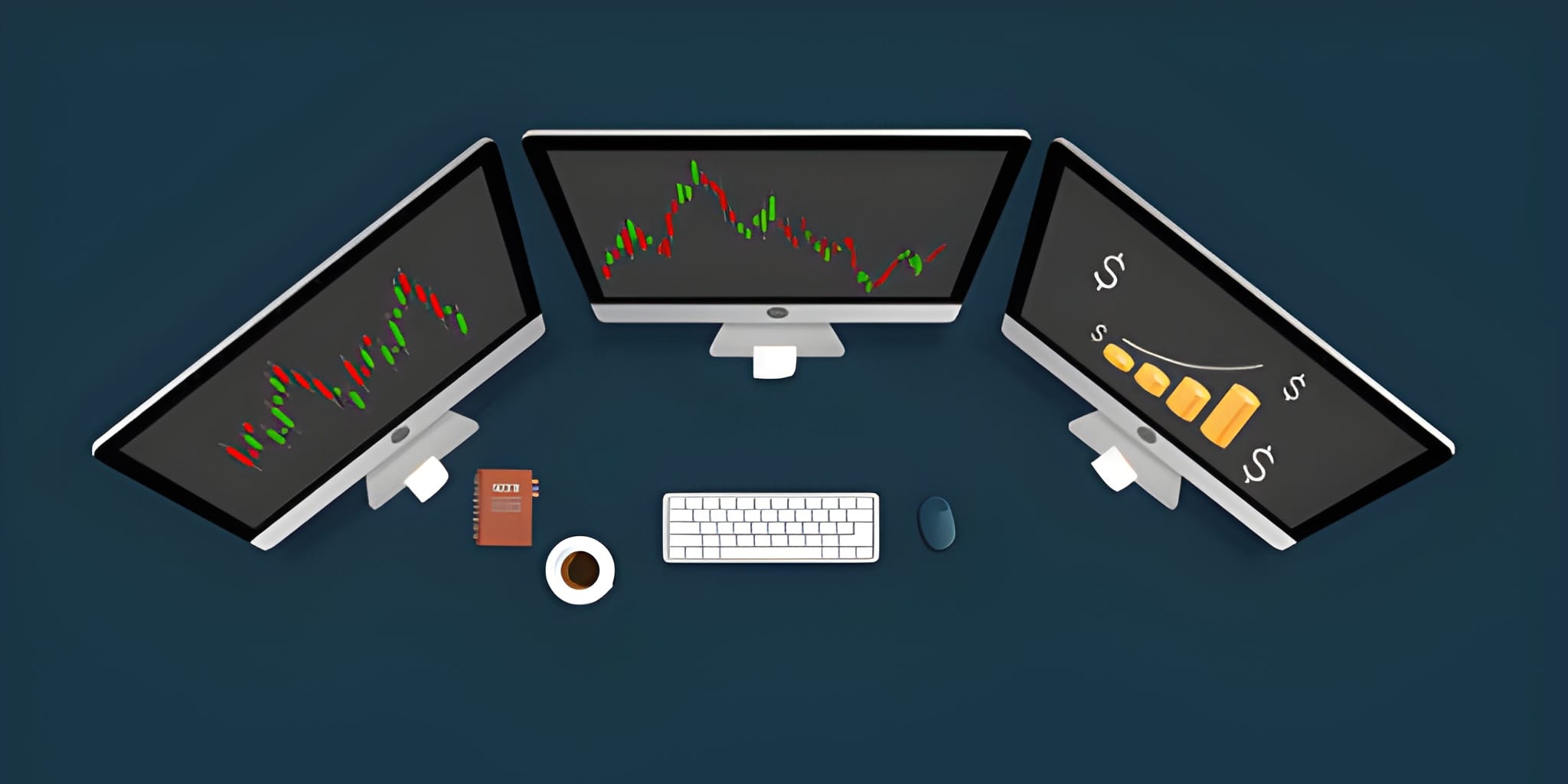
AI day trading refers to the use of artificial intelligence technologies—such as machine learning, neural networks, and algorithmic models—to automate and enhance intraday trading decisions. By analyzing large datasets, identifying patterns, and executing trades with precision, AI can assist traders in navigating fast-paced markets with greater efficiency and reduced emotional bias. This article explores AI day trading, its mechanisms, strategies, tools, and risk management considerations.
Understanding AI Day Trading
AI day trading combines algorithmic trading with machine learning models to analyze price movements, volume, news sentiment, and other market factors. AI can identify opportunities, generate trade signals, and execute trades faster than human traders.
Key Benefits:
- Speed: AI can process market data in milliseconds, identifying intraday opportunities.
- Accuracy: Machine learning algorithms detect patterns and trends often missed by humans.
- Emotion-Free Trading: Automated execution reduces impulsive decisions caused by fear or greed.
- Scalability: Multiple assets, markets, or instruments can be monitored simultaneously.
- Adaptive Learning: AI models can adjust strategies based on real-time feedback and historical performance.
Features of AI Day Trading Systems
| Feature | Description | Example |
|---|---|---|
| Data Analysis | Processes historical and real-time data for signals | Price, volume, news, and social sentiment |
| Trade Signal Generation | Identifies buy/sell opportunities using predictive models | AI predicts 70% probability of upward movement |
| Automated Order Execution | Executes trades instantly based on signals | Buy 100 shares when model triggers signal |
| Risk Management Modules | Implements stop-loss, take-profit, and position sizing | AI sets stop-loss at 2% below entry |
| Backtesting and Simulation | Tests strategies on historical data to optimize parameters | Simulate AI strategy over past 6 months |
| Performance Monitoring | Tracks real-time profit/loss, execution speed, and errors | Dashboard displays cumulative returns |
| Adaptive Learning | Continuously updates model parameters based on outcomes | Adjusts moving average periods automatically |
AI Day Trading Strategies
1. Trend-Following AI Strategies
AI identifies intraday trends using moving averages, momentum, and machine learning pattern recognition.
Example:
- Stock XYZ trending upward
- AI buys 100 shares at $50 → exits at $53
- Profit: \text{Profit} = (53 - 50) \times 100 = 300
2. Mean Reversion AI Strategies
Targets stocks deviating from their short-term averages, expecting a return to mean price.
Example:
- 30-minute moving average: $48
- Current price: $45 → AI buys 200 shares
- Price reverts to $48 → sell
- Profit: \text{Profit} = (48 - 45) \times 200 = 600
3. News and Sentiment-Based AI Strategies
Analyzes real-time news and social media to predict intraday price movement.
Example:
- Positive earnings tweet detected → AI buys 50 shares at $100
- Price rises to $105 → sell
- Profit: \text{Profit} = (105 - 100) \times 50 = 250
4. High-Frequency Trading (HFT) AI Strategies
Executes numerous trades in milliseconds to capture small price discrepancies.
Example:
- Buy/sell 1,000 shares at $50.00 and $50.01 repeatedly
- Profit per cycle: (50.01 - 50.00) \times 1000 = 10
Risk Management in AI Day Trading
| Risk Control | Description | Example |
|---|---|---|
| Position Sizing | Limits exposure per trade | AI risk = 1–2% of account per trade |
| Stop-Loss Orders | Automatically exits losing trades | Stop-loss at 2% below entry |
| Take-Profit Levels | Locks in gains automatically | Target 3% profit per trade |
| Diversification | Spreads trades across assets and sectors | Tech, healthcare, and finance stocks |
| System Monitoring | Ensures software integrity and execution accuracy | Alerts for failed orders or connectivity issues |
Popular Platforms and Tools
- MetaTrader 5 with AI Plugins: Supports custom AI strategies, indicators, and backtesting.
- QuantConnect: Cloud-based platform for AI-driven algorithmic trading.
- TradeStation: Integrates AI models with EasyLanguage for automated execution.
- Interactive Brokers API: Enables AI integration for equities, forex, and futures.
- Alpaca & Binance API: Supports AI automation for stocks and cryptocurrency day trading.
Practical Example: AI Momentum Trade
- Account Capital: $20,000
- AI Strategy: Intraday momentum with RSI and volume filters
- Trade: Buy 100 shares of ABC at $50 → Exit at $52
- Profit: \text{Profit} = (52 - 50) \times 100 = 200
Backtesting and adaptive learning allow AI to refine parameters, stop-loss, and position sizing for improved intraday performance.
Conclusion
AI day trading transforms intraday trading by leveraging speed, precision, and predictive analytics. Through trend-following, mean-reversion, sentiment analysis, and high-frequency strategies, AI can identify profitable opportunities while mitigating human emotional errors. Combining automation, backtesting, and risk management ensures disciplined trading, scalability, and improved probability of success. For traders seeking to optimize day trading performance, AI provides a powerful, data-driven approach to the fast-paced market environment.