
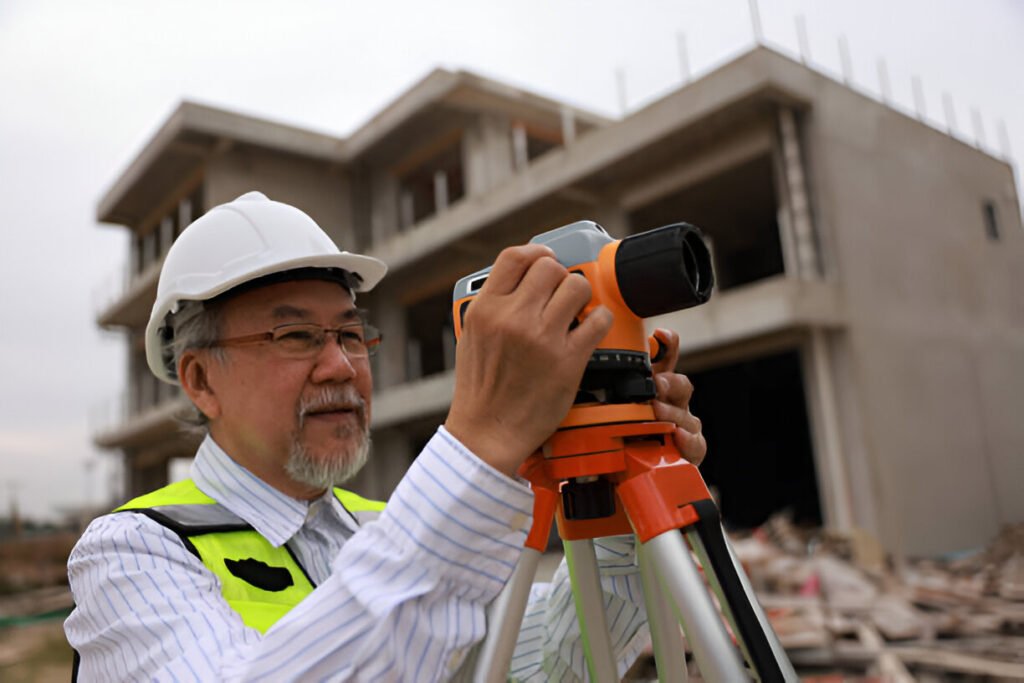
As a civil engineer, my career has been one of creating and building structures that last for generations. However, when it comes to personal financial planning, retirement is the most crucial structure I can build for myself. Unlike the solid foundations we design for bridges and buildings, retirement planning requires a more thoughtful approach to ensure a steady income once I decide to step away from my engineering career. Over the years, I have realized the importance of a comprehensive retirement strategy that takes into account various financial tools, income sources, and investment options. In this article, I will explore the essential aspects of retirement planning for civil engineers and provide practical steps, examples, and calculations that can guide the journey toward financial independence in retirement.
Table of Contents
Understanding the Basics of Retirement Planning
Retirement planning is not a one-size-fits-all process. The right approach depends on factors such as current income, expected lifestyle in retirement, retirement age, and any pension or 401(k) plans offered by my employer. The goal is to ensure that, when I retire, my savings and investments will provide a sufficient income stream for the rest of my life.
For civil engineers, especially those who work for large firms or government agencies, pensions may still be part of the benefits package. However, many engineers will need to supplement their pensions with personal savings and investment accounts to achieve the desired standard of living. It’s essential to understand the various options available for saving and investing for retirement.
The Key Elements of a Retirement Plan
A well-rounded retirement plan incorporates several elements:
1. Income Needs Assessment
The first step in planning for retirement is to assess how much income will be required. It’s critical to estimate the future costs of living, including housing, healthcare, food, transportation, and leisure activities. For example, my current monthly expenses might be $4,000, but in retirement, I may need $5,000 to account for inflation and rising healthcare costs.
2. Social Security
Social Security is often the foundation of a retiree’s income. As a civil engineer in the United States, I have been paying into the Social Security system throughout my career. While Social Security may not replace my entire pre-retirement income, it will serve as a reliable income source. The key here is to understand how much I can expect to receive from Social Security and factor that into my retirement plan. The amount varies depending on my lifetime earnings and when I begin claiming benefits.
I will use the Social Security Administration’s (SSA) online calculators to estimate my benefits at different retirement ages.
3. Employer-Sponsored Plans
Many civil engineers are fortunate enough to work for large firms or government agencies that offer pension plans or 401(k) accounts. These retirement savings vehicles are essential for building wealth over time.
- 401(k) Plans: A 401(k) is a tax-advantaged retirement savings account that allows me to contribute pre-tax income. Many employers offer matching contributions, which is essentially free money. The maximum contribution to a 401(k) plan for 2025 is $22,500, with an additional catch-up contribution of $7,500 for those aged 50 and above. This means that I can contribute up to $30,000 if I am 50 or older.
- Pension Plans: If my employer offers a defined benefit pension plan, it is essential to understand how it will impact my retirement. Pension plans promise a fixed income for life, usually based on years of service and final salary. In this case, I need to evaluate how the pension amount fits into my overall retirement goals and determine if additional savings are needed.
4. Personal Savings and Investments
For civil engineers, personal savings are crucial to supplement Social Security and employer-sponsored plans. I have several options for growing my wealth:
- Individual Retirement Accounts (IRAs): IRAs, both traditional and Roth, allow for tax-advantaged savings. A traditional IRA offers tax deductions on contributions, while a Roth IRA offers tax-free growth and withdrawals in retirement. For 2025, the contribution limit for an IRA is $6,500, with a $1,000 catch-up contribution for those over 50.
- Taxable Brokerage Accounts: In addition to tax-advantaged accounts, I can invest in a taxable brokerage account. This type of account does not offer tax benefits, but it provides flexibility. I can invest in stocks, bonds, mutual funds, and other securities, and I can withdraw funds at any time.
- Real Estate Investments: As a civil engineer, I might have a good understanding of the real estate market. Investing in rental properties or real estate investment trusts (REITs) can provide steady income and long-term growth.
5. Inflation and Healthcare Costs
Inflation and healthcare costs are two major factors that can erode the purchasing power of retirement savings. It’s important to assume that both will increase over time. Historically, inflation in the U.S. has averaged around 3% per year. I need to account for this increase in living expenses when planning my retirement. Healthcare costs are particularly critical, as they tend to rise faster than general inflation, and I may need long-term care later in life.
6. Withdrawal Strategy
Once I retire, I will need to develop a strategy for withdrawing funds from my retirement accounts. A commonly used rule is the “4% rule,” which suggests that I can withdraw 4% of my retirement savings each year without running out of money. For example, if I have $1,000,000 saved for retirement, I can withdraw $40,000 per year, adjusting for inflation.
7. Tax Implications
The tax treatment of retirement accounts is another crucial factor to consider. Traditional 401(k) and IRA accounts are taxed upon withdrawal, while Roth accounts provide tax-free withdrawals. Understanding the tax implications of each account will help me determine the best strategy for withdrawals in retirement.
Example of Retirement Planning: A Civil Engineer’s Journey
Let’s work through an example to illustrate how I can approach retirement planning as a civil engineer.
Step 1: Estimating Future Expenses
Let’s assume that my current monthly expenses are $4,000. In retirement, I expect these expenses to rise to $5,000 due to inflation and increased healthcare costs. This is a common scenario for retirees who no longer have work-related expenses but face higher medical costs.
Step 2: Estimating Social Security Benefits
Using the SSA’s calculator, I estimate my monthly Social Security benefit at $2,000 if I retire at age 67.
Step 3: Employer-Sponsored Retirement Plan
Let’s say that my employer offers a 401(k) plan, and I contribute $10,000 per year, with a company match of $5,000. Over 30 years, assuming an average annual return of 7%, I could accumulate approximately $900,000 in my 401(k) account.
Step 4: Estimating Additional Savings
I also have personal savings and investments in taxable accounts. Let’s assume I save an additional $5,000 per year, and I invest in a diversified portfolio of stocks and bonds, which grows at 6% per year. Over the same 30 years, this account could grow to about $300,000.
Step 5: Withdrawal Strategy
When I retire, I will have the following sources of income:
- Social Security: $2,000 per month ($24,000 per year)
- 401(k): $900,000 (4% withdrawal rate = $36,000 per year)
- Personal Savings: $300,000 (4% withdrawal rate = $12,000 per year)
In total, I would have approximately $72,000 per year from these sources. This income should be sufficient to cover my expected expenses of $60,000 per year ($5,000 per month), allowing for some flexibility and growth in the future.
Creating a Detailed Retirement Plan: An Example Table
Below is a table summarizing the estimated retirement income sources for a civil engineer:
| Source of Income | Amount per Year |
|---|---|
| Social Security | $24,000 |
| 401(k) Withdrawals | $36,000 |
| Personal Savings Withdrawals | $12,000 |
| Total Retirement Income | $72,000 |
Step 6: Reviewing and Adjusting the Plan
Retirement planning is not a one-time event. It’s essential to review the plan regularly to ensure that I am on track. If my income increases or my expenses change, I need to adjust my savings rate or investment strategy. Additionally, I should consider unexpected events, such as health issues or changes in the economy, and have a contingency plan in place.
Conclusion: The Road to a Secure Retirement
As a civil engineer, I understand the importance of building things that last. My retirement is no different; it requires careful planning, patience, and the right tools. By evaluating my income needs, maximizing employer-sponsored plans, diversifying my investments, and accounting for inflation and healthcare costs, I can ensure that I will have a secure and fulfilling retirement. With the right strategies in place, I can retire with confidence, knowing that my hard work and smart financial decisions will pay off in the long run.



