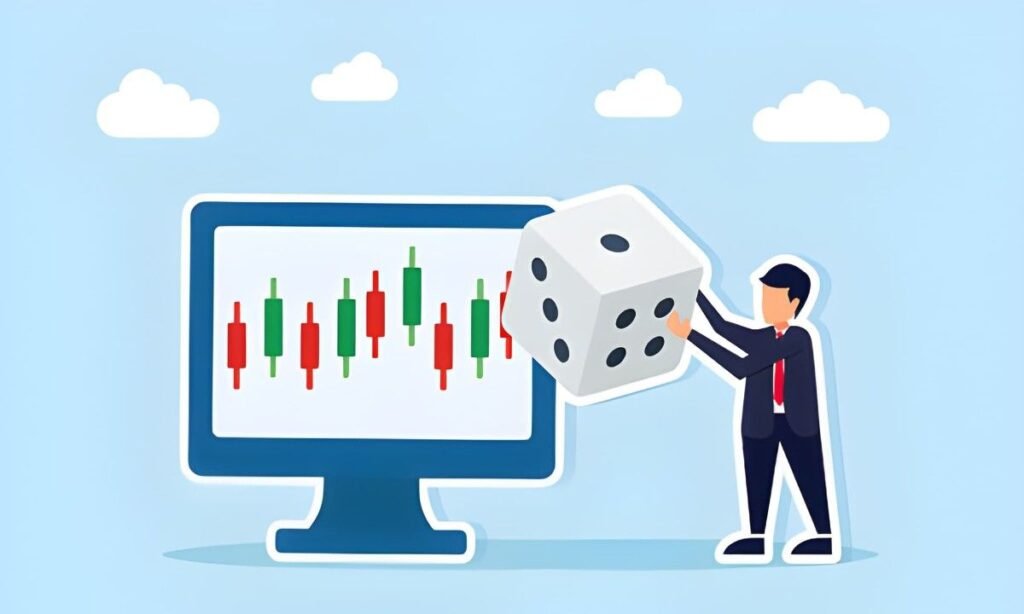
Day trading is often compared to gambling because both involve risk and uncertainty. However, while there are superficial similarities, the underlying principles, methods, and outcomes distinguish day trading from gambling. Understanding these differences is crucial for anyone considering short-term trading strategies.
Key Differences Between Day Trading and Gambling
| Aspect | Day Trading | Gambling |
|---|---|---|
| Skill vs. Luck | Relies heavily on analysis, strategy, and experience | Primarily relies on chance or probability |
| Decision Basis | Technical/fundamental analysis, charts, indicators | Random outcomes, odds, or luck-based events |
| Risk Management | Stops, position sizing, diversification, hedging | Limited or no risk controls |
| Expected Return | Potentially positive with discipline and strategy | Usually negative (house edge in casinos) |
| Learning Curve | Skills improve with practice, backtesting, and research | Little improvement with experience; outcomes mostly random |
| Regulation and Oversight | SEC, FINRA, and broker rules apply | Gambling commissions or gaming authorities |
How Day Trading Can Resemble Gambling
Despite differences, day trading can feel like gambling under certain circumstances:
- Overtrading: Entering trades without analysis, similar to placing bets randomly.
- High Leverage: Using excessive margin amplifies potential losses, akin to betting large amounts in a single spin.
- Ignoring Risk Management: Failing to set stop-loss orders or limit exposure can lead to significant losses.
- Chasing “Hot Tips” or Rumors: Trading on unreliable information increases randomness in outcomes.
How to Avoid Treating Day Trading Like Gambling
- Develop a Strategy: Use well-tested methods like momentum, scalping, or breakout trading.
- Use Risk Management: Implement stop-losses, position sizing, and daily loss limits.
- Practice with Simulators: Paper trading allows skill development without risking capital.
- Track Performance: Maintain a trading journal to evaluate strategies and improve decision-making.
- Educate Yourself: Understand market mechanics, technical indicators, and economic factors.
Practical Example
- Without Strategy (Gambling Approach): Buy 100 shares randomly at $50, no stop-loss, sell when “feels right.”
- Outcome: High risk of large losses; success depends on luck.
- With Strategy (Trading Approach): Buy 100 shares at $50 using momentum strategy, stop-loss at $48, take-profit at $55.
- Outcome: Risk is controlled (\text{Max Loss} = (50-48) \times 100 = 200), potential gain is defined (\text{Profit} = (55-50) \times 100 = 500).
Conclusion
Day trading is not inherently gambling, but it can resemble gambling if approached without analysis, strategy, or risk management. The key distinction lies in the use of skill, planning, and disciplined execution. Traders who follow structured strategies, employ proper risk controls, and continuously educate themselves can generate consistent, risk-adjusted returns, unlike gambling, which relies mostly on chance and typically favors the house.
Day trading becomes gambling only when discipline, preparation, and strategy are ignored.