
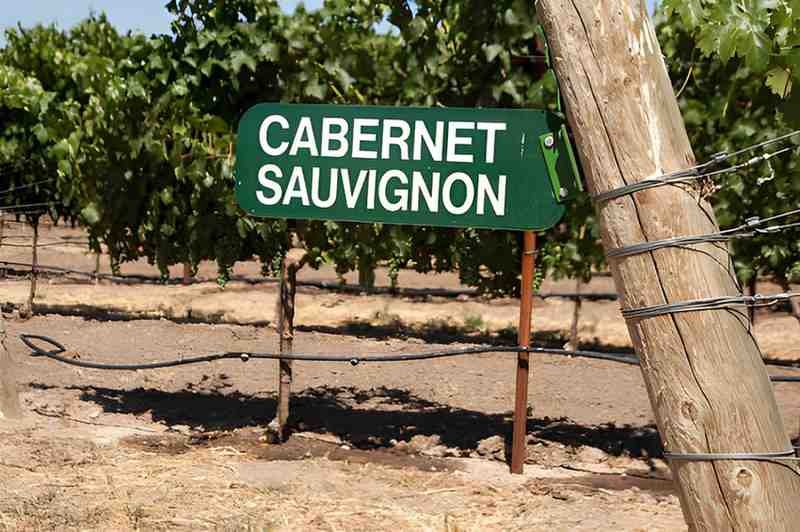
The Investment Thesis for Fine Wine
Before selecting specific bottles, one must understand why fine wine can be a viable asset class. Its value proposition is built on a foundation of unique economic principles.
- Negative Correlation to Traditional Markets: Fine wine often moves independently of stocks and bonds. During periods of economic uncertainty or market volatility, its value can remain stable or even appreciate as investors seek tangible stores of value.
- Supply Inelasticity and Depleting Supply: The supply of any given vintage is absolutely fixed. Once bottled, no more can ever be produced. Over time, as bottles are consumed, the remaining supply shrinks, creating natural scarcity. This is the ultimate limited edition.
- The Quality of Scarcity (The “Liquid” Asset with a Low Beta): The most sought-after wines are produced in tiny quantities from specific, geographically defined plots of land. This inherent scarcity, combined with growing global demand from an expanding cohort of high-net-worth collectors, creates powerful upward pressure on prices.
- A Non-Depreciating, “Consumable” Asset (With Caveats): Unlike a car that drives off the lot, a well-chosen wine typically increases in value as it matures and reaches its peak drinking window. Its utility—the pleasure of consumption—is intrinsically linked to its value.
Critical Investment Considerations: Beyond the Label
An investment-grade wine must meet specific, non-negotiable criteria. This is where amateurs speculating on a high score diverge from serious collectors.
- Provenance is Paramount: A wine’s value is destroyed by poor storage. Heat, light, and vibration are its enemies. Any bottle you purchase must have an impeccable, auditable provenance, ideally from the château’s cellar directly to a professional storage facility. I would never acquire a wine of value that has been in a private collector’s non-climate-controlled cellar.
- The Cost of Carry: Unlike a stock certificate held in a free brokerage account, wine incurs ongoing carrying costs. Professional storage in a bonded warehouse (like London City Bond or Octavian) typically costs \text{\$15}-\text{\$30} per case per year. This is the equivalent of an expense ratio, and it must be factored into your total return calculation.
- Liquidity and Transaction Costs: The secondary market for wine is less liquid than public securities. Selling often requires consigning with a broker or auction house, which can take time and command a seller’s commission of 10-15%. This is an asset for patient capital.
- Vintage Variation is a Feature, Not a Bug: In finance, we seek consistency. In wine, the variation between vintages due to weather is what creates opportunity. A challenging year for a region can produce smaller quantities of exceptional, long-lived wine that appreciates significantly.
The Blue-Chip “First Growths” of Cabernet: Core Holdings
These wines are the equivalent of large-cap, dividend-paying stocks—the foundation of a portfolio. Their brand recognition, consistent demand, and long track record of appreciation make them relatively safer (though still volatile) plays. Focus on excellent to outstanding vintages that are still en primeur (as futures) or recently released. Their prices will be higher on release but offer the best provenance.
1. Bordeaux, France (The Originators)
Bordeaux blends are Cabernet-dominant. The top-tier wines from the Left Bank (Médoc, Pauillac, Saint-Estèphe, Margaux) are the gold standard.
- Château Lafite Rothschild (Pauillac): The quintessential blue-chip wine. A symbol of status in emerging markets, particularly Asia, which can drive its price dynamics independently.
- Château Latour (Pauillac): Known for its incredible power and longevity. A notoriously slow ager, making it a perfect multi-decade hold.
- Château Mouton Rothschild (Pauillac): Unique for its artist-designed labels, which add a collectible element beyond the liquid in the bottle.
- Château Margaux (Margaux): Often described as the most “elegant” of the First Growths. It has a flawless track record in great vintages.
- Château Haut-Brion (Pessac-Léognan): The only First Growth from outside the Médoc, often showing more Merlot influence. A consistent performer.
Recent Vintages to Target (Bordeaux): 2019, 2016, 2010, 2009, 2005. These are legendary vintages with proven aging potential. The 2019s, for instance, are still available in the market and represent a strong value for the quality.
2. Napa Valley, California (The Modern Titans)
Napa Cabernets are more fruit-forward and accessible in their youth but can age magnificently. Their market is more domestic but has grown increasingly global.
- Screaming Eagle: The ultimate “cult Cabernet.” Its tiny production and immense demand create an auction market where bottles regularly sell for thousands of dollars. Extremely difficult to acquire at release.
- Harlan Estate: A “First Growth” of Napa. Bill Harlan set out to create a wine of unquestioned quality and longevity, and he succeeded. A benchmark for the region.
- Opus One: The joint venture between Robert Mondavi and Baron Philippe de Rothschild. Perhaps the most recognized Napa wine globally, offering strong brand liquidity.
- Shafer Vineyards Hillside Select: A perennial critic’s darling from the Stags Leap District. Consistently powerful and age-worthy.
- Dalla Valle Maya: A iconic cult wine, famously championed by critic Robert Parker. Its unique Cabernet Franc blend adds to its allure.
Recent Vintages to Target (Napa): 2018, 2016, 2013, 2012. The 2018s are showing incredible promise and are still findable.
The “Growth Stocks”: Up-and-Coming Producers
This is where deeper analysis can yield higher returns. These producers have a buzz around them, have received critical acclaim, and have not yet reached the price ceiling of the established icons.
- Bordeaux: Look to the so-called “Super Seconds” (e.g., Léoville-Las Cases, Pichon Baron, Montrose) which often deliver First Growth quality at a lower price point. Also, watch for stars from Saint-Julien and Pessac-Léognan like Smith Haut Lafitte.
- Napa Valley: Producers like Ovid, Promontory, Abreu, and Chappellet’s Pritchard Hill are considered the next tier of elite, sought-after wines with limited production.
- Other Regions: Don’t ignore top Cabernets from Washington State (Quilceda Creek, Leonetti), Tuscany (Sassicaia, Ornellaia) – though often Cabernet blends, and Coonawarra, Australia (Penfolds Bin 707, Wynns John Riddoch).
Portfolio Construction and Acquisition Strategy
You would not put your entire portfolio into one stock. The same applies here.
- Diversify by Region and Vintage: Allocate across Bordeaux and Napa. Buy different vintages to mitigate the risk of a single vintage being overhyped or underperforming over time.
- Buy in Original Wooden Cases (OWC): Wine held in its original wooden case from the producer is worth significantly more (often 10-20%) on the secondary market than loose bottles. It guarantees provenance.
- Use Reputable Merchants and Platforms: Buy only from established, reputable wine merchants, auction houses (Sotheby’s, Christie’s), or dedicated wine investment platforms (Cult Wines, Vinovest) that guarantee provenance and provide professional storage.
- Hold for the Long Term: This is a 10, 15, 20-year game. The most significant appreciation occurs as the wine approaches its peak drinking window and supply dwindles.
A Final Word of Caution
Invest in wine because you have a passion for it and the capital to allocate to a speculative, illiquid alternative asset. The transaction costs, carrying costs, and expertise required create a high barrier to entry. The market can be subject to fads and critic scores. Ultimately, the greatest dividend a wine investment can pay is the unparalleled pleasure of sharing a perfectly matured bottle with friends and family decades after you acquired it. That is a return no stock ticker can ever provide.



