
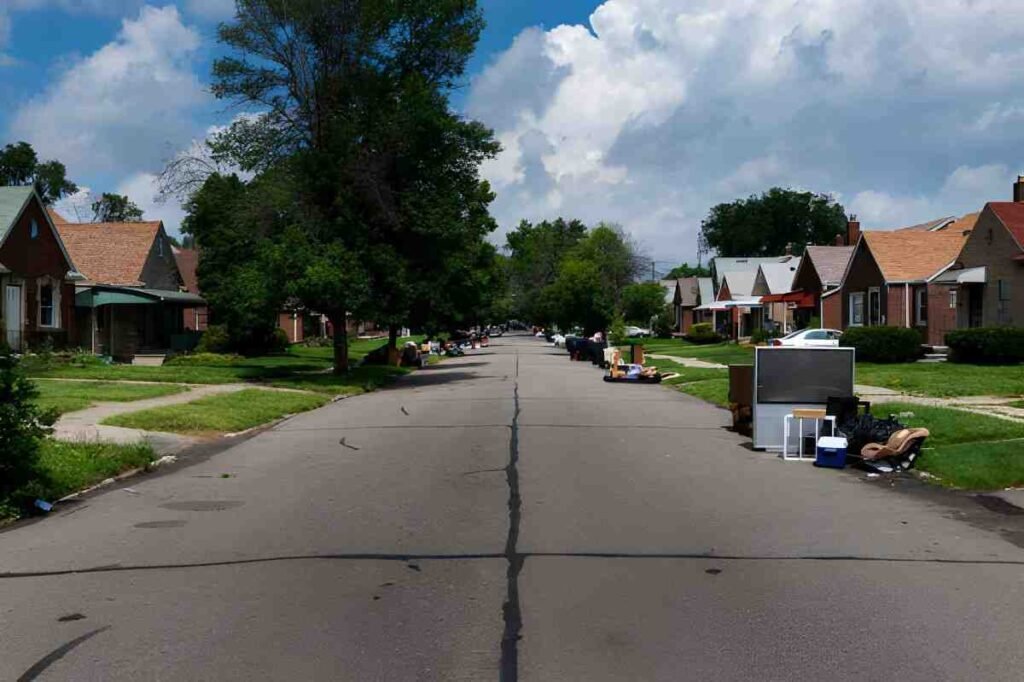
I have structured real estate investments across the risk spectrum for over two decades, and I can state with certainty that buying and holding vacant lots in low-income neighborhoods represents one of the most misunderstood and potentially rewarding strategies in real estate investing. This approach combines exceptional patience with strategic vision, offering unique advantages that improved properties cannot match. After helping clients acquire and manage dozens of vacant lots in emerging neighborhoods, I’ve developed a comprehensive framework for evaluating, acquiring, and holding these unconventional assets.
The Vacant Lot Investment Thesis
Vacant lots in low-income neighborhoods offer a distinctive value proposition that differs fundamentally from traditional real estate investments.
Mathematical Advantage of Raw Land
The financial dynamics of vacant lots create unique compounding opportunities:
\text{Carrying Cost} = \text{Property Taxes} + \text{Insurance} + \text{Maintenance} + \text{Financing Cost}For a typical urban lot:
- Property taxes: \text{\$500}-\text{\$1,500} annually
- Insurance: \text{\$300}-\text{\$600} annually (liability only)
- Maintenance: \text{\$200}-\text{\$500} annually (minimal)
- Financing: \text{\$0} (if purchased cash)
Total annual carrying cost: \text{\$1,000}-\text{\$2,600}
Compare this to improved properties with carrying costs 10-20x higher.
The Optionality Value
Vacant lots represent real options on future development. This optionality has mathematical value:
\text{Option Value} = \text{Intrinsic Value} + \text{Time Value}Where:
- Intrinsic Value: Current value if developed today
- Time Value: Value of waiting for better development conditions
Neighborhood Analysis Framework
Not all low-income neighborhoods are equal for vacant lot investments. I use a rigorous scoring system:
Table: Vacant Lot Neighborhood Evaluation Criteria
| Factor | Weight | Positive Indicators | Negative Indicators |
|---|---|---|---|
| Demographic Trends | 25% | Population growth, income growth, educational improvement | Population decline, income stagnation |
| Development Activity | 20% | New construction, renovation activity, infrastructure investment | Abandonment, demolition without replacement |
| Location Attributes | 15% | Proximity to employment centers, transportation, amenities | Environmental hazards, flood zones, isolation |
| Government Investment | 15% | Municipal improvement plans, tax incentives, zoning changes | Municipal distress, service reductions |
| Lot-Specific Factors | 25% | Buildable condition, utility access, clear title | Contamination, easement issues, odd shape |
Neighborhoods scoring above 70/100 typically offer the best risk-reward profiles.
Acquisition Strategy
Acquiring vacant lots requires different approaches than improved properties.
Sourcing Strategies
Tax Delinquent Properties:
- Annual tax sales
- Quiet title actions after redemption periods
- Direct negotiation with municipalities
Distressed Owners:
- Heirs who inherited unwanted property
- Absentee owners with mounting tax liabilities
- Banks with REO properties not worth improving
Municipal Programs:
- Land bank programs
- Blight elimination initiatives
- Community development programs
Due Diligence Process
Vacant lots require specialized due diligence:
Title Issues:
- Quiet title actions may be necessary
- Estate issues with heir property
- Tax lien complications
- Easement and right-of-way issues
Environmental Concerns:
- Phase I environmental assessment
- Soil testing for contamination
- Underground storage tank searches
- Historical land use research
Development Constraints:
- zoning verification
- Setback requirements
- Utility availability and connection costs
- Soil suitability for construction
Financing and Acquisition Costs
Vacant lots present unique financing challenges that impact investment returns.
Cash Purchase Advantages
\text{Return on Cash} = \frac{\text{Appreciation} + \text{Option Value}}{\text{Purchase Price} + \text{Carrying Costs}}Example:
- Purchase price: \text{\$10,000}
- Annual carrying cost: \text{\$1,200}
- 5-year appreciation: \text{\$15,000} (50% gain)
- Holding period: 5 years
\text{Total Return} = \frac{\text{\$15,000}}{\text{\$10,000} + (\text{\$1,200} \times 5)} = \frac{\text{\$15,000}}{\text{\$16,000}} = 93.75\%
\text{Annualized Return} = (1.9375)^{1/5} - 1 = 14.1\%Financing Alternatives
Seller Financing: Often available from motivated sellers
Portfolio Loans: Some local banks will finance land with 30-50% down
HELOC: Use home equity to purchase lots cash
Self-Directed IRA: For tax-advantaged holding
Carrying Cost Management
Minimizing carrying costs is essential for profitable vacant lot investing.
Tax Reduction Strategies
Green Space Designation: Some municipalities offer tax reductions for maintained vacant lots
Agricultural Use: Temporary farming can qualify for agricultural tax rates
Non-Profit Use: Lease to community organizations for tax benefits
Tax Abatement Programs: Many cities offer temporary tax abatements for vacant lot improvement
Maintenance Cost Control
Basic Maintenance: \text{\$200}-\text{\$500} annually for mowing and trash removal
Community Partnerships: Local organizations may maintain lots for community use
Minimum Maintenance: Some neighborhoods require only periodic mowing
The Development Optionality Value
The primary value of vacant lots comes from their development potential.
Development Timeline Framework
Table: Typical Vacant Lot Holding Periods
| Development Catalyst | Expected Hold Period | Appreciation Potential | Probability |
|---|---|---|---|
| Organic Neighborhood Improvement | 7-15 years | 200-400% | 30-40% |
| Government-Led Redevelopment | 5-10 years | 300-600% | 20-30% |
| Private Development Catalyst | 3-7 years | 400-800% | 10-20% |
| Inflation-Driven Appreciation | 10-20 years | 100-200% | 80-90% |
Option Value Calculation
\text{Option Value} = \frac{\text{Development Value} - \text{Construction Cost}}{(1 + r)^t} - \text{Carrying Cost}Where:
- Development Value: Estimated value after improvement
- Construction Cost: Cost to build new structure
- r: Discount rate (10-15%)
- t: Time to development (years)
Interim Use Strategies
Generating income during the holding period can significantly improve returns.
Low-Cost Interim Uses
Community Gardening: Lease to local gardeners for \text{\$100}-\text{\$300}/month
Parking: \text{\$50}-\text{\$200}/month per space
Storage: \text{\$100}-\text{\$400}/month for container storage
Event Space: \text{\$200}-\text{\$500}/event for community events
Community Benefits
Interim uses provide additional benefits:
- Reduced maintenance costs
- Community goodwill
- Crime reduction through activated space
- Tax advantages in some municipalities
Risk Management Framework
Vacant lot investing carries unique risks that require specific mitigation strategies.
Political and Regulatory Risks
zoning Changes: Can either enhance or destroy value
Eminent Domain: Government acquisition at below-market rates
Tax Policy Changes: Elimination of tax advantages
Development Moratoriums: Temporary freezes on construction
Environmental Risks
Contamination Liability: Even if you didn’t cause it
Stormwater Management: New regulations can increase development costs
Climate Change: Flood zone designations changing
Market Risks
Gentrification Timing: Buying too early or too late
Infrastructure Limitations: Lack of utilities limiting development potential
Economic Shocks: Neighborhoods hit hardest during recessions
Exit Strategy Optimization
Successful vacant lot investing requires well-defined exit strategies.
Development Timeline
Short-Term (3-5 years): Land banking for quick flip to developers
Medium-Term (5-10 years): Partial improvement and sale
Long-Term (10-20 years): Full development or sale to institutional buyers
Valuation at Exit
\text{Exit Valuation} = \text{Land Value} \times (1 + \text{Appreciation Rate})^{\text{Years}} \times \text{Development Multiple}Where Development Multiple ranges from 2-10x based on neighborhood transformation.
Tax Considerations
Vacant lots offer unique tax advantages that improve returns.
1031 Exchange Eligibility
Vacant land qualifies for 1031 exchanges, allowing tax-deferred roll into income-producing properties.
Capital Gains Treatment
Long-term capital gains rates apply after one year of ownership.
Deductible Expenses
All carrying costs are tax-deductible against other income, creating tax benefits during the holding period.
Community Impact and Ethical Considerations
Investing in low-income neighborhoods carries ethical responsibilities.
Positive Community Engagement
Transparent Plans: Communicate intentions with community organizations
Interim Benefits: Provide community benefits during holding period
Local Hiring: Use local contractors for maintenance and development
Affordable Housing: Consider community needs in development plans
Avoiding Harmful Practices
Speculative Vacancy: Don’t hold properties indefinitely without maintenance
Price Manipulation: Avoid artificial inflation of neighborhood prices
Displacement Concerns: Be sensitive to gentrification impacts
Implementation Timeline
Phase 1: Research and Acquisition (Months 1-6)
- Neighborhood identification and analysis
- Lot sourcing and due diligence
- Acquisition and title clearance
- Initial maintenance setup
Phase 2: Holding and Monitoring (Years 1-5)
- Cost minimization implementation
- Interim use establishment
- Neighborhood progress monitoring
- Tax strategy optimization
Phase 3: Decision Point (Years 5-7)
- Develop, hold, or sell decision
- Partnership exploration for development
- Financing arrangement for development
- Exit strategy execution
Phase 4: Execution (Years 7-10+)
- Development or sale execution
- 1031 exchange consideration
- Portfolio reinvestment
- Legacy planning
Expected Returns and Realities
Based on historical data and experience:
Return Components
Land Appreciation: 4-8% annually (inflation plus premium)
Option Value Realization: 100-400% upon development catalyst
Interim Income: 2-6% annually on cost basis
Tax Benefits: 1-3% annual equivalent value
Realistic Outcomes
Successful Investment: 15-25% annualized returns over 10+ years
Average Investment: 8-12% annualized returns
Unsuccessful Investment: 0-5% returns or capital loss
Time Horizon Realities
- Minimum hold period: 5-7 years
- Optimal hold period: 10-15 years
- Maximum hold period: 20+ years for full value realization
Buying and holding vacant lots in low-income neighborhoods represents a sophisticated investment strategy that requires exceptional patience, specialized knowledge, and community awareness. While offering potentially exceptional returns with minimal ongoing effort, success demands careful neighborhood selection, risk management, and a long-term perspective that few investors possess.
The most successful practitioners I’ve worked with understand that they’re not just buying land—they’re buying options on neighborhood transformation. This requires both analytical rigor to identify neighborhoods with genuine potential and ethical commitment to contribute positively to community development. When executed properly, vacant lot investing can generate outstanding risk-adjusted returns while creating positive social impact.



