
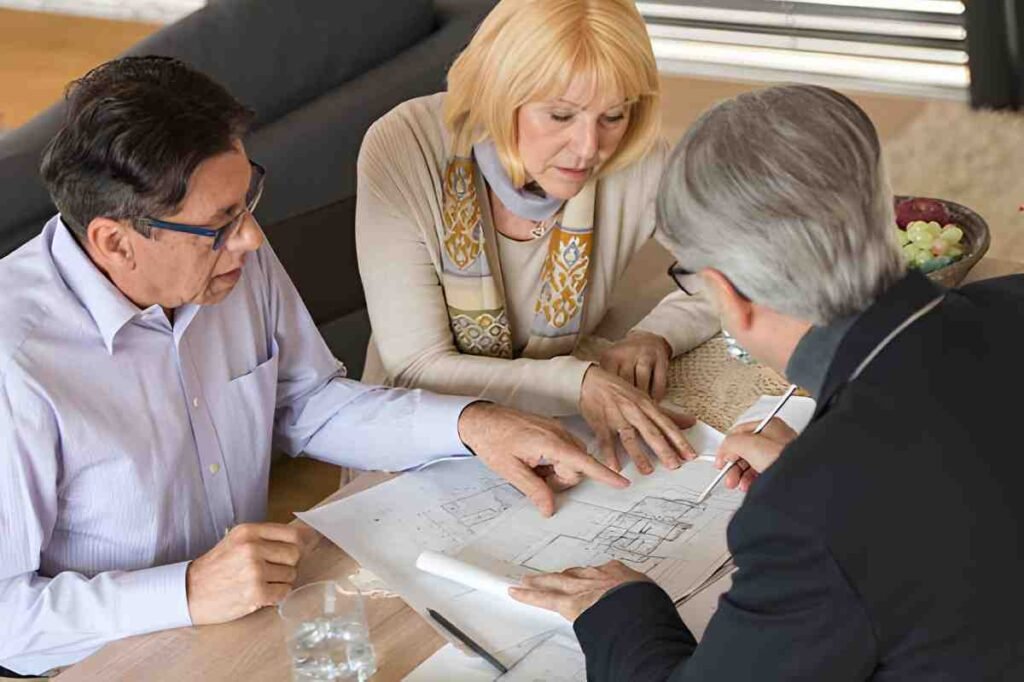
I have consulted on numerous real estate and healthcare ventures, and few projects are as complex and socially impactful as the development of a retirement village. A business plan for such a community is not merely a real estate prospectus; it is a hybrid document that must convincingly integrate market analysis, healthcare logistics, hospitality services, and sophisticated financial modeling. The goal is to create a financially sustainable ecosystem that provides security, community, and care for residents while delivering a stable, long-term return for operators and investors. This requires a meticulous approach that balances compassion with commercial rigor.
The Foundation: Defining Your Model and Market
The first critical decision is the choice of operational model, as this dictates everything from pricing to cash flow structure.
1. The Ownership Model:
- Ownership (Strata Title/Freehold): Residents purchase their units. The operator may charge monthly fees for common area maintenance and services. This model generates large upfront capital but less recurring revenue.
- Loan/License Model (Entry Fee): Residents pay a substantial upfront fee (often partially refundable) for a license to occupy a unit, plus ongoing monthly fees. This is a popular model as it provides significant initial capital and predictable recurring income.
- Rental Model: Residents pay a monthly rent that covers all costs. This offers the least upfront capital but provides consistent long-term income streams.
2. The Care Model:
- Independent Living: For active seniors; focuses on community, amenities, and freedom from home maintenance.
- Assisted Living: Provides support with Activities of Daily Living (ADLs) like bathing, dressing, and medication management.
- Memory Care: Specialized, secure units for residents with dementia or Alzheimer’s.
- Continuing Care Retirement Community (CCRC): The most complex and comprehensive model. Residents enter while independent but have guaranteed access to higher levels of care (assisted living, nursing care) as their needs change, often under a long-term contract.
Your business plan must define your chosen model, as it is the core of your value proposition and financial structure.
The Financial Architecture: Revenue Streams and Cost Drivers
A retirement village operates on multiple revenue streams, each with its own cost structure.
Projected Revenue Streams:
- Upfront Fees (Ingress Fees): A primary source of capital for debt repayment and further development. In a loan/license model, this can be a significant sum (e.g., \$300,000 – \$1,000,000 per unit), often with a deferred management fee (DMF) deducted upon exit and resale.
- Recurring Monthly Fees: The lifeblood of operational income. This covers:
- Property maintenance, landscaping, and utilities for common areas.
- Security.
- Staff salaries ( hospitality, wellness, administration).
- Provision of amenities (pool, gym, clubhouse, transportation).
- Care and Service Packages: Additional fee-for-service revenue from home help, meal plans, personal care, and medical services. This is a high-margin revenue stream that grows as the population ages in place.
Major Cost Drivers:
- Staffing: The largest ongoing operational expense. Includes hospitality staff, nurses, carers, maintenance, and administration.
- Maintenance: Ongoing upkeep of buildings, grounds, and high-quality amenities is non-negotiable for resident satisfaction and asset preservation.
- Healthcare Compliance: Meeting stringent state licensing and regulatory requirements for care facilities involves ongoing costs for training, auditing, and equipment.
- Marketing and Sales: A long lead-time business. Occupancy rates are critical, and a sustained sales effort is required to fill units and maintain waitlists.
The Investment Thesis: Capital Outlay and Phased Development
The capital required is substantial and is typically deployed in phases to manage risk and cash flow.
Phase 1: Land Acquisition and Pre-Development
- Costs: Land purchase, rezoning, legal fees, architectural designs, engineering studies, and permits.
- Funding: Often requires equity from sponsors or joint venture partners to secure the asset and get through the approval process.
Phase 2: Construction of Core Infrastructure and First Units
- Costs: Construction is the single largest cost center. A detailed pro forma is essential.
- Example Construction Cost: \$250,000 – \$400,000 per independent living unit; significantly higher for assisted living and memory care due to specialized requirements.
- Funding: A combination of pre-sales (ingress fees from future residents), senior construction debt, and mezzanine financing. Lenders will typically require a high level of pre-sales (e.g., 50-70%) before releasing funds.
Phase 3: Operations and Subsequent Phases
- Cash flow from initial occupancy fees and monthly charges helps fund the rollout of subsequent phases, additional amenities, or new care facilities.
Financial Viability: Key Metrics and Projections
The business plan must prove long-term viability through detailed financial modeling.
1. Occupancy Rate: The most critical metric. The model must be based on conservative ramp-up projections (e.g., achieving 85-90% occupancy within 24-36 months of opening). Vacancy rates directly impact all revenue.
2. Average Revenue Per Occupied Unit (ARPOO): This metric blends monthly fees and care services. It should project growth over time as residents age and require more services.
3. Debt Service Coverage Ratio (DSCR): Lenders will require a minimum DSCR, typically 1.25x to 1.35x. This means your Net Operating Income (NOI) must be 25-35% higher than your annual debt payments.
DSCR = \frac{Net\ Operating\ Income}{Total\ Debt\ Service}4. Break-Even Analysis: The plan must clearly show when the project will become cash-flow positive after accounting for all operational expenses and debt service. This is often several years after opening.
5. Exit Valuation: For investors, the ultimate return may come from the sale of the stabilized asset. The value of a retirement village is typically calculated by capitalizing its NOI.
Property\ Value = \frac{Net\ Operating\ Income}{Capitalization\ Rate}
A stable, high-occupancy facility with diverse revenue streams will command a premium valuation (a lower cap rate) in the commercial real estate market.
The Integrated Offering: More Than Just Bricks and Mortar
Ultimately, the business plan must sell a lifestyle and a promise of security. The financials are underpinned by the quality of the offering:
- Amenities: Pools, libraries, workshops, cafes, and gardens that foster community.
- Healthcare Integration: Partnerships with local healthcare providers, telehealth services, and on-site wellness programs.
- Technology: Safety features like emergency call systems, fall detection, and smart home integration.
A successful retirement village business plan is a compelling narrative that demonstrates a deep understanding of an aging demographic’s desires and fears. It must show not only that the numbers work but also that the operator has the expertise and compassion to execute on the promise of a vibrant, secure, and caring community. The financial return is inextricably linked to the quality of life provided to residents.



