
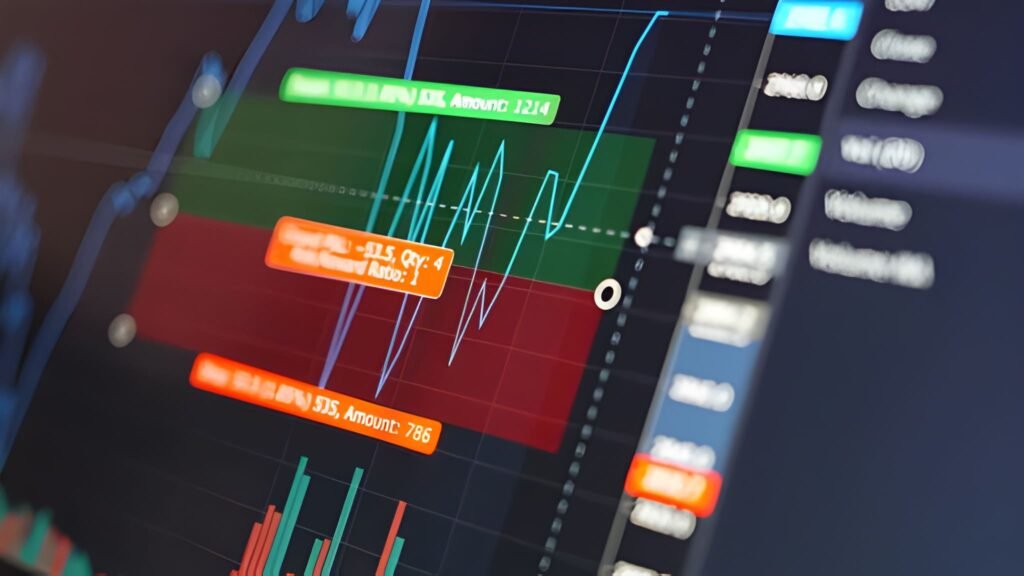
MetaTrader 5 (MT5) is one of the most widely used platforms for algorithmic trading across forex, commodities, indices, and cryptocurrency markets. It builds on the legacy of MetaTrader 4, providing enhanced features for automated trading, backtesting, and strategy optimization. Designed for both individual and institutional traders, MT5 supports multi-asset trading, advanced technical analysis, and seamless integration with custom trading algorithms through its proprietary programming language, MQL5.
Overview of MT5 for Algorithmic Trading
MetaTrader 5 allows traders to implement automated trading strategies using Expert Advisors (EAs), scripts, and custom indicators. EAs are programs that automatically execute trades based on pre-defined rules, freeing traders from the need to monitor markets continuously. MT5 provides a flexible environment to:
- Develop trading strategies in MQL5.
- Backtest strategies on historical data.
- Optimize parameters for improved performance.
- Integrate with external data and machine learning models.
Key Features for Algorithmic Trading
- Multi-Asset Trading – MT5 supports forex, stocks, futures, options, and cryptocurrencies within a single platform.
- Advanced Charting and Analysis – 21 timeframes, 80+ indicators, and graphical objects for technical analysis.
- Automated Trading Tools – EAs for strategy deployment, alerts, and custom scripts.
- Strategy Tester – Enables backtesting in multi-threaded, multi-currency, and tick-level simulation modes.
- Optimization Tools – Genetic algorithms and brute-force optimization for parameter selection.
- Economic Calendar Integration – Supports fundamental analysis by incorporating news and events.
- Depth of Market (DOM) – Real-time order book monitoring to analyze liquidity and execute advanced order types.
Programming Automated Strategies in MQL5
MQL5 is an object-oriented programming language similar to C++. It allows the creation of EAs, custom indicators, scripts, and libraries. A simple trading algorithm structure in MQL5 includes:
- Signal Generation: Define conditions for buy, sell, or hold.
- Trade Execution: Submit orders to the broker based on signals.
- Risk Management: Set stop-loss, take-profit, and position sizing.
- Logging: Record trades and performance metrics.
Example of a moving average crossover signal in MT5:
Signal = SMA_{short} - SMA_{long}
If Signal > 0, the EA executes a buy; if Signal < 0, a sell order is placed.
Backtesting and Optimization
MT5’s Strategy Tester allows traders to simulate strategy performance over historical data. Backtesting is crucial to evaluate profitability and risk exposure before going live.
The cumulative return for a backtested strategy is calculated as:
CR = \prod_{i=1}^{N} (1 + R_i) - 1
Where R_i is the return per trade and N is the total number of trades.
Optimization in MT5 helps select the most effective parameters. For instance, a moving average EA can test different short and long periods to maximize the Sharpe Ratio:
Sharpe = \frac{E[R_p - R_f]}{\sigma_p}Risk Management in MT5
Proper risk controls are critical for algorithmic trading. MT5 supports position sizing, stop-loss, and take-profit levels.
Example: For a $10,000 account risking 1% per trade:
Max\ Loss = Account\ Equity \times Risk\ Per\ Trade = 10000 \times 0.01 = 100Position size is determined by:
Position\ Size = \frac{Max\ Loss}{Stop\ Loss\ Distance}This ensures trades remain within acceptable risk limits.
Integration with External Data and AI
MT5 allows integration with external DLLs and Python scripts, enabling advanced analysis and machine learning models. Traders can import predictive models, perform data-driven optimization, and generate trading signals based on AI insights.
Example of ML integration: Predicting price movement using historical features:
\hat{y} = f(x_1, x_2, ..., x_n)
Where x_1, x_2, ..., x_n are technical and fundamental features.
Popular Strategies on MT5
| Strategy Type | Description | MT5 Implementation |
|---|---|---|
| Moving Average Crossover | Trades based on short/long SMA crossovers | Simple EA |
| RSI Overbought/Oversold | Buys when RSI < 30, sells when RSI > 70 | Custom indicator EA |
| Breakout | Trades on price breaking support/resistance levels | Scripted signal EA |
| Scalping | High-frequency trades for small profits | Low-latency EA using DOM |
| Grid Trading | Buys and sells at fixed intervals | Automated grid EA |
Depth of Market and Order Execution
The MT5 Depth of Market (DOM) provides real-time visibility of market liquidity, enabling advanced order strategies like iceberg orders, limit orders, and stop orders. Execution speed is crucial, particularly for scalping and high-frequency strategies.
Latency can be calculated as:
Latency = T_{execution} - T_{signal}Minimizing latency ensures that trades are executed at intended prices, enhancing strategy efficiency.
Brokers and Market Access
MT5 connects to multiple brokers worldwide, offering access to a wide range of asset classes. Examples include:
- Forex Brokers: IC Markets, FXTM
- CFD Brokers: Plus500, Pepperstone
- Cryptocurrency Brokers: Bybit, Binance (via bridge APIs)
Integration with broker APIs ensures seamless execution of automated strategies, including full account management and reporting.
Advantages of MT5 for Algorithmic Trading
- Multi-Asset Support – Trade forex, stocks, futures, and crypto in one platform.
- Robust Backtesting – Multi-threaded simulation for accurate historical analysis.
- Advanced Automation – Expert Advisors automate strategy execution 24/7.
- Data-Driven Insights – Access to tick-level data, indicators, and news feeds.
- Community and Marketplace – Thousands of pre-built EAs, indicators, and scripts available.
Challenges and Considerations
- Learning Curve: MQL5 and advanced strategy development require programming expertise.
- Market Risk: Algorithms can generate losses if improperly designed or backtested.
- Latency Sensitivity: MT5 is suitable for retail-level automation but may not match institutional HFT speeds.
- Data Quality: Accurate signals depend on high-quality historical and live data feeds.
Future Outlook
The future of algorithmic trading on MT5 includes:
- Greater integration with machine learning models.
- Enhanced cloud-based backtesting for massive datasets.
- Expansion into cryptocurrency and decentralized markets.
- Real-time sentiment analysis integration for adaptive strategies.
Conclusion
MetaTrader 5 has established itself as a premier platform for algorithmic trading, offering traders and developers the tools to implement, backtest, and optimize automated strategies across multiple markets. Its combination of Expert Advisors, custom indicators, multi-asset support, and integration with external data and AI models makes it suitable for both individual and institutional traders. By mastering MT5, algorithmic traders can systematically exploit market opportunities, manage risk efficiently, and develop sophisticated strategies capable of adapting to evolving market conditions.


