
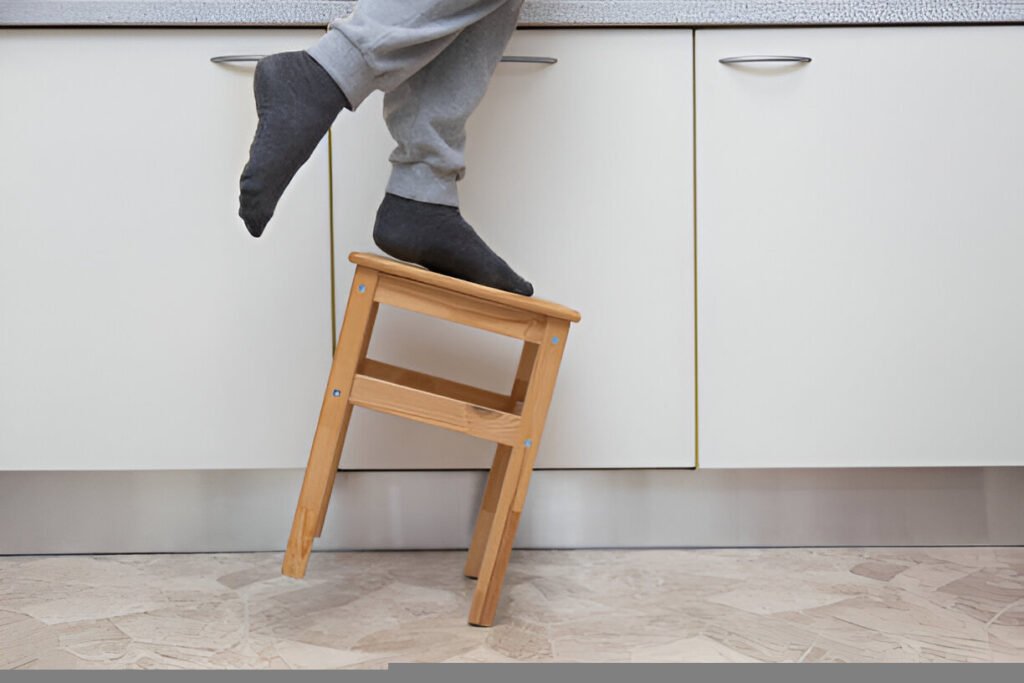
Retirement planning often feels like a puzzle with too many pieces. I find the 3-legged stool model simplifies it. The concept, rooted in traditional pension systems, breaks retirement income into three core sources: Social Security, employer-sponsored plans, and personal savings. If one leg weakens, the other two provide stability. I will dissect each leg, explore their interdependencies, and show how to balance them for a secure retirement.
Table of Contents
Why the 3-Legged Stool Works
The stool metaphor works because it emphasizes diversification. Relying solely on Social Security or a 401(k) is risky. A 2023 Federal Reserve report found that 26% of non-retired adults have no retirement savings. The stool model mitigates this risk by spreading income sources. Let’s examine each leg.
Leg 1: Social Security – The Foundation
Social Security acts as a safety net. The average monthly benefit in 2024 is $1,907. While helpful, it replaces only about 40% of pre-retirement income for medium earners. The Social Security Administration projects the Trust Fund will deplete by 2034, potentially reducing benefits by 20%.
Maximizing Social Security:
- Delay benefits until age 70 to increase payouts by 8% annually post-full retirement age.
- Coordinate spousal benefits—a lower-earning spouse can claim up to 50% of the higher earner’s benefit.
Example: If your full retirement age is 67 and you delay until 70, your benefit grows by 24% (0.08 \times 3 = 0.24). A $2,000 monthly benefit becomes $2,480.
Leg 2: Employer-Sponsored Plans – The Growth Engine
Employer plans like 401(k)s and pensions offer tax advantages. A 2023 Vanguard study found the median 401(k) balance for those 65+ is $232,710. While substantial, it may not suffice alone.
Key Strategies:
- Contribute enough to secure employer matches—it’s free money.
- Use target-date funds for automated asset allocation.
Example: If you earn $80,000 and contribute 10% annually with a 3% employer match, your yearly addition is $10,400 (0.10 \times 80,000 + 0.03 \times 80,000).
Leg 3: Personal Savings – The Flexibility Factor
Personal savings include IRAs, taxable accounts, and real estate. A 2022 EBRI survey revealed only 42% of workers calculate retirement needs.
Building Personal Savings:
- Follow the 4% rule: withdraw 4% annually to preserve capital.
- Use Roth IRAs for tax-free growth.
Example: A $500,000 portfolio allows $20,000 yearly withdrawals (500,000 \times 0.04 = 20,000).
Balancing the Stool
Each leg’s weight depends on individual circumstances. High earners may rely less on Social Security, while others prioritize employer plans. Below is a comparison of income replacement ratios:
| Income Source | Low Earner | Medium Earner | High Earner |
|---|---|---|---|
| Social Security | 50% | 40% | 25% |
| Employer Plans | 20% | 30% | 45% |
| Personal Savings | 30% | 30% | 30% |
Common Pitfalls
- Overestimating Social Security: Assuming it covers all expenses is dangerous.
- Underestimating Healthcare Costs: Fidelity estimates a 65-year-old couple needs $315,000 for medical expenses.
- Ignoring Inflation: A 3% inflation rate halves purchasing power in 24 years (72 / 3 = 24).
Final Thoughts
The 3-legged stool remains relevant because it adapts. I recommend reviewing each leg annually. Adjust contributions, delay Social Security if possible, and diversify savings. A stable stool ensures a comfortable retirement—one leg at a time.



