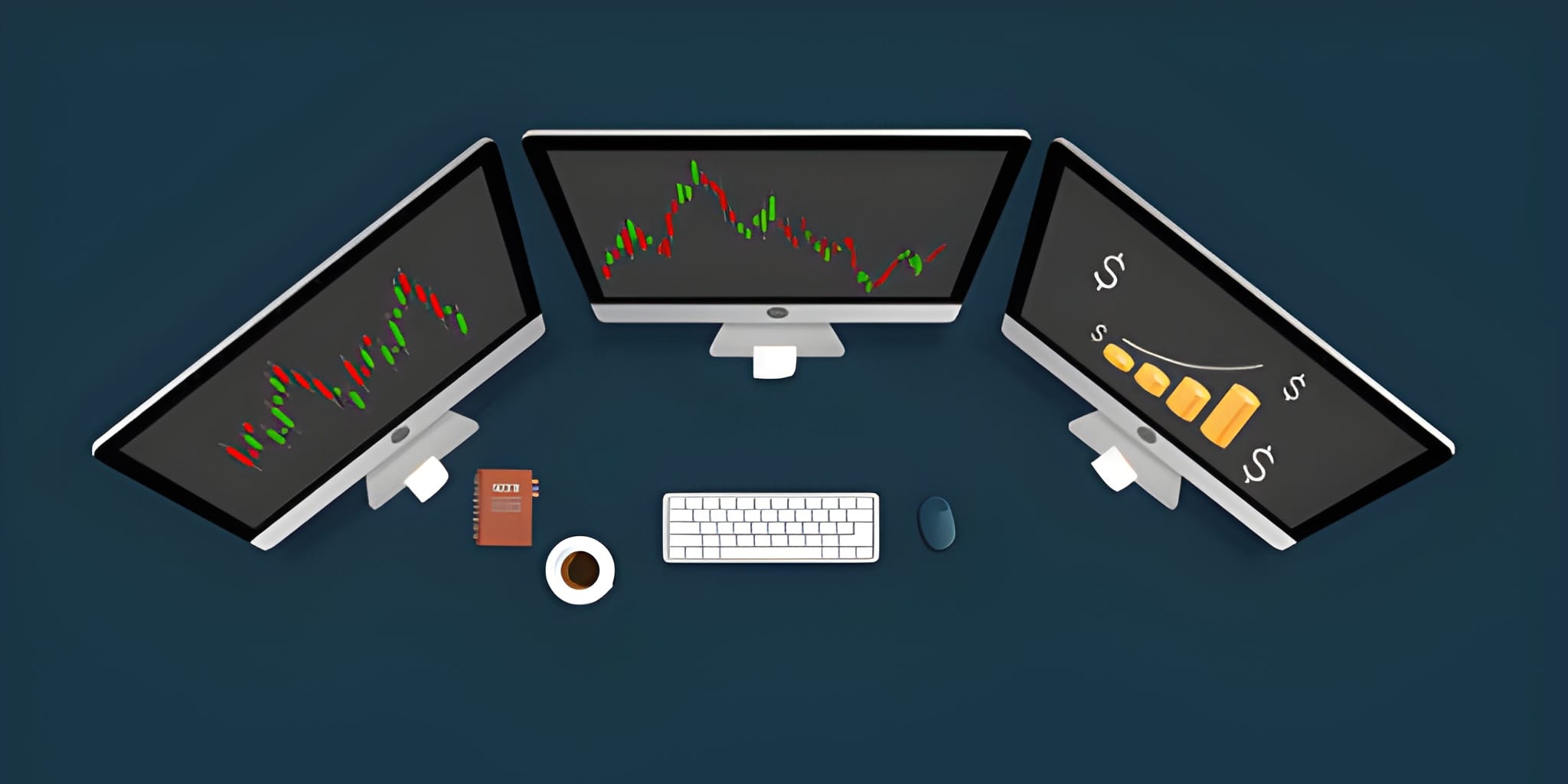
Strategic Expansion: A Quantitative Framework for Breakout Day Trading
Execution Logic & Liquidity DynamicsInstructional Roadmap
CollapseBreakout day trading is the art of capturing the exact moment market participants reach a consensus on value expansion. In the high-velocity markets of , price does not move in a smooth, linear fashion. Instead, it oscillates within defined structural boundaries before exploding with concentrated energy once those limits are breached. This strategy relies on the clinical identification of these boundaries—known as support and resistance—and the systematic execution of positions as the price enters a "liquidity void." For the professional trader, a breakout is not just a price move; it is a fundamental imbalance in the order book that offers asymmetric reward potential.
The Physics of Price Discovery
To understand a breakout, one must understand the concept of Liquidity Absorption. Imagine a stock trading under a horizontal resistance level of $150.00. Every time the price reaches $150.00, a large block of "Limit Sell" orders fulfills all available "Market Buy" orders, forcing the price back down. The breakout occurs when those sell orders are entirely exhausted—meaning every person willing to sell at $150.00 has been filled. Once the final share is sold at that level, there is no more supply to hold the price back. The price then verticalizes to find the next level of sellers, creating the "expansion" that breakout traders exploit.
Anatomy of a High-Probability Setup
Professional breakout trading moves beyond simply buying any price high. It requires a confluence of structural factors that increase the probability of "follow-through." A breakout without follow-through is simply a "Fakeout," and managing this distinction is what separates the successful from the insolvent.
Clear Horizontal Levels
While diagonal trendlines are useful, horizontal resistance levels are more significant because they represent a specific price point where thousands of participants are anchored psychologically.
Higher Lows into Resistance
Known as an Ascending Triangle, this pattern shows that buyers are willing to purchase at higher prices on every pullback, squeezing the sellers at the resistance ceiling.
The "Lull" Before the Move
Counter-intuitively, the highest probability breakouts often start with a period of extreme quiet. This suggests that the market is in total equilibrium before a new catalyst shifts the balance.
Volume Verification and RVOL Logic
Volume is the fuel of the trade. A breakout occurring on low volume suggests a lack of institutional conviction and is highly likely to fail. Professional traders utilize Relative Volume (RVOL) to determine if the move is being supported by "Smart Money."
Threshold Rule: For an intraday breakout to be considered valid, RVOL should typically exceed 2.0. This indicates that twice as many participants are active compared to a normal session, confirming a fundamental shift in sentiment.
By observing the Volume Delta—the difference between buying and selling volume—traders can see if aggressive market orders are overwhelming passive limit orders. In a valid bullish breakout, the delta should show a sharp spike, indicating that buyers are "hitting the ask" with high urgency.
Core Execution Methodologies
Successful breakout execution requires a specific "entry trigger." Traders generally fall into two categories: those who enter "On the Break" and those who enter "On the Retest."
| Strategy Type | Entry Condition | Primary Advantage | Primary Risk |
|---|---|---|---|
| Momentum Entry | Limit order 2 ticks above resistance | Ensures capture of high-velocity moves | High exposure to immediate fakeouts |
| The Retest Play | Buying the first pullback to previous resistance | Confirmed strength and higher R:R ratio | Market may never retest, leaving you behind |
| Consolidation Break | Breakout from a high-tight flag | Tight stop-loss placement possible | Limited initial liquidity |
| ORB (Opening Range) | Break of the first 15-minute high | Captures the day's primary institutional trend | High early-morning volatility |
Identifying and Mitigating False Breakouts
A false breakout occurs when the price breaches resistance but fails to close above it, or immediately reverses. This is often the result of "Liquidity Hunting," where institutional algorithms push the price just high enough to trigger the stop-losses of short sellers, providing the liquidity they need to fill a large sell order.
Instead of buying the instant the price touches a new high, wait for a 5-minute candle to close above the resistance level. This ensures that the breakout has survived the initial "selling pressure" often found at key psychological levels. If the candle closes back inside the range, the breakout is invalidated.
The Volume Weighted Average Price (VWAP) acts as the intraday "fair value." Never buy a breakout if the price is extended too far above the VWAP. The probability of a "mean reversion" pullback is too high. The most stable breakouts occur when the price breaks resistance while sitting just above a rising VWAP.
Quantitative Risk Architecture
Breakout trading involves high variance. Because the moves are explosive, the risk of "slippage"—where your order is filled at a worse price than intended—is significant. You must adjust your position sizing to account for this reality. Capital preservation is the only priority.
Account Balance: $30,000
Risk per Trade (1%): $300
Breakout Entry: $50.10 | Stop-Loss: $49.60
Risk per Share: $0.50
Share Size: $300 / $0.50 = 600 Shares
Your stop-loss should be placed at the point where the breakout logic is proven wrong. Usually, this is just below the previous consolidation range or the 20-period Exponential Moving Average (EMA). If price returns into the range, the breakout has failed, and you must exit immediately without hesitation. "Hope" is not a risk management tool.
Behavioral Discipline in Volatile States
The greatest challenge in breakout trading is FOMO (Fear Of Missing Out). When a stock is verticalizing and the green candles are expanding, the human brain releases dopamine. This triggers the urge to "chase" the trade at a suboptimal price. Professional traders cultivate the discipline to wait for their specific entry criteria. If you miss the initial break, you wait for the retest. If there is no retest, you move on to the next asset.
Optimizing Your Technological Stack
In breakout trading, speed is a competitive edge. Attempting to execute breakouts using a standard web interface or a mobile app will result in massive slippage. To compete with institutional algorithms, you require a specialized infrastructure:
- Direct Market Access (DMA): A broker that allows you to bypass the middleman and send orders directly to the NYSE/NASDAQ order books.
- Hotkey Execution: Buying and selling via keyboard commands to shave seconds off your reaction time.
- Real-Time Scanners: Software like Trade-Ideas or custom TradingView scripts that alert you to volume spikes and range breaches instantly.
- Hardwired Connectivity: A fiber connection with low latency to the exchange data centers.
Strategic Summary
Breakout trading is a sophisticated discipline that rewards those who understand market structure and quantitative verification. By focusing on horizontal levels, insisting on high relative volume, and maintaining a strict 1% risk architecture, a trader can utilize market volatility as a engine for growth rather than a source of chaos. Remember: the market does not owe you a profit because a level was breached. Your profit is earned through the clinical execution of a strategy that accounts for both the explosive potential of an expansion and the inherent risk of a reversal. Discipline in selection and stoicism in execution remain the only true advantages in a market that never sleeps.