Professional day trading is often romanticized in popular culture as a fast-paced game of intuition and luck. In reality, it is a sophisticated high-performance business that demands technical mastery, psychological fortitude, and rigorous risk control. To transition from a retail participant to a professional market operator, one must dismantle the gambling mindset and replace it with a systematic, probabilistic approach. This blueprint serves as a deep-dive exploration into the infrastructure and methodologies required to compete in the most efficient markets on earth.
The Modern Market Ecosystem
To succeed as a day trader, you must first understand who you are competing against. The modern stock market is no longer a collection of shouting humans on a floor; it is a digital network of high-frequency trading (HFT) algorithms, institutional dark pools, and retail flow. Professional day traders occupy the space between these giants, seeking to identify where liquidity is being trapped or where price is being forced away from value.
Institutions handle massive orders that cannot be executed instantly without moving the market. They use "iceberg" orders or algorithmic slices to hide their true size. A professional trader utilizes Level 2 data and Time & Sales (Tape Reading) to spot these footprints. By identifying where a large "buyer" is defending a price level, the day trader can enter a position with a high probability of short-term price appreciation.
Understanding "Dark Pools" is equally vital. These are private exchanges where institutions trade large blocks of stock away from the public eye. While the trades are private, they must eventually be reported to the consolidated tape. Professionals monitor "delayed prints" to see where the big money is actually positioning, regardless of what the public chart might suggest.
The Professional Technical Stack
A professional trader treats their hardware like a mission-critical server. Using a standard laptop over a residential Wi-Fi connection is a recipe for catastrophic failure. Latency—the delay between clicking a button and the order reaching the exchange—can be the difference between a profitable trade and a loss.
Data Feeds
Professionals never rely on "delayed" or even "standard" real-time feeds from retail brokers. They subscribe to direct-exchange feeds (IQFeed or Polygon.io) to ensure they see price changes milliseconds before the general public.
Software (OMS/EMS)
Order Management Systems like Sterling Trader Pro or DAS Trader Pro provide direct market access (DMA). This allows you to route orders to specific exchanges (ARCA, NASDAQ, EDGX) to capture rebates or ensure faster fills.
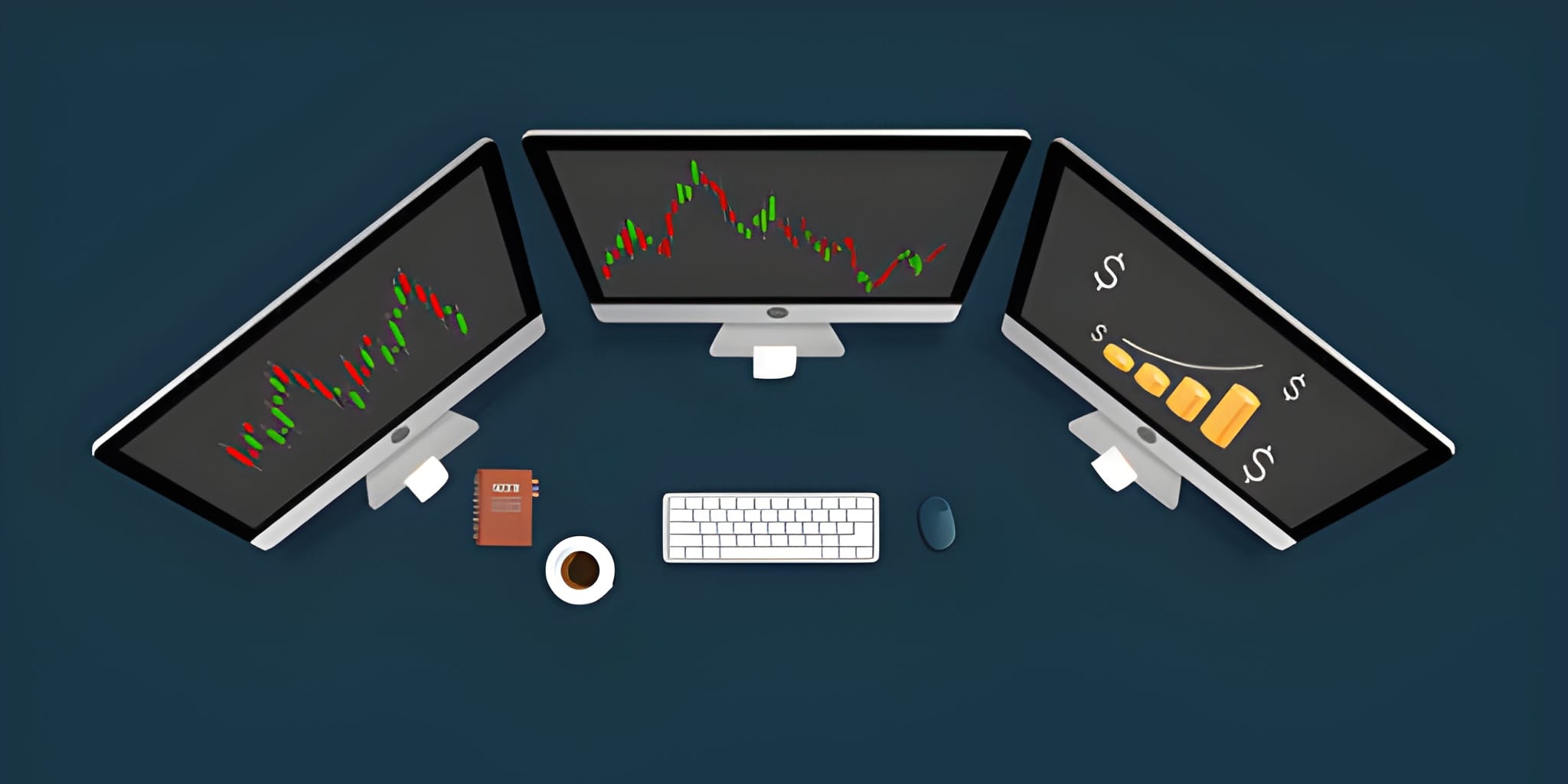
The hardware setup typically involves a multi-monitor configuration. This isn't for aesthetics; it is for situational awareness. One screen may track the S&P 500 futures (ES) for overall market direction, another for a sector heatmap, another for Level 2 data, and several for various timeframes of the primary trading vehicle. High RAM (at least 32GB) and a powerful CPU are required to process the massive stream of data without freezing the charting software during periods of extreme volatility.
The Mathematics of Survival
Most traders fail because they treat position sizing as an afterthought. Professionals view every trade through the lens of a "Risk to Reward" ratio and "Expectancy." If you do not have a positive expectancy, you are simply paying the market for the privilege of gambling.
The Science of Position Sizing
The most important calculation a trader performs is determining exactly how many shares to buy to ensure a loss never exceeds a predetermined percentage of their account. This is called the 1% rule, though many professionals prefer a 0.5% risk profile.
Let us look at a practical example. Suppose you have a 100,000 USD account and you are willing to risk 0.5% (500 USD) on a trade. You want to buy a stock at 200.00 USD with a stop-loss at 198.00 USD. Your risk per share is 2.00 USD. To calculate your size: 500 / 2.00 = 250 shares. Regardless of the stock price, your loss is capped at 500 USD if the trade fails.
Defining Your Statistical Edge
An "edge" is simply a higher probability of one thing happening over another. It is not a crystal ball. Common edges for professional day traders include Mean Reversion, Momentum, and Order Flow Imbalance. A professional focuses on one or two patterns and ignores everything else.
| Edge Type | Market Condition | Ideal Tool | Typical Hold Time |
|---|---|---|---|
| Momentum | High Volume / News | VWAP & RVOL | 2 - 15 Minutes |
| Mean Reversion | Overextended / Quiet | Bollinger Bands | 10 - 60 Minutes |
| Order Flow | Low Volatility | Footprint Charts | Seconds - 5 Minutes |
| Gap Strategy | Market Open | Pre-market Scanners | First 30 Minutes |
Advanced Execution Strategies
Execution is where the strategy meets the reality of the tape. Professionals rarely use "Market Orders" because the slippage (the difference between the price you see and the price you get) can destroy a small edge. Instead, they use complex order types.
When a trader needs to buy 50,000 shares of a stock that only trades 2,000 shares per minute, they use an Iceberg order. Only 100 shares are visible on the Level 2 at any time. As soon as those 100 are bought, the system automatically replaces them with another 100 until the 50,000 are filled. Professional scanners can detect the "refresh" rate of these orders to identify institutional presence.
These orders ensure that you are a "maker" of liquidity rather than a "taker." By using post-only orders, you ensure your order is only placed if it will sit on the book. This often earns you a small rebate from the exchange and prevents you from accidentally buying into a "spread" during a volatile spike.
The first 5 to 15 minutes of the trading day contain the most volume and volatility. The ORB strategy involves marking the high and low of this initial period. When price breaks the high with a surge in volume, it indicates a directional move for the morning session. Stops are placed at the mid-point of the range to minimize risk.
The High-Performance Mindset
You can have the best strategy in the world, but if your mind is not disciplined, you will lose money. The biggest enemy of a day trader is the "amygdala hijack"—when a loss triggers a fight-or-flight response, leading to revenge trading or freezing in a losing position.
The Probabilistic Mindset
A professional does not care if any single trade is a winner or a loser. They only care about the results over a sample size of 100 trades. This is the casino owner's perspective. The casino doesn't panic when a player wins a big hand; they know the math will favor them over the long run. To achieve this, a trader must decouple their self-worth from their daily profit and loss statement.
40% Win RateIt is entirely possible to be a millionaire trader with only a 40% win rate, provided your average win is three times larger than your average loss. This is the secret of the professionals.
Physical health is also a factor. High-frequency decision-making requires significant glucose and mental energy. Professionals prioritize sleep, hydration, and exercise. If you are tired or stressed from external life factors, the professional choice is to "stay in cash" and not trade that day. Preserving capital is a win in itself.
Trading as a Legal Entity
In the United States, professional day trading is a business and should be treated as such for tax purposes. Individual retail traders are subject to "Wash Sale" rules, which prevent you from claiming a tax loss if you buy the same stock back within 30 days. For a day trader, this can be devastating.
Section 475(f) Election
Professional traders can elect "Mark-to-Market" status. This treats all gains and losses as ordinary income, removes wash-sale restrictions, and allows you to deduct unlimited losses against other income sources.
LLC Formation
Trading through an LLC allows you to deduct business expenses such as data fees, hardware, software subscriptions, and even a portion of your home office. It also provides a layer of legal separation between your personal assets and your trading capital.
The Daily Routine Checklist
Consistency in the markets comes from consistency in preparation. A professional's day begins long before the market opens and ends long after it closes.
| Time (EST) | Activity | Objective |
|---|---|---|
| 7:00 AM | Macro Review | Check Global Markets, Oil, Gold, and Bond Yields. |
| 8:30 AM | Economic Data | Review CPI, Jobs Reports, or Fed speeches. |
| 9:00 AM | Watchlist Build | Identify stocks with pre-market volume > 500k shares. |
| 9:30 AM | The Open | Observe price action; no trades for the first 5 minutes. |
| 11:30 AM | The Lull | Market volume drops; tighten stops or take profits. |
| 4:00 PM | The Close | All intraday positions must be flat (zero shares). |
| 4:30 PM | Post-Mortem | Log every trade into a journal and analyze mistakes. |
The post-mortem is perhaps the most critical part of the day. A professional reviews their "slippage," their "execution speed," and their "emotional adherence" to the plan. If they followed the plan and lost money, it was a good trade. If they broke the plan and made money, it was a bad trade, because that behavior will eventually lead to ruin.
Conclusion: The Path Forward
Day trading is a marathon of discipline. The technical tools and strategies outlined here provide the framework, but the results depend on the operator. It requires thousands of hours of screen time to develop the "intuition" to recognize patterns in real-time. By treating trading as a professional business—investing in the right infrastructure, mastering the math of risk, and maintaining a stoic psychological state—you move from being the liquidity providers (the losers) to being the liquidity extractors (the professionals).