
Introduction
Creating a trading algorithm involves designing a systematic, rule-based approach to buy and sell financial instruments automatically. It combines quantitative analysis, programming, and risk management to execute trades efficiently, minimize human error, and optimize performance. Whether trading equities, futures, forex, or cryptocurrencies, the process follows structured steps from strategy conception to live deployment.
Step 1: Define Your Trading Objective
Before coding, clearly define:
- Asset Class: Stocks, ETFs, futures, forex, or crypto.
- Time Horizon: Intraday, swing, or long-term positions.
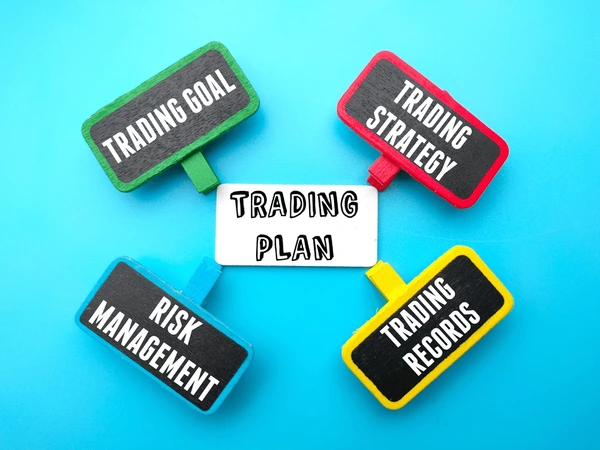
- Trading Goal: Capital growth, income, or hedging.
- Risk Tolerance: Maximum acceptable drawdown, volatility, and per-trade risk.
Step 2: Develop a Trading Strategy
A trading strategy consists of logical rules that determine when to enter and exit trades:
- Trend-Following: Buy when prices rise and sell when they fall.
- Mean-Reversion: Enter trades when prices deviate from historical averages.
- Statistical Arbitrage: Exploit pricing differences between correlated securities.
- Momentum Strategies: Trade based on price acceleration or deceleration patterns.
Step 3: Collect and Prepare Data
Data is critical for developing and testing algorithms:
- Historical Price Data: Open, high, low, close, volume (OHLCV) for backtesting.
- Alternative Data: News sentiment, economic indicators, and social media trends.
- Data Cleaning: Remove missing or inconsistent values to ensure accuracy.
- Feature Engineering: Calculate indicators such as moving averages, RSI, Bollinger Bands, or custom metrics.
Step 4: Choose Programming Environment
Popular programming languages and platforms for algorithmic trading include:
- Python: Libraries like Pandas, NumPy, Backtrader, Zipline.
- R: Statistical analysis and modeling.
- MATLAB: Advanced numerical and mathematical modeling.
- C++/Java/C#: High-performance execution for low-latency strategies.
- Trading Platforms: MetaTrader, NinjaTrader, TradeStation, or Interactive Brokers API.
Step 5: Implement the Algorithm
- Define Entry and Exit Rules: Use logical conditions based on technical indicators or signals.
- Integrate Risk Management:
- Position sizing:
Stop-loss and take-profit orders to control losses and lock gains.
Order Execution: Write code to submit orders automatically using broker APIs.
Logging: Record all trades, P&L, and key metrics for analysis.
Step 6: Backtesting
- Simulate Past Performance: Test your algorithm on historical data to evaluate profitability.
- Metrics to Analyze: Sharpe ratio, maximum drawdown, win/loss ratio, and profit factor.
- Walk-Forward Testing: Split data into training and testing sets to avoid overfitting.
- Include Transaction Costs: Consider commissions, slippage, and liquidity impact.
Step 7: Optimization and Parameter Tuning
- Adjust Indicators: Fine-tune moving average lengths, thresholds, or other parameters.
- Avoid Overfitting: Ensure performance is robust across different time periods and market conditions.
- Monte Carlo Simulations: Test strategy robustness under varying assumptions and randomness.
Step 8: Paper Trading
- Simulated Environment: Test your algorithm in real-time without risking actual capital.
- Monitor Execution: Verify that trades are placed correctly and signals are interpreted accurately.
- Assess Slippage and Latency: Identify potential issues in real-time trading conditions.
Step 9: Live Deployment
- Start Small: Deploy with limited capital initially.
- Monitoring: Continuously track performance, risk metrics, and system health.
- Adjustments: Fine-tune strategy as needed based on live performance and market changes.
- Automation: Ensure robust handling of errors, disconnects, and unexpected market conditions.
Step 10: Continuous Evaluation and Improvement
- Performance Review: Analyze P&L, drawdowns, and trading statistics regularly.
- Strategy Adaptation: Adjust to market regime shifts, volatility changes, and evolving correlations.
- Add Complexity Gradually: Introduce new signals, machine learning models, or additional instruments incrementally.
Conclusion
Creating a trading algorithm is a systematic process that integrates strategy design, data analysis, coding, backtesting, and live execution. By combining robust risk management with automated execution, traders can implement consistent and scalable trading strategies. Continuous monitoring, adaptive improvements, and rigorous testing ensure that the algorithm remains effective in dynamic financial markets. This structured approach allows traders to reduce human error, enhance efficiency, and capture opportunities systematically across diverse markets.


