
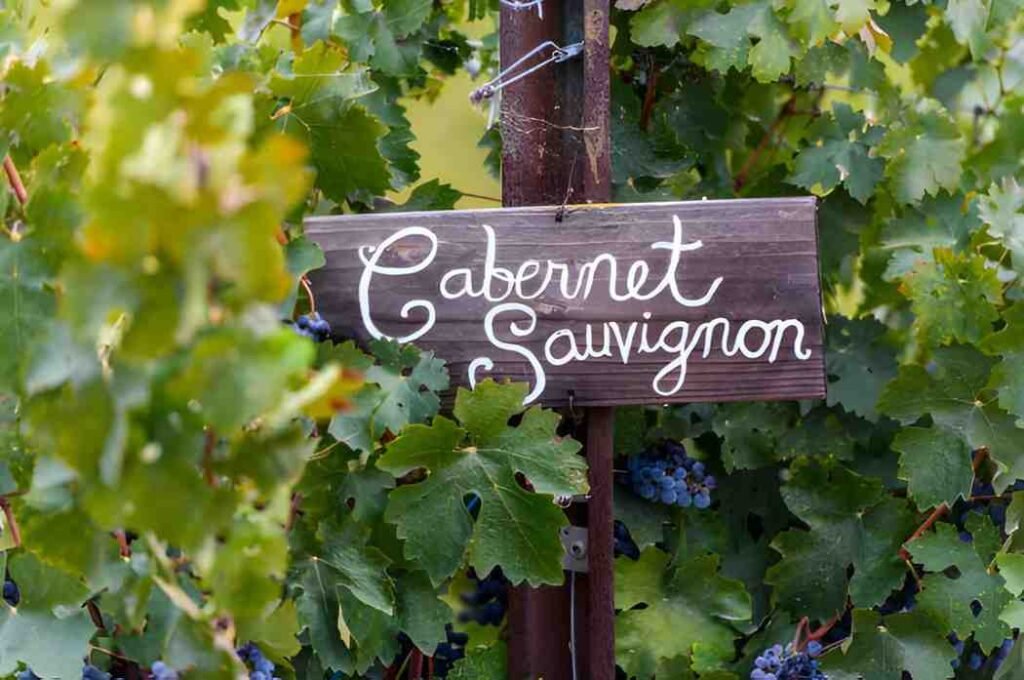
Beyond the Bottle: Viewing Wine Through an Investor’s Lens
I do not view wine merely as a beverage. I see it as a dynamic, living asset class. When I advise clients on alternative investments, wine often enters the conversation, not as a substitute for equities or bonds, but as a compelling diversifier. It possesses a low correlation to traditional financial markets, a tangible intrinsic value, and a unique supply-and-demand curve. Unlike a company that can issue more shares, a specific vintage from a esteemed vineyard is a finite resource. As bottles are consumed, the remaining supply becomes scarcer, potentially driving value for those who held onto their allocations.
However, the world of wine investment is often dominated by headlines about cult Napa Cabernets and First Growth Bordeaux fetching thousands per bottle. This narrative excludes the pragmatic investor, the one who understands the principle of starting small and thinking long-term. That is where this blueprint comes in. I want to demonstrate that building a wine portfolio with genuine aging potential and financial upside does not require a trust fund. It requires knowledge, patience, and a disciplined strategy focused on Cabernet Sauvignon under $50.
The Financial Terroir: Why Cabernet Sauvignon Under $50?
The choice of Cabernet Sauvignon at this price point is deliberate and, from an investment perspective, calculated.
Intrinsic Qualities: Cabernet Sauvignon is arguably the most age-worthy grape variety on the planet. Its high tannin and acidity act as natural preservatives. Over time, these harsh elements soften and integrate, allowing complex secondary and tertiary aromas—think leather, cigar box, forest floor, and dried fruit—to emerge. This evolution is the core of its value proposition. You are buying a product that objectively improves with time, a characteristic very few assets possess.
Market Liquidity and Recognition: Cabernet, particularly from renowned regions, is a highly liquid asset in the secondary market. It is the blue-chip stock of the wine world. Everyone knows it, everyone understands its language, and there is always a buyer. This broad recognition is crucial for eventual exit strategies.
The $50 “Sweet Spot”: This price bracket is where the magic of value investing meets wine. Below $20, you are largely in the realm of wines meant for immediate consumption. Their structure will not support long-term evolution. Above $75, you enter the domain of wines where much of the future appreciation may already be priced in by the brand’s hype.
The sub-$50 zone is where we find the “value classics”—wines from world-class producers and regions that may lack the sheer bombast of their top-tier siblings but are crafted from the same philosophy and often from adjacent vineyards. They are the overlooked equities with strong fundamentals. Our goal is to identify these wines, acquire them at their release price (the equivalent of an IPO), and hold them as they mature and appreciate.
The Accounting of Aging: Calculating the True Cost of Holding
This is where my financial expertise becomes non-negotiable. The purchase price of the bottle is only the initial capital outlay. To understand the true cost basis and, therefore, the real return on investment, we must account for the carrying costs of holding this physical asset for 5, 10, or 15 years.
Let’s create a model for a hypothetical case study. Assume we purchase a 12-bottle case of a promising Cabernet for $40 per bottle.
Initial Capital Outlay:
\text{Initial Cost} = 12 \times \text{\$40} = \text{\$480}Now, we must hold this case for 10 years in a professional wine storage facility. Poor storage destroys value, so this is not an optional expense. Assume an annual storage cost of $30 per case.
Total Storage Cost:
\text{Total Storage} = \text{\$30/year} \times 10\ \text{years} = \text{\$300}The opportunity cost is the potential gain we forfeit by choosing this investment over another. If we had invested that $480 in a broad market index fund with an average annual return of 7%, the future value would be:
Opportunity Cost (Future Value of Initial Outlay):
\text{FV}_{\text{initial}} = \text{\$480} \times (1 + 0.07)^{10} \approx \text{\$480} \times 1.96715 \approx \text{\$944.23}We also incur the storage costs over time. The cost of the first year’s storage ($30) also has 9 years of opportunity cost, and so on. This is a more complex calculation, but for simplicity, we can estimate the total cost of ownership.
Estimated Total Cost of Ownership (10 Years):
\text{Total Cost} \approx \text{Initial Cost} + \text{Total Storage} + \text{Lost Interest} \approx \text{\$480} + \text{\$300} + \text{\$464.23} = \text{\$1,244.23}This means our case needs to be worth more than $1,244.23 in a decade just for us to break even on a real economic basis. That translates to over $103 per bottle.
| Cost Component | Calculation | Amount |
|---|---|---|
| Initial Bottle Cost | 12 x $40 | $480.00 |
| Total Storage Fees | $30 x 10 years | $300.00 |
| Simple Subtotal | $780.00 | |
| Opportunity Cost (7% return on $480) | $480 x (1.07^10 – 1) | ~$464.23 |
| Estimated Total Economic Cost | $1,244.23 | |
| Break-Even Price per Bottle | $1,244.23 / 12 | $103.69 |
This analysis is not meant to discourage but to inform. It forces a disciplined selection process. We cannot just buy any Cabernet under $50; we must buy those with the proven pedigree and structure to likely surpass that $100+ threshold in a decade. This high bar is what separates speculative buying from strategic investing.
The Due Diligence Process: Analyzing a Wine’s Prospectus
Just as I would never recommend a stock without analyzing its fundamentals, I would never buy a wine for aging without assessing its viticultural and enological fundamentals.
1. Region and Producer (The Brand Equity): Focus on regions known for structure over immediate fruit. For Cabernet, this means:
- Bordeaux (Left Bank): The home of value. Look for Crus Bourgeois from good vintages. These are classified growths just below the Grand Cru Classe, offering astounding value. Châteaux like Château Belle-Vue, Château du Glana, or Château Lanessan can often be found under $50.
- California (Napa/Sonoma): Target the “second labels” of famed producers. A winery’s top Cabernet might be $150, but they often sell wine from younger vines or declassified lots under a different label for a fraction of the price. Examples include Beringer’s “Knights Valley” Cabernet, Stag’s Leap Wine Cellars’ “Artemis,” or Frank Family’s “Napa Valley” Cabernet.
- Washington State: A powerhouse for value. Producers like Chateau Ste. Michelle, Columbia Crest, and Januik produce structured, age-worthy Cabernets that consistently punch well above their weight.
- Chile (Maipo Valley): Look for wines from premium producers like Viña Almaviva’s “Epu” second label, or Don Melchor’s Cabernet. They offer Old World structure at New World prices.
- Italy (Tuscany): While Super Tuscans can be expensive, many “baby” Super Tuscans or robust Cabernet-based blends from Bolgheri are available under $50.
2. Vintage (The Economic Cycle): The year on the bottle is everything. A great producer in a poor vintage can make mediocre wine; a good producer in a great vintage can make legendary wine. Use vintage charts as a guide. For example, 2016, 2018, and 2019 were outstanding years across much of California and Bordeaux. Investing in these strong vintages increases the probability of a successful outcome.
3. Critical Scores (The Analyst Ratings): Publications like Wine Advocate, Wine Spectator, and Vinous provide professional ratings. A score in the 90-94 point range for a sub-$50 wine is a very strong bullish signal. It indicates the professionals believe the wine has the stuffing to age and improve.
A Portfolio in Practice: Building a Case for the Future
Diversification is key. Don’t put all your capital into one producer or one vintage. Spread it across regions and vintages to mitigate regional climate risks or vintage variation.
Here is an illustrative portfolio of 12 bottles, with a total cost target under $600 ($50/bottle average).
| Region | Producer | Wine | Vintage | Est. Price | Why It’s a Hold |
|---|---|---|---|---|---|
| Bordeaux | Château Belle-Vue | Haut-Médoc | 2019 | $35 | Classic Left Bank structure from a top vintage. |
| Bordeaux | Château Lanessan | Haut-Médoc | 2016 | $40 | Renowned estate with a long history of aging well. |
| Napa, CA | Beringer | Knights Valley Cabernet | 2018 | $45 | Second label from a historic estate; consistent performer. |
| Sonoma, CA | Jordan | Alexander Valley Cabernet | 2016 | $55 | Slightly over budget, but a benchmark for ageable CA Cab. |
| Washington | Januik | Columbia Valley Cabernet | 2018 | $35 | Critically acclaimed producer offering tremendous value. |
| Washington | L’Ecole No 41 | Estate Ferguson | 2017 | $65 | A splurge, but a perennial top-scorer from Walla Walla. |
| Chile | Viña Almaviva | Epu | 2018 | $40 | The second label of a legendary Bordeaux-owned partnership. |
| Italy | Tenuta San Guido | Guidalberto | 2019 | $55 | The “little brother” to the iconic Sassicaia. |
| Australia | Wolf Blass | Grey Label Cabernet | 2018 | $40 | Premium offering from a reliable giant; showcases Coonawarra. |
| South Africa | Kanonkop | Kadette Cape Blend | 2019 | $25 | A blend led by Cabernet; from a legendary SA producer. |
| California | Frank Family | Napa Valley Cabernet | 2018 | $55 | Accessible price for true Napa fruit; consistently excellent. |
| California | Stag’s Leap Wine Cellars | Artemis | 2019 | $60 | The entry-point to one of Napa’s most famous estates. |
| Total Estimated Cost | ~$550 |
The Exit Strategy: Realizing the Return
An investment only becomes profit when you exit the position. In wine, this typically means selling via auction, a wine broker, or a peer-to-peer platform like CellarTracker.
Your profit is the sale price minus your total economic cost. If you sell your $550 portfolio for $1,500 in ten years, your nominal gain is $950. But to calculate your annualized return, we use the holding period return formula and annualize it.
Holding Period Return (HPR):
\text{HPR} = \frac{\text{End Value} - \text{Beginning Value}}{\text{Beginning Value}} = \frac{\text{\$1,500} - \text{\$550}}{\text{\$550}} \approx 1.727\ \text{or}\ 172.7\%Annualized Return (CAGR):
\text{CAGR} = \left( \frac{\text{End Value}}{\text{Beginning Value}} \right)^{\frac{1}{n}} - 1 = \left( \frac{\text{\$1,500}}{\text{\$550}} \right)^{\frac{1}{10}} - 1 \approx (2.727)^{0.1} - 1 \approx 1.105 - 1 = 0.105\ \text{or}\ 10.5\%A 10.5% annualized return, net of storage and opportunity costs, would be a phenomenal outcome, highlighting the power of a well-selected wine investment.
The Intangible Dividend
Finally, I must acknowledge the unique dividend this asset class pays: the option to consume. If a bottle appreciates dramatically, you can sell it for a gain. If it merely holds its value, you have effectively stored a decade of drinking pleasure at a net cost of zero. And if you open it on a special occasion, you receive a dividend no stock certificate can ever provide: the profound enjoyment of a perfectly matured wine, shared with friends and family. That is a return on investment that transcends financial calculation. It is the ultimate justification for this patient, thoughtful approach to building a cellar.



