
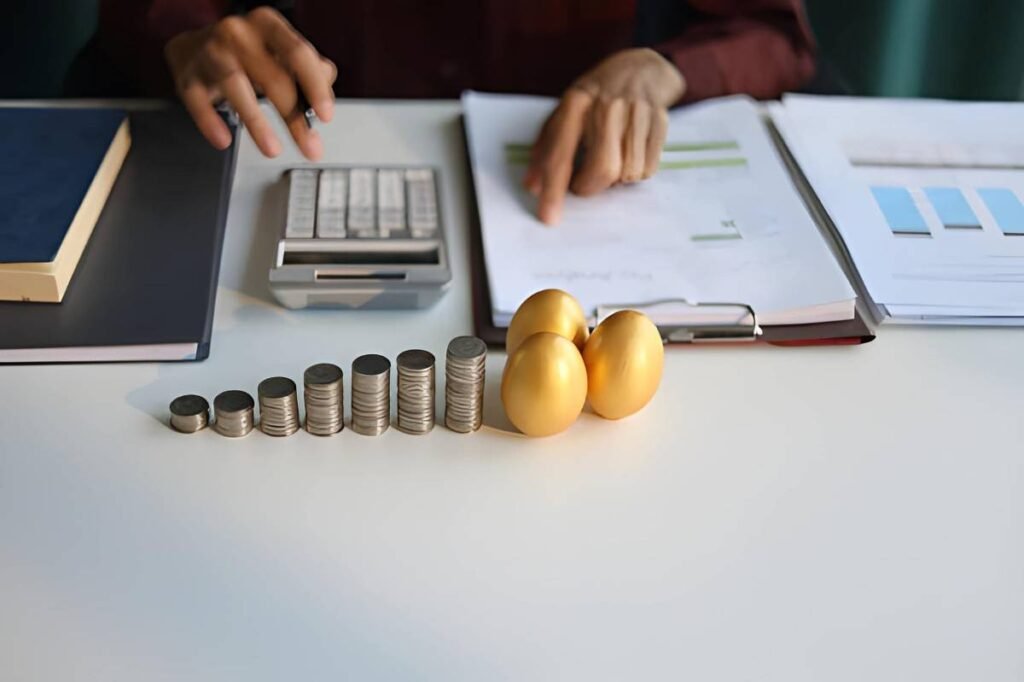
I have guided investors through every type of market environment, and few strategies are as simple in concept yet as difficult in execution as the pure buy-and-hold approach. At its core, buy-and-hold involves carefully selecting stocks or other assets and holding them for a very long time, often decades, regardless of short-term market fluctuations. This is not a passive strategy; it is an active commitment to a philosophy that prioritizes the relentless power of compounding and the long-term growth of the economy over the noise of daily price movements. It is a strategy that requires immense psychological fortitude, a carefully constructed portfolio, and a fundamental belief that time in the market is infinitely more important than timing the market.
The Foundational Principle: Compounding is the Engine
The entire thesis of buy-and-hold rests on the mathematical certainty of compounding. Compounding occurs when the earnings generated by an investment themselves generate their own earnings. Over time, this creates exponential growth.
The formula for compound growth is:
A = P \times (1 + r)^tWhere:
- A = the future value of the investment
- P = the principal investment amount
- r = the annual rate of return
- t = the number of years the money is invested
The variable with the most profound impact is t, time. A longer time horizon allows the compounding effect to become overwhelming. A buy-and-hold investor seeks to maximize t by never selling, allowing their returns to generate more returns. This is why the strategy is so powerful over 20, 30, or 40-year periods.
The Psychological Hurdle: Volatility is the Price of Admission
The greatest challenge to the buy-and-hold strategy is not intellectual; it is emotional. Financial markets are volatile. A portfolio will experience drawdowns of 10%, 20%, or even 50%. During these periods, the emotional urge to “do something”—typically to sell and stop the pain—is overwhelming.
The successful buy-and-hold investor understands that this volatility is not risk but opportunity. It is the necessary price paid for the higher long-term returns that equities provide. They recognize that:
- Market declines are normal. They have happened historically and will happen again.
- Attempting to avoid declines often means missing recoveries. The best days in the market are often clustered closely around the worst days. Missing just a few of these best days can drastically reduce long-term returns.
- The strategy requires ignoring forecasts. It is impossible to consistently predict market movements. The buy-and-hold investor accepts this uncertainty and remains invested through it all.
The Execution: How to Implement a True Buy-and-Hold Strategy
This is not about buying any stock and forgetting it. It requires a deliberate process.
- Careful Selection (The “Buy”): The foundation is built on quality. This typically means:
- Low-Cost, Broad Market Index Funds: For most investors, the most effective buy-and-hold strategy is to purchase funds like the Vanguard S&P 500 ETF (VOO) or the Vanguard Total Stock Market ETF (VTI). This provides instant diversification and captures the overall growth of the economy.
- Individual Stocks: If selecting individual companies, the focus must be on businesses with durable competitive advantages (“moats”), strong balance sheets, competent management, and a long runway for growth. The goal is to buy companies you are confident will still be thriving in 20 years.
- Automation and Reinvestment: The “hold” part is reinforced by behavior.
- Dollar-Cost Averaging: Investing a fixed amount of money at regular intervals (e.g., monthly) regardless of price. This ensures you buy more shares when prices are low and fewer when they are high, smoothing your average cost basis.
- Dividend Reinvestment (DRIP): Automatically using all dividend payments to purchase more shares of the stock or fund. This is a powerful mechanism that forces compounding.
- The Only Reasons to Sell: A pure buy-and-hold strategy has very few valid reasons for sale:
- A Permanent Impairment of the Thesis: The company’s competitive advantage has been permanently broken (e.g., technological disruption, gross mismanagement).
- A Need for the Capital: The money is required for a life event (retirement, purchase of a home).
- Rebalancing: To maintain a target asset allocation, you may need to trim a position that has become too large a percentage of your portfolio.
The Historical Justification: Time Heals All Volatility
The historical data supports this strategy unequivocally. While any single year can be negative, the probability of a positive return for a broadly diversified stock portfolio increases dramatically over longer holding periods. For instance, over every 20-year rolling period in U.S. history, the stock market has produced a positive return. This does not guarantee future results, but it provides a powerful historical precedent.
The Modern Context: A Defense Against Behavioral Errors
In today’s world of constant financial news and zero-commission trading, the temptation to act is greater than ever. The buy-and-hold strategy is a defensive shield against these behavioral pitfalls. It is a pre-commitment to a plan that removes emotion from the equation. By deciding in advance to hold for decades, an investor inoculates themselves against the fear and greed that destroy portfolio value.
The buy-and-hold strategy is a testament to the power of patience and discipline. It is the recognition that wealth is not built through frantic buying and selling but through the quiet, relentless accumulation of returns over a lifetime. It is the understanding that the greatest asset an investor has is not their capital, but their time. By marrying a long time horizon with a diversified portfolio of high-quality assets, an investor positions themselves to not just survive market cycles, but to thrive because of them.



