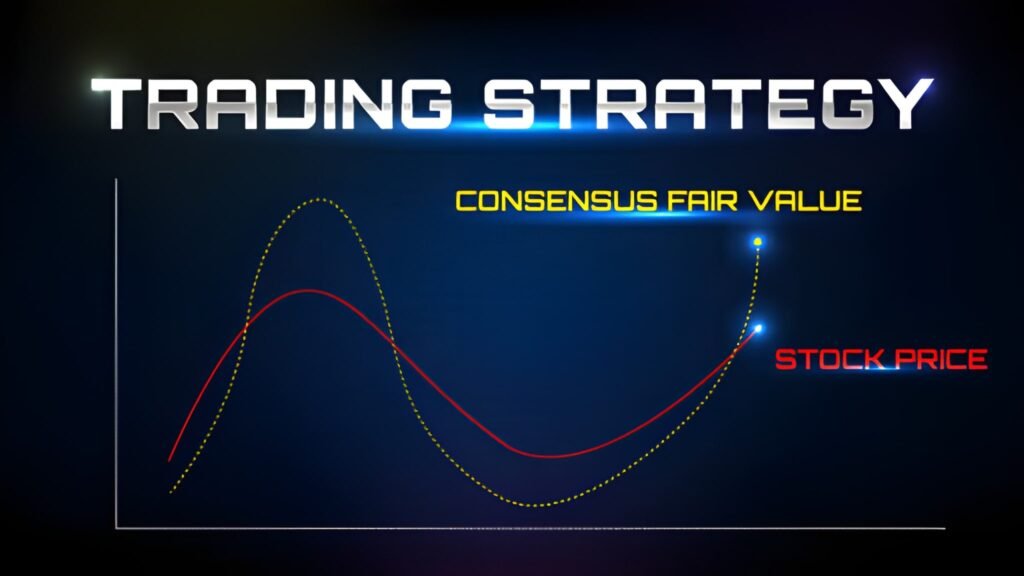
Automated trading strategies are rule-based, algorithmic approaches to buying and selling financial instruments without manual intervention. These strategies leverage historical data, statistical models, technical indicators, and sometimes machine learning to systematically identify trading opportunities and execute orders. They are widely used across stocks, forex, futures, ETFs, and cryptocurrencies, allowing traders to operate with precision, speed, and discipline. This article explores the key types, design principles, advantages, and risks of automated trading strategies.
What Are Automated Trading Strategies?
An automated trading strategy is a predefined set of rules encoded into software, enabling computers to analyze market conditions, generate trading signals, and execute trades automatically. Strategies can range from simple rule-based systems to complex statistical or AI-driven approaches. Key characteristics include:
- Systematic: Trades follow strict rules rather than human discretion.
- Data-Driven: Decisions are based on historical and real-time market data.
- Scalable: Multiple markets and instruments can be monitored simultaneously.
- Consistent: Eliminates emotional and psychological bias in trading decisions.
Core Types of Automated Trading Strategies
1. Trend-Following Strategies
Trend-following strategies aim to capture sustained market movements. They are based on the premise that an asset trending in a certain direction is likely to continue moving in that direction until a reversal occurs.
- Indicators Used: Moving averages (SMA, EMA), MACD, ADX.
- Example Signal:
- Suitable for liquid, high-volume markets.
- May generate false signals during sideways or choppy markets.
2. Mean-Reversion Strategies
Mean-reversion strategies assume that asset prices will revert to a historical average or equilibrium level after temporary deviations.
- Indicators Used: Bollinger Bands, RSI, Z-scores.
- Signal Example: Buy when the asset price falls below the lower Bollinger Band and sell when it rises above the upper band.
- Effective in range-bound or low-volatility markets.
3. Statistical Arbitrage
Statistical arbitrage (stat arb) involves simultaneously trading correlated assets to profit from temporary mispricings while remaining market-neutral.
- Techniques: Pairs trading, cointegration analysis, Z-score thresholds.
- Entry/Exit:
Spread_t = P_{Asset1} - \beta \cdot P_{Asset2}, \quad Z_t = \frac{Spread_t - \mu_{Spread}}{\sigma_{Spread}}
Signal_t = \begin{cases} Buy & Z_t < -k \ Sell & Z_t > k \ Hold & \text{otherwise} \end{cases}- Reduces directional market risk.
- Requires monitoring correlation stability over time.
4. Breakout Strategies
Breakout strategies aim to capture strong directional moves after prices breach support or resistance levels.
- Indicators: Pivot points, price channels, ATR (Average True Range).
- Mechanism: Enter long trades on upside breakouts, short trades on downside breakouts.
- Useful for volatile markets or event-driven opportunities.
5. Scalping Strategies
Scalping strategies seek small, frequent profits from minor price fluctuations.
- Execution is rapid, often requiring low-latency order placement.
- Works best in highly liquid markets with tight spreads.
- Risk management is crucial due to high trade frequency.
6. Momentum Strategies
Momentum strategies identify assets moving strongly in one direction and ride the trend until signs of reversal.
- Indicators: Rate of change (ROC), Relative Strength Index (RSI), Moving Average Convergence Divergence (MACD).
- Entry signals occur when momentum crosses predefined thresholds.
- Exit signals trigger when momentum weakens or reverses.
7. Algorithmic Options Strategies
Automated strategies can also apply to options trading, including:
- Delta hedging to maintain market neutrality.
- Volatility arbitrage exploiting differences between implied and realized volatility.
- Automated execution of spreads, iron condors, and straddles.
Key Components of Automated Trading Strategy Design
- Signal Generation: Define precise rules for when to enter or exit trades.
- Execution Logic: Specify order types, routing, and timing.
- Risk Management: Incorporate stop-loss, take-profit, position sizing, and exposure limits.
- Backtesting and Optimization: Evaluate strategy on historical data to measure profitability, drawdowns, and robustness.
- Monitoring and Adaptation: Continuously track performance and adjust strategies to changing market conditions.
Example of position sizing formula:
PositionSize = \frac{AccountBalance \cdot RiskPerTrade}{StopLossDistance}Advantages of Automated Trading Strategies
- Speed and Efficiency: Execute trades faster than manual methods.
- Emotion-Free Trading: Eliminates fear, greed, and hesitation.
- Scalability: Monitor multiple markets and instruments simultaneously.
- Consistency: Apply the same rules rigorously across all trades.
- Backtesting Capability: Validate strategies using historical data before live deployment.
Risks and Challenges
- Market Risk: Unexpected events can invalidate strategy assumptions.
- Execution Risk: Slippage, latency, and connectivity issues can affect outcomes.
- Overfitting: Over-optimized strategies may perform poorly in live conditions.
- Regulatory Risk: Strategies must comply with exchange and jurisdiction rules.
- Technology Risk: Software bugs, server downtime, or API failures can cause losses.
Best Practices
- Start Small: Begin with limited capital or paper trading to validate strategy.
- Use Robust Backtesting: Test across different market conditions and timeframes.
- Integrate Risk Controls: Always define stop-loss, take-profit, and exposure limits.
- Monitor Performance: Regularly review metrics to detect anomalies or underperformance.
- Iterative Optimization: Refine strategies gradually to adapt to changing market dynamics.
Python snippet for a simple moving average crossover strategy:
import yfinance as yf
import pandas as pd

data = yf.download('SPY', period='3mo', interval='15m')
data['EMA_short'] = data['Close'].ewm(span=10).mean()
data['EMA_long'] = data['Close'].ewm(span=50).mean()
data['Signal'] = 0
data.loc[data['EMA_short'] > data['EMA_long'], 'Signal'] = 1
data.loc[data['EMA_short'] < data['EMA_long'], 'Signal'] = -1
Conclusion
Automated trading strategies enable systematic, disciplined, and data-driven trading. Common approaches include trend-following, mean-reversion, statistical arbitrage, breakout, scalping, momentum, and options-based strategies.
Success in automated trading depends on:
- Rigorous strategy design and backtesting
- Robust execution systems
- Comprehensive risk management
- Continuous monitoring and adaptation
By combining these elements, traders can capitalize on market opportunities efficiently while minimizing emotional and operational risks, making automated strategies an essential tool in modern financial markets.