
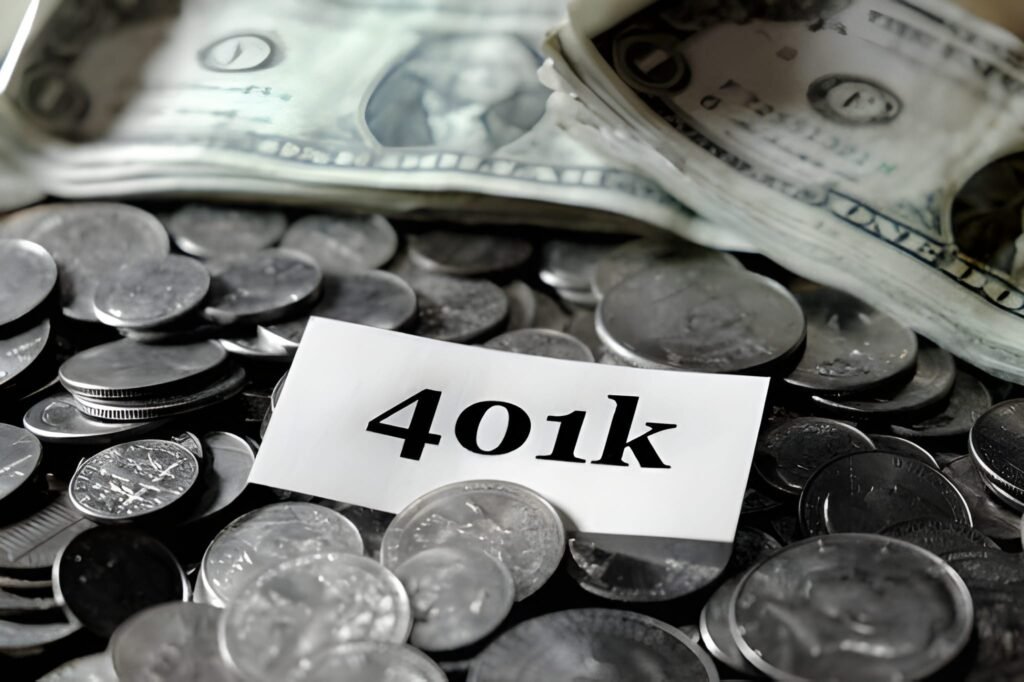
In my career analyzing corporate retirement benefits, I have seen every variation of the 401(k) plan. Some are bare-bones, offering little more than a basic savings vehicle. Others are robust ecosystems designed to empower employees to build genuine wealth. From my examination, the BMO Harris Bank retirement plan, offered to its employees, falls into the latter category. It is a classic example of a large, established financial institution leveraging its expertise to provide a competitive benefits package. However, a powerful plan is only as good as the employee’s understanding of it. My purpose here is to dissect the typical structure of such a plan, moving beyond the brochure to give you a strategic framework for optimization. This is not just about saving for retirement; it is about actively engineering your financial future with the tools your employer provides.
Table of Contents
The Core Structure: A 401(k) Plan with a Company Match
For most employees at BMO Harris Bank, the primary retirement savings vehicle is a 401(k) plan. This is a defined contribution plan, meaning the ultimate value of your retirement benefit is not a guaranteed pension amount but is defined by the contributions made and the investment performance of those contributions over time. The responsibility—and the opportunity—lies primarily with you.
The mechanics are powerful in their simplicity. You elect to defer a portion of your pre-tax salary into the plan. This action provides an immediate benefit: it reduces your current taxable income. For example, if you earn a $90,000 salary and contribute $10,000 to your 401(k), your taxable income for the year drops to $80,000. The funds then grow tax-deferred within the plan. You will only pay ordinary income tax on the money when you withdraw it in retirement, presumably at a lower tax bracket.
The most critical component of this plan is the employer match. This is free money added directly to your account by BMO Harris, contingent on you making your own contributions. While the exact formula can vary and should be confirmed in your plan’s Summary Plan Description (SPD), a common structure in the banking industry is a dollar-for-dollar match on a certain percentage of your salary.
Let’s illustrate with a calculation. Assume a common match formula is “100% on the first 5% of salary you contribute.”
- Your annual salary: $90,000
- Your contribution (5%): 0.05 \times \$90,000 = \$4,500
- BMO Harris match (100% of your 5%): 1.00 \times \$4,500 = \$4,500
- Total annual contribution: \$4,500 + \$4,500 = \$9,000
In this scenario, by contributing $4,500 of your own money, you receive a total of $9,000 in your account—an immediate 100% return on your investment. My first and most non-negotiable piece of advice is to contribute at least enough to capture the full employer match. Failing to do so is effectively declining a portion of your compensation.
Investment Menu: Curated Options for a Diversified Portfolio
Once your money is in the plan, your next task is to invest it. BMO Harris, likely working with a major plan administrator like Fidelity, Vanguard, or Principal, will provide a curated menu of investment options. This menu is designed to offer diversification and cater to various risk tolerances. You will typically find:
- Target-Date Funds (TDFs): These are often the default investment option. You simply choose a fund with a date closest to your expected retirement year (e.g., BMO Harris 2055 Fund). The fund’s manager automatically handles the asset allocation, shifting from growth-oriented stocks to more income-oriented bonds as the target date approaches. For investors who prefer a hands-off, professionally managed approach, TDFs are an excellent and rational choice.
- Individual Mutual Funds and ETFs: The plan will offer a selection of funds allowing you to build a custom portfolio. This typically includes:
- U.S. Equity Funds: Large-cap, mid-cap, and small-cap stock funds.
- International Equity Funds: Funds focused on developed and emerging markets outside the U.S.
- Bond Funds: Options ranging from total U.S. bond market funds to inflation-protected securities (TIPS).
- Stable Value Fund: A capital preservation option that aims to provide a steady, low return with minimal risk, often backed by insurance contracts.
- Company Stock: Some plans offer the option to invest in Bank of Montreal (BMO) stock. I advise extreme caution here. While it can feel rewarding to own a piece of your company, it concentrates your risk. Your human capital (your job and income) is already tied to BMO’s success. Overloading your retirement portfolio with the same stock is a high-risk strategy. I generally recommend limiting company stock to no more than 5-10% of your total portfolio.
Your asset allocation—the percentage of your portfolio in stocks versus bonds—should be a function of your time horizon and risk tolerance. A young employee with 30 years until retirement can rationally have a portfolio weighted 90% or more in equities for growth. Someone within a decade of retirement should have a more balanced mix, perhaps 60% equities and 40% bonds, to better preserve capital.
The Roth 401(k) Option: A Tax-Diversification Strategy
Many modern 401(k) plans, including likely the one at BMO Harris, offer a powerful choice: the Roth 401(k) option. This is distinct from the traditional pre-tax contribution.
- Traditional 401(k): You contribute pre-tax dollars, reducing your taxable income now. You pay ordinary income tax on all withdrawals in retirement.
- Roth 401(k): You contribute after-tax dollars—you get no up-front tax break. However, the money grows completely tax-free, and all qualified withdrawals in retirement are 100% tax-free.
The decision between the two hinges on a prediction: Do you believe your income tax rate is higher now, or will it be higher in retirement? This is complex, but some guidelines exist. If you are early in your career at BMO Harris and in a lower tax bracket, the Roth option is incredibly powerful. You lock in today’s low tax rate and never pay taxes on that money or its growth again. If you are a higher-earning, mid-career professional in your peak earning years, the immediate tax break of the traditional 401(k) may be more advantageous.
A sophisticated strategy is to diversify your future tax liability by contributing to both. For example, you might direct enough to the traditional 401(k) to get the full match and then put any additional savings into the Roth option. This gives you a pool of tax-free money to draw from in retirement, allowing you to manage your taxable income strategically each year.
Vesting: Earning Your Employer’s Contributions
A vital concept to understand is vesting. You are always 100% vested in your own salary deferrals—that money is yours immediately. However, the employer match portion is often subject to a vesting schedule. This means you must remain with the company for a certain number of years before you fully own those matched funds.
A common structure is “cliff” or “graded” vesting. For instance:
| Years of Service | Vested Percentage |
|---|---|
| Less than 2 | 0% |
| 2 | 20% |
| 3 | 40% |
| 4 | 60% |
| 5 | 80% |
| 6 | 100% |
You must check your plan’s SPD to understand BMO Harris’s specific schedule. This has real financial implications if you consider leaving the bank before retirement. If you are 60% vested and you leave, you forfeit 40% of the employer contributions made on your behalf.
Beyond the 401(k): The IRA Complement and the Mega Backdoor Roth
Your BMO Harris 401(k) is a powerful tool, but it should not be your only one. I always recommend complementing it with an Individual Retirement Account (IRA). The IRS sets separate annual contribution limits for 401(k)s and IRAs. For 2024, the 401(k) limit is $23,000 ($30,500 for those 50+), while the IRA limit is $7,000 ($8,000 for those 50+).
Contributing to both allows for greater diversification. An IRA, whether Traditional or Roth, gives you access to a virtually unlimited universe of investments beyond the plan’s curated menu.
For high earners seeking to save even more, it is critical to inquire if the BMO Harris 401(k) plan allows for after-tax (non-Roth) contributions and, more importantly, in-service conversions or in-service distributions of those after-tax funds. This is the mechanics behind the “Mega Backdoor Roth” strategy.
Here is how it could work if your plan allows it:
- You contribute the annual maximum to your pre-tax 401(k) ($23,000 in 2024).
- You then make additional after-tax contributions to your 401(k) up to the overall plan limit (which is $69,000 for 2024, including employer contributions).
- You immediately convert these after-tax contributions to your Roth 401(k) or roll them over to an external Roth IRA.
- The converted funds then grow tax-free, and future qualified withdrawals are tax-free.
This is a complex strategy with specific rules, but for those who can utilize it, it is a phenomenally powerful way to build tax-free wealth. Your first step is to contact your plan administrator or review your SPD to see if these features are enabled.
The Endgame: Withdrawal Strategies and Rollovers
As you approach retirement, your strategy must shift from accumulation to distribution. Upon leaving BMO Harris or retiring, you have several options for your 401(k):
- Leave it in the Plan: If your balance is above a certain threshold (often $5,000), you can usually leave the money in the old employer’s plan.
- Rollover to an IRA: This is often the most flexible choice. You can initiate a direct trustee-to-trustee rollover of your 401(k) assets into a Rollover IRA at a brokerage of your choice. This avoids taxes and penalties and opens your entire investment universe.
- Cash Out: This is, with rare exception, a catastrophic financial decision. The entire distribution becomes taxable income, likely pushing you into a higher tax bracket, and if you are under age 59½, you will incur a 10% early withdrawal penalty.
Remember the rule of Required Minimum Distributions (RMDs). For traditional 401(k)s and IRAs, you must begin taking withdrawals annually after you reach age 73 (as of 2023). Roth IRAs have no RMDs during the owner’s lifetime.
The BMO Harris retirement plan provides a formidable foundation for building wealth. Your mandate is to move from being a passive participant to an active architect. Understand your match, choose your investments wisely, consider tax diversification through Roth options, and plan for the long term. By engaging strategically with every component of this plan, you transform it from a simple benefit into the central pillar of your financial independence.



