The Institutional Standard: Evaluating the Best Technical Trading Software
A multi-dimensional analysis of the world’s leading market analysis platforms.
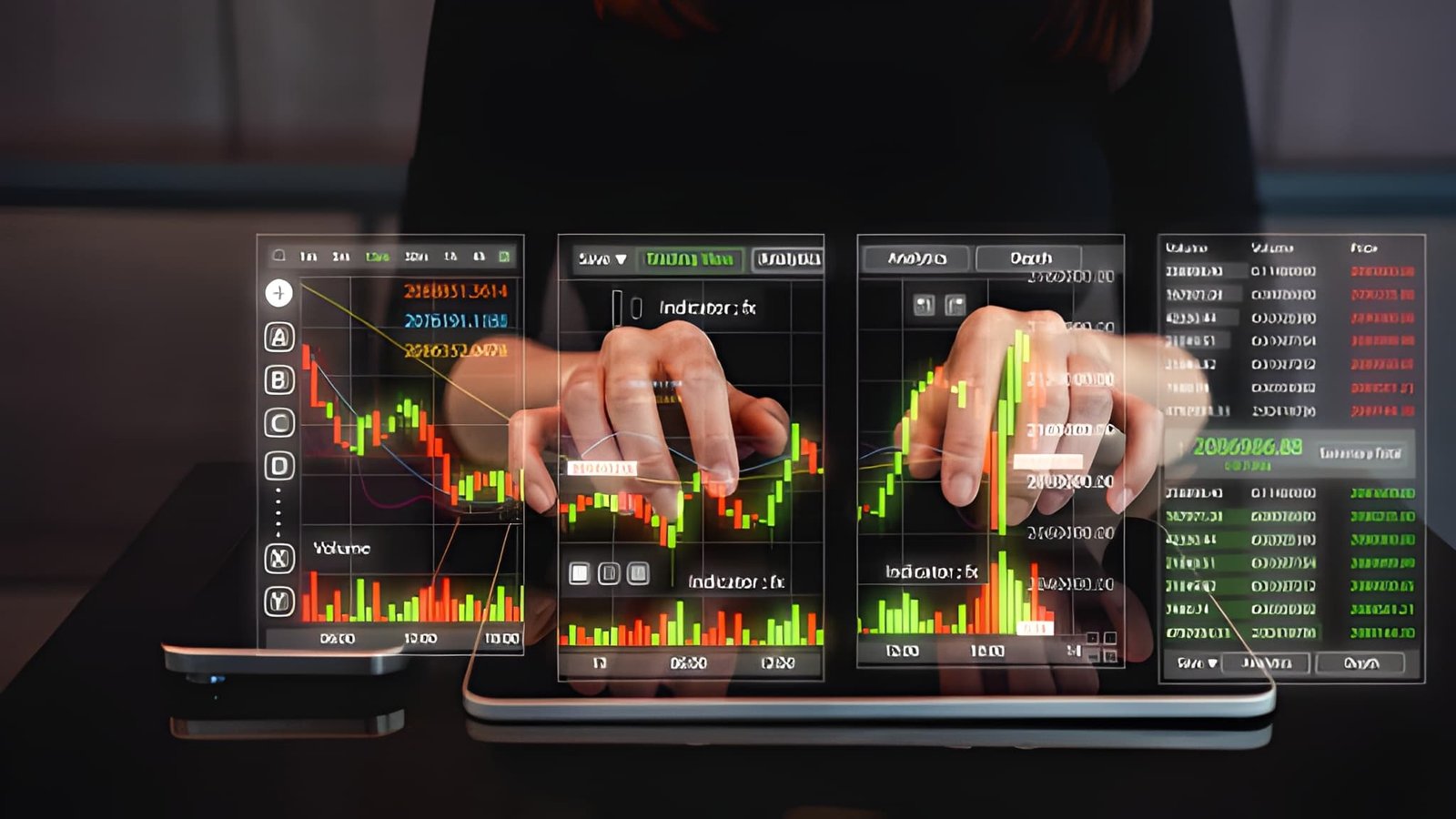
In the current financial environment, your choice of technical trading software serves as the central nervous system of your entire investment operation. The days of simple line charts have been replaced by sophisticated data visualization tools that process market microstructure, volume delta, and algorithmic order flow in real-time. For the professional trader, "best" is not a static superlative; it is a variable that depends entirely on your specific market niche, the frequency of your trades, and the complexity of your risk management models.
TradingView: The Universal Web Solution
TradingView has revolutionized the retail trading world by providing an incredibly powerful charting engine that runs entirely in a web browser. It has effectively eliminated the need for heavy desktop installations for a large portion of the trading community. Its greatest strength lies in its social integration and the "Pine Script" programming language, which allows users to build and share thousands of custom indicators.
For the technical analyst, TradingView offers a massive array of drawing tools, from Gann fans to complex Fibonacci spirals. Because the data is synced across the cloud, a trader can mark up a chart on a desktop at home and view the exact same analysis on a mobile device while on the move. However, for high-frequency day traders, the browser-based nature can sometimes introduce subtle execution delays compared to dedicated desktop environments.
Sierra Chart: The Performance Benchmark
If TradingView is the sleek, modern interface for the masses, Sierra Chart is the high-performance industrial machinery used by professional futures traders. It is widely regarded as one of the most stable and efficient platforms in existence. Because it is written in highly optimized C++, it can handle massive amounts of market data with negligible CPU usage.
Sierra Chart offers direct connectivity to major futures exchanges via Teton Order Routing. This bypasses many of the traditional retail "hops" that data takes, resulting in faster fills. Furthermore, its ability to render "Number Bars" (footprints) and TPO profiles with zero lag makes it the preferred tool for those who trade via market microstructure.
The primary barrier to entry for Sierra Chart is its user interface, which resembles software from the early 2000s. It requires a significant amount of configuration. However, once mastered, it provides a level of customization that browser-based platforms simply cannot match.
NinjaTrader: Excellence in Customization
NinjaTrader stands as a middle ground between the user-friendliness of TradingView and the raw power of Sierra Chart. It is a desktop-based platform that is particularly popular in the US futures and forex markets. Its "NinjaScript" framework (built on C#) is exceptionally robust, making it a favorite for traders who wish to automate their technical strategies.
One of its standout features is the Market Analyzer, which allows traders to scan hundreds of instruments in real-time based on specific technical criteria. If you are looking for a currency pair that has a 14-period RSI below 30 on a 4-hour timeframe while simultaneously touching a 200-period moving average, NinjaTrader can alert you the second those conditions are met across its entire database.
The Order Flow Specialists: Bookmap and Jigsaw
For traders who have moved beyond standard technical indicators and into the realm of the Limit Order Book (LOB), specialized visualization tools are required. These platforms do not replace your primary charting software; they augment it by providing a high-definition view of market liquidity.
| Platform | Primary Strength | Ideal For |
|---|---|---|
| Bookmap | Heatmap visualization of the Order Book | Scalpers identifying spoofing and icebergs. |
| Jigsaw Daytrader | Tape reading and DOM (Depth of Market) | Traders focusing on bid/ask exhaustion. |
| MotiveWave | Elliott Wave and Harmonic patterns | Swing traders using complex geometry. |
| QuantConnect | Cloud-based algorithmic backtesting | Systematic and quantitative researchers. |
Retail-Heavy Ecosystems: Thinkorswim and MetaTrader
MetaTrader (MT4/MT5) remains the undisputed king of the retail forex world. Its success is driven by its accessibility and the fact that almost every broker on the planet supports it. While its native charting tools are somewhat basic, the sheer volume of free and paid "EAs" (Expert Advisors) makes it a powerful choice for those who want to use pre-built technical systems.
In the equities world, TD Ameritrade’s (now Schwab's) Thinkorswim is the gold standard for retail technical analysis. Its "thinkScript" allows for incredible chart customization, and its options volatility analysis is second to none. It provides a level of institutional-grade data to retail investors that was unheard of a decade ago.
Quantitative and Algorithmic Frameworks
For the trader who has transitioned from discretionary analysis to systematic execution, the software choice shifts toward "API-first" platforms. These environments prioritize the ability to backtest strategies against decades of tick-level data. QuantConnect and TradeStation are the leaders in this sector, allowing for the deployment of Python or C# models that execute trades automatically when technical thresholds are crossed.
Average Monthly Subscription: $150 (Platform + Data)
Average Trade Size: 2 Contracts ($25 per tick)
Potential Slippage Saved per Trade: 1 Tick ($25)
Formula:
Break-even Trades = Monthly Cost / Slippage Savings
$150 / $25 = 6 Trades
Expert Insight: If professional software saves you just one tick of slippage on six trades per month, the platform has paid for itself. Professional tools are a hedge against poor execution.
Decision Matrix: Choosing Your Stack
The ultimate technical trading software stack is rarely a single platform. Most professionals use a tiered approach:
- The Analysis Layer: A platform like TradingView for broad macro and multi-timeframe analysis.
- The Execution Layer: A high-performance platform like Sierra Chart or NinjaTrader for managing orders.
- The Visualization Layer: A tool like Bookmap for fine-tuning entries via the order book.
In conclusion, the best technical trading software is the one that minimizes the cognitive load between your brain and the market. Whether it is the visual elegance of TradingView or the brutal efficiency of Sierra Chart, your choice should empower your strategy, not hinder it. By matching the right tool to your specific methodology, you transition from a passive market participant to a professional operator.