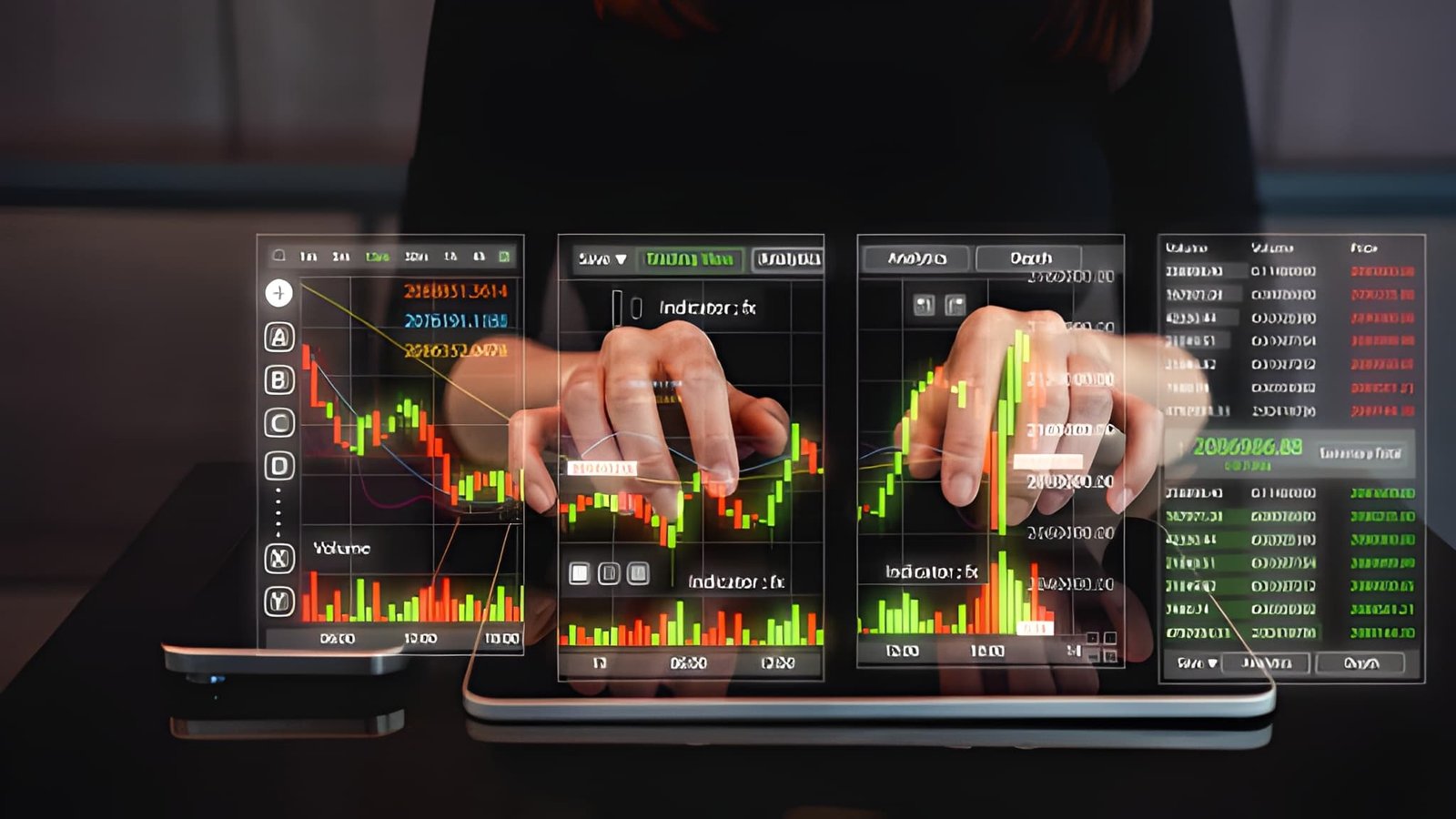
The Artisan of the Markets: Synthesizing Intuition and Technical Analysis
Beyond Formulas: Mastering the Psychological Architecture of Price
Professional market engagement exists at the razor's edge where cold, mathematical logic meets the volatile, irrational reality of human behavior. While many novice participants view technical analysis as a collection of deterministic "buy and sell" signals, the expert understands it as a diagnostic tool for reading collective sentiment. Trading is effectively an artisan craft—a blend of structural proficiency and intuitive interpretation. The chart is not merely a record of price; it is a visual history of every decision, doubt, and conviction held by market participants within a specific window of time.
Decoding the Market's Narrative Voice
Every price tick represents a localized agreement on value between two entities. When thousands of these agreements are aggregated into candlesticks, they begin to tell a coherent story. A long lower wick on a high-volume candle near a major support zone is not just a shape; it is a report of aggressive buyers stepping in to absorb every sell order. It indicates that the bearish narrative has reached a point of exhaustion and that the "smart money" finds the current price attractive for accumulation.
The art of trading involves hearing this narrative before it becomes obvious to the general public. While the retail trader waits for a specific indicator to cross, the artisan looks at the speed and magnitude of price rejection. This "Price Action" provides the most immediate, unfiltered feedback on the market's true intentions. Indicators should only serve as secondary confirmation for the story already being told by the candles.
Relies on rigid backtests and fixed parameters. Views the market as a closed system where historical patterns must repeat with mathematical certainty.
Utilizes patterns as a framework but adjusts for current context. Understands that the same technical setup can have different outcomes depending on the macro environment.
Geometric Scars of Group Psychology
Technical patterns—such as the Head and Shoulders, the Ascending Triangle, or the Double Bottom—are effectively the geometric scars of human emotion. A "Head and Shoulders" pattern, for instance, represents a three-stage failure of buying conviction. The "Left Shoulder" is the establishment of the trend; the "Head" is the final surge of euphoria; and the "Right Shoulder" is the desperate attempt of the remaining bulls to salvage the trend before it collapses. When the "Neckline" breaks, it is the visual representation of a sudden, mass transition from greed to fear.
Mastering the art of these patterns means recognizing their fractal nature. A pattern on a 5-minute chart carries the same psychological DNA as one on a Weekly chart. However, the significance of the pattern is determined by its location. A bearish pattern in a long-term bullish trend is often just a consolidation phase, while the same pattern at a multi-year high could signal a catastrophic reversal.
Market Regimes and Adaptive Strategy
One of the most complex aspects of the trading craft is identifying the current "Market Regime." Markets generally oscillate between three states: Trending, Ranging, and Shifting. A strategy that generates significant profit in a trending market will often result in "death by a thousand cuts" when the market enters a range. The artisan uses technical analysis to diagnose which regime is active before choosing their tools.
In a trending regime, the market makes higher highs and higher lows. Indicators like the Moving Average act as dynamic support. The artisan looks to "buy the dip" on any pullbacks to the mean. The primary goal is to stay in the position until the structural higher-low sequence is broken.
In a ranging regime, price bounces between horizontal boundaries. Trend-following indicators provide "false signals" here. Instead, the artisan uses oscillators like the RSI or Stochastics to identify "overbought" or "oversold" conditions at the edges of the range, betting on a return to the center.
This is the transition phase where a trend breaks but a range has not yet formed. Volatility spikes and liquidity often thins out. For the artisan, this is a "No-Trade Zone" where capital preservation becomes the absolute priority until a new regime is established.
Order Flow: The Hidden Engine
While technical analysis focuses on price history, Order Flow focuses on current intent. In the professional arena, price action is confirmed by volume and the "limit order book." An artisan trader understands that a price move on low volume is "hollow" and likely to fail, whereas a move backed by high volume indicates institutional participation. By observing the "Depth of Market" (where the large buy and sell orders are sitting), the trader can identify the real "walls" that price must overcome.
The Mathematical Frame of Art
A trader's technical skill is irrelevant if their mathematical framework is flawed. The art of trading is supported by the science of Expectancy. You must view your technical setups as a series of probabilistic events. A professional system is not one that never loses; it is one that has a positive expectancy over a sample size of 100 trades.
(Probability of Win * Average Win) - (Probability of Loss * Average Loss) = Expectancy
Example Scenario:
Win Rate: 45% (0.45)
Average Win: $800
Average Loss: $400 (2:1 Reward-to-Risk)
Calculation:
(0.45 * 800) - (0.55 * 400) = $360 - $220 = $140 per trade
Even with a win rate below 50%, the system is highly profitable. The artisan protects this math through strict stop-loss discipline.
The Artisan's Journal: Critical Reflexivity
The development of market intuition requires more than just screen time; it requires deep, critical reflection. The artisan maintains a detailed journal that records not only the entry and exit prices but the psychological state during the trade. Were you feeling anxious? Did you move your stop loss because of fear? Did you exit early because of greed?
By reviewing these entries, the trader identifies recurring cognitive biases. Over time, this reflexivity transforms mechanical analysis into intuitive mastery. You begin to recognize when a "perfect" setup is actually a trap, or when a "messy" chart is actually providing a generational opportunity. This internal calibration is the final step in the artisan's journey.
The Four Stages of Trader Evolution
The journey from novice to master follows a predictable path. Understanding where you sit on this spectrum is vital for setting realistic expectations and focusing on the right areas of development.
| Stage | Primary Focus | Dominant Emotion |
|---|---|---|
| 1. Unconscious Incompetence | Searching for the "Holy Grail" indicator. | Blind Optimism / Gambling |
| 2. Conscious Incompetence | Learning many indicators but losing money. | Frustration / Confusion |
| 3. Conscious Competence | Strict rule-following and risk management. | Calculated Calm |
| 4. Unconscious Competence | Intuitive integration of technicals and flow. | Detached Clarity |
Ultimately, the art of trading is the art of surviving. The market is designed to transfer wealth from the impatient and undisciplined to the patient and calculated. Technical analysis is your map, but your character is your compass. The artisan does not seek to "beat" the market; they seek to align themselves with its current flow. When you stop fighting the tape and start observing it with detached curiosity, the silent language of the markets finally becomes clear.
Market mastery is not a destination but a continuous state of adaptation. The artisan remains a student, constantly refining their edge and acknowledging that in the global arena of finance, humility is the ultimate risk management tool. By focusing on the process rather than the profit, the artist ensures their longevity and eventual success in the most competitive endeavor on earth.