Optimized Volume-Weighted MACD Settings for Intraday Trading
Integrating Microstructure Liquidity into Momentum Signals for Professional Execution- The Logic of Volume Weighting
- Standard vs. Aggressive Settings
- Scalping Configuration (8, 21, 5)
- Intraday Trend Framework (12, 26, 9)
- The Zero-Line Interaction
- Histogram Momentum Velocity
- Calculation: Manual Weighting Example
- The ATR and VW-MACD Risk Engine
- Volume Microstructure Anomalies
- Systematic Performance Audits
The Logic of Volume Weighting
The standard Moving Average Convergence Divergence (MACD) is an incredible tool for identifying trend changes, but it possesses a significant blind spot: it treats every price tick with equal importance regardless of the liquidity behind it. In the professional landscape, we know that a 1% price move on thin volume is far less significant than a 0.5% move backed by institutional-grade volume. The Volume-Weighted MACD (VW-MACD) corrects this by incorporating volume directly into the Exponential Moving Average (EMA) calculations.
By weighting the EMAs by volume, the indicator becomes more reactive to high-conviction moves and more resistant to low-volume "noise" or "fakeouts." For a day trader, this means fewer false signals during the "lunch hour" lull and clearer confirmation during the high-volatility periods of the market open and close. You aren't just looking at the trajectory of the price; you are looking at the trajectory of capital.
Standard vs. Aggressive Settings
There is no universal "best" setting for the VW-MACD; the optimal configuration depends entirely on your Trading Velocity. A scalper looking to capture 10-tick moves on a 1-minute chart requires a much more sensitive setup than a swing trader looking to hold for multiple days.
When we adjust the settings, we are essentially balancing two variables: Responsiveness and Reliability. Decreasing the periods makes the indicator faster but increases the likelihood of whipsaws. Increasing the periods provides more reliable trend confirmation but may cause you to enter a trade too late, missing the initial "meat" of the move.
8, 21, 5 Configuration
Designed for high-frequency scalping. It catches momentum shifts almost immediately after a volume surge but requires a strict risk engine to manage frequent signal reversals.
12, 26, 9 Configuration
The institutional standard. This setup filters out the majority of noise while maintaining enough speed to capture the core of intraday trends on 5-minute and 15-minute timeframes.
Scalping Configuration (8, 21, 5)
For traders operating on the 1-minute or 2,000-tick charts, the 8, 21, 5 setting is often the preferred choice. The "8" represents the fast volume-weighted EMA, the "21" the slow, and the "5" serves as the signal line. This setup is highly reactive to the initial "opening bell" volatility.
In this configuration, the VW-MACD acts as an early warning system. When you see the histogram flip from negative to positive alongside a price breakout, the volume-weighting ensures that you are only getting that signal if the breakout is being aggressively bought. If the price moves up but volume stays low, the VW-MACD will often remain flat or negative, keeping you out of a potential trap.
Intraday Trend Framework (12, 26, 9)
The 12, 26, 9 setting remains the most robust for those who trade "the meat" of the daily trend. On a 5-minute chart, this setting aligns with the natural ebb and flow of institutional accumulation and distribution phases.
Using this standard setting with volume-weighting creates a much smoother histogram than the standard MACD. It helps you identify divergence with higher accuracy. For example, if the price makes a new high but the VW-MACD makes a lower high, it signals that the buyers are exhausting their capital despite the price increase. This "Bearish Volume Divergence" is a high-probability signal for an impending reversal.
| Trading Style | Settings (F, S, Sig) | Best Timeframe | Strategy Focus |
|---|---|---|---|
| Scalping | 8, 21, 5 | 1-min / Tick | Momentum Burst / Scalps |
| Day Trading | 10, 22, 7 | 2-min / 5-min | Mean Reversion / Fades |
| Trend Following | 12, 26, 9 | 5-min / 15-min | Institutional Pulllbacks |
| Conservative | 18, 40, 12 | 15-min / 1-hour | Secular Trend Changes |
The Zero-Line Interaction
The "Zero-Line" in the VW-MACD represents the point where the fast EMA and the slow EMA are equal. For a professional trader, the zero-line is more than just a crossover point; it is a Sentiment Threshold.
If the VW-MACD is trading above zero, the short-term volume-weighted momentum is stronger than the long-term momentum. You should generally avoid taking short positions in this regime. The highest probability trades often occur when the VW-MACD pulls back toward the zero-line but fails to cross it, then turns back in the original direction. This "Zero-Line Reject" signals that the institutional trend is continuing after a brief period of profit-taking.
Histogram Momentum Velocity
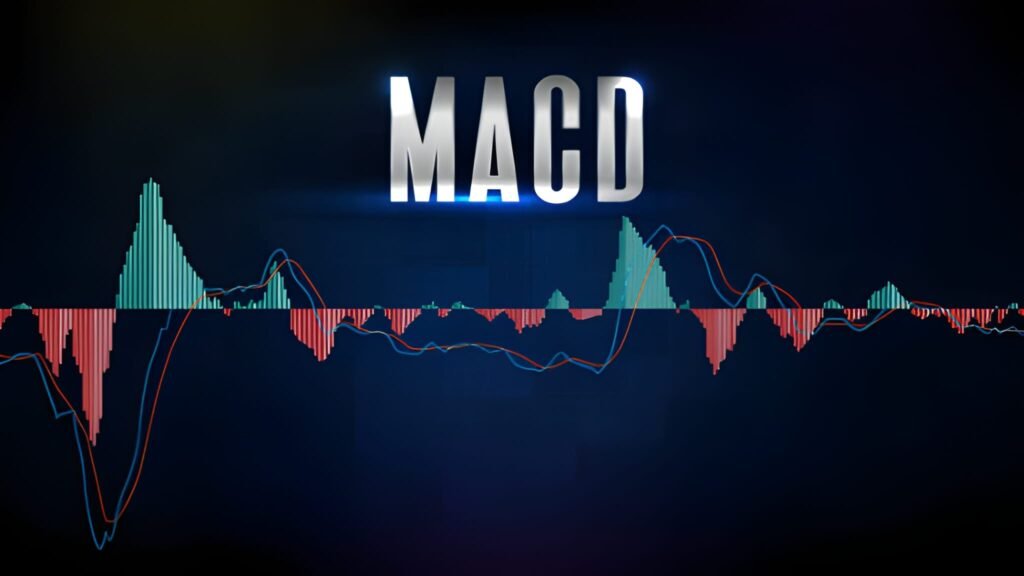
The histogram is the difference between the VW-MACD line and its Signal line. While most traders wait for a crossover of the lines, the Slope of the Histogram provides a much faster signal.
If the histogram is below zero but the bars are getting shorter (moving toward zero), it indicates that the selling pressure is decelerating. This is your cue to start looking for long entries before the actual line crossover occurs. By the time the lines cross, the first 20% to 30% of the move is often already over. The histogram allows you to front-run the institutional shift in conviction.
Calculation: Manual Weighting Example
To truly master the indicator, you must understand how volume alters the math. Let us compare two 5-minute bars in a simplified example.
Bar 1: Price 100, Volume 500
Bar 2: Price 101, Volume 1,500
Standard Average: (100 + 101) / 2 = 100.5
Volume-Weighted Calculation:
Sum (Price x Volume) / Sum (Volume)
(100 x 500 + 101 x 1500) / (500 + 1500)
(50,000 + 151,500) / 2,000 = 100.75
Impact: The VW-EMA is 0.25 higher than the standard average because it "recognized" that the move to 101 was supported by three times the volume.
The ATR and VW-MACD Risk Engine
No technical signal is worth executing without a Risk Protection Layer. For intraday trading, we integrate the Average True Range (ATR) with our VW-MACD signals.
If the VW-MACD gives a "Buy" signal (e.g., a histogram crossover), your stop-loss should be placed at a distance of 2.0 x ATR from the entry price. If the VW-MACD momentum is genuine, the price should not violate this volatility threshold. Furthermore, if the price reaches your first profit target (e.g., 1:1 reward-to-risk), you should look at the VW-MACD histogram; if it is still expanding, you might choose to "trail" the stop-loss rather than exiting the full position.
Volume Microstructure Anomalies
One of the most powerful advanced setups in VW-MACD is the Volume Impulse. This occurs when the VW-MACD line moves vertically while the price moves horizontally. This signals that massive amounts of shares are being exchanged at a specific price level without the price moving—a classic sign of Institutional Accumulation.
When this "sideways" volume surge is finally released, the resulting trend is usually violent and sustained. By monitoring the decoupling of VW-MACD and price action, you can enter a position before the breakout occurs, securing a much better entry price than those waiting for traditional chart patterns to form.
Systematic Performance Audits
Finally, remember that the "best" settings are dynamic. A setting that works during a high-volatility earning season may need to be tightened during a low-volatility summer period. Professional traders perform a performance audit every 30 days, comparing their "Expectancy" across different VW-MACD settings.
By treating your trading as a data-driven business, you ensure that your technical filters remain aligned with the current market microstructure. Success in intraday trading is not about being "right" on every trade; it is about having a disciplined system where the volume-weighted Conviction of your entries consistently outweighs the cost of your filtered exits.