

Sentiment-Driven Technical Trading: Merging Social Intelligence with Market Geometry
Mastering the convergence of Natural Language Processing (NLP) and classic technical indicators to identify institutional-grade entries.
The Evolution of Market Signals
For decades, the financial markets operated on a binary diet of fundamental and technical data. Traders analyzed balance sheets to understand value and price charts to understand timing. However, the digital transformation of the last decade has introduced a third, equally powerful pillar: Qualitative Sentiment Data. In a world where a single social media post or a breaking news headline can trigger billion-dollar shifts in liquidity, the "pure technician" who ignores the behavioral context of the crowd is operating with a significant blind spot.
The transition from manual chart reading to Algorithmic Sentiment Analysis represents the current frontier of quantitative finance. Institutional desks no longer wait for a journalist to write a report; they utilize Natural Language Processing (NLP) to scrape millions of data points across social platforms, news wires, and regulatory filings in milliseconds. This guide explores how to bridge the gap between these high-speed social signals and the enduring geometry of technical indicators.
The Professional Reality
Sentiment is not a replacement for technical analysis; it is a velocity multiplier. Technical indicators show you where the support and resistance levels lie, but sentiment data tells you how much conviction the market has to break through those levels. The most profitable setups occur when the "Technical Blueprint" and the "Sentiment Narrative" converge.
News Analytics and Sentiment Drift
While social data is reactive, News Analytics is often predictive of institutional flow. Professional news scanners utilize machine learning to assign a "Sentiment Score" to every headline. This score ranges from -1.0 (extremely bearish) to +1.0 (extremely bullish). The key discovery in modern trading is the Post-News Sentiment Drift. Research shows that after a major positive news event, the stock often continues to "drift" in the direction of the news for several days as institutional portfolios rebalance.
Integrating Sentiment with Technicals
The true mastery of this discipline lies in Convergence. An indicator signal is merely a mathematical suggestion; a sentiment signal is a behavioral suggestion. When both align, you have identified a high-probability market regime. There are three primary ways to integrate these data streams into a unified tactical approach.
1. Sentiment as a Trend Filter
If your technical indicators show a "Golden Cross" (50-day crossing above the 200-day SMA), you check the 30-day sentiment trend. If sentiment is rising alongside the moving averages, you have a high-conviction trend. If sentiment is falling while price is rising, you are likely looking at a "Bull Trap" or an exhaustion move driven by low-conviction retail buying. In this scenario, the professional trader ignores the long signal or tightens their stop-losses aggressively.
2. Volume-Weighted Sentiment
A sentiment spike on low relative volume is often noise. However, when a sentiment breakout occurs on 300% of the average volume, it indicates that institutional conviction has shifted. Modern trading platforms allow you to overlay sentiment data as a histogram on the volume bars. This allows the trader to see if the "big money" buying is fueled by positive news sentiment or simple technical mean reversion.
Just as technicians look for price-RSI divergence, we look for price-sentiment divergence. If a stock hits a new all-time high but the social and news sentiment score has dropped significantly from the previous high, the trend is "hollow." This indicates that the narrative supporting the price has eroded, and the stock is vulnerable to a sharp correction once the technical support breaks.
The Sentiment-Relative Strength Index
One of the most innovative indicators in modern trading is the Sentiment-Adjusted RSI. Traditional RSI measures price magnitude over time. The sentiment-adjusted version modifies the RSI reading based on the social/news sentiment polarity. For example, if the RSI is at 80 (overbought) but the news sentiment is at an extreme +0.9 (historically high), the indicator is "over-extended" and due for a violent mean reversion.
Conversely, if the RSI is at 20 (oversold) but news sentiment has begun to trend upward from a negative extreme, it signals the beginning of an "Accumulation Phase" by institutional players. The trader uses this to front-run the eventual technical breakout above the 50-day moving average. By identifying the sentiment shift before the price shift, the trader captures a larger portion of the subsequent markup phase.
Modeling Information Velocity
The speed at which information travels—the Information Velocity—is a critical metric for position sizing. In the age of social media, a "viral" sentiment move can move a stock 10% in an hour. Professional systems calculate the "Standard Deviation of Sentiment" to determine if the current move is an outlier. If the sentiment move is more than 2.5 standard deviations from the 20-day mean, the trader reduces position size to account for the heightened volatility risk.
Professional Sentiment Risk Model
This framework allows you to adjust your risk based on the clarity and conviction of the information flow.
- Step 1: Technical Stop. Place your stop-loss below the structural support level (e.g., the 50-day EMA).
- Step 2: Sentiment Volatility. If sentiment is erratic (standard deviation > 2.0), increase your multiplier to 1.5x. This forces a smaller position size.
- Step 3: Execution. This math ensures that during "meme-driven" or "hype-driven" rallies, your total dollar risk remains constant despite the violent fluctuations in price.
Risk Architecture in High-Speed Data
The greatest risk in combining sentiment and technicals is the "Feedback Loop." When a technical breakout occurs, social media amplifies the bullishness, which triggers more buying, which improves the chart further. This creates a parabolic move that is unsustainable. The professional risk architecture involves setting Static Profit Targets based on ATR (Average True Range) and ignoring the "sentiment noise" once the target is reached.
The Sentiment Trap
Never enter a trade based on sentiment after a parabolic move has already reached the technical price target. Sentiment is usually at its peak right before the smart money exits.
Expert Tip: Use sentiment to enter early, but use technical indicators to exit systematically.
News Falsehoods
Some news sentiment is "priced in" before the headline hits. If price drops on positive news, it indicates a "Sell the News" technical event. Trust the tape over the headline.
Expert Tip: Always verify that the price action is reacting to the news in the logical direction before entering.
The integration of news and social sentiment with traditional technical trading represents the maturation of the individual participant into a modern market operator. By deconstructing the behavioral narrative of the crowd and applying it to the geometric certainty of price charts, the trader builds a multi-dimensional edge that is resilient across all market regimes. Remember: the chart tells you where to act, but sentiment data tells you when the conviction is high enough to risk capital. In the high-velocity markets of the digital age, the convergence of intelligence and execution is the only sustainable path to capital growth.



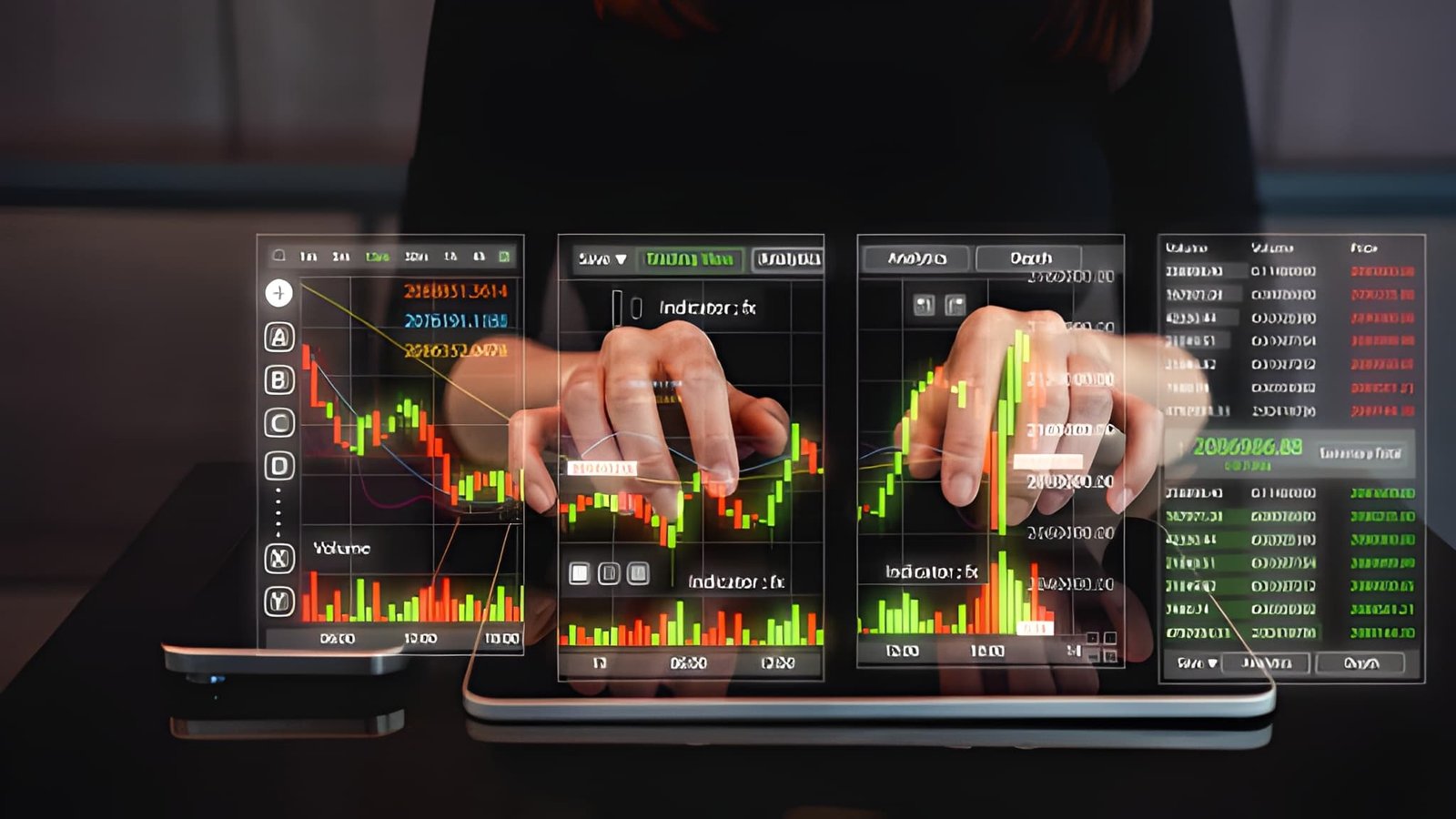
Mechanics of Social Intelligence
Social sentiment is the aggregated "mood" of the retail and institutional participants as expressed across digital platforms. Unlike news, which is theoretically objective, social data is purely subjective and emotional. This makes it a primary tool for identifying market extremes. When social sentiment reaches a state of euphoria, technical oscillators like the RSI are often at their peak, signaling a looming reversal. Conversely, extreme fear on social channels often marks the technical "capitulation" bottom.
Crowd Wisdom vs. Crowd Madness
The professional application of social data involves distinguishing between "organic" sentiment and "engineered" hype. Social sentiment apps categorize data into three primary buckets: volume of mentions, sentiment polarity (positive vs. negative), and User Influence Score. A spike in mentions from influential verified accounts carries more technical weight than a thousand bots. When an influential analyst on a social platform comments on a specific chart pattern, it often triggers a self-fulfilling prophecy as thousands of participants react simultaneously to the same technical level.