The Modern Trading Stack: Essential Technical Tools for the Professional Investor
Decoding the infrastructure required for high-precision market engagement.
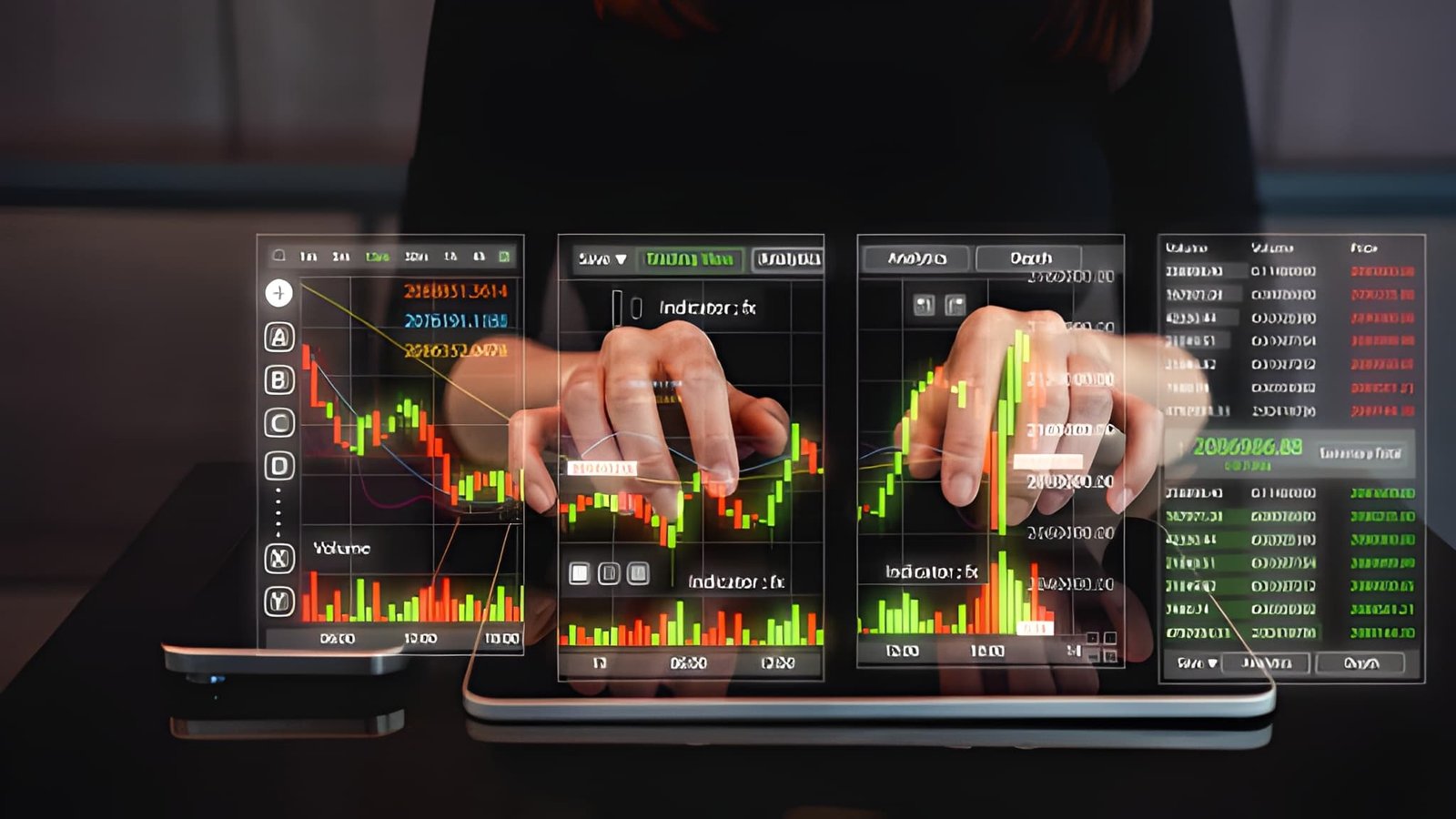
Professional trading represents a convergence of financial acumen and technological infrastructure. In an era where institutional participants utilize low-latency hardware and sophisticated algorithmic logic, retail traders must carefully curate their "stack" to maintain a competitive edge. Technical trading tools are no longer merely aesthetic overlays for price action; they serve as the primary interface through which we process market efficiency, liquidity, and sentiment.
Core Charting Platforms
The charting platform is the cockpit of your trading operation. It is where raw data is transformed into visual intelligence. Choosing a platform depends on your asset class, timeframe, and need for customization. While brokerage-native platforms have improved, third-party specialized software remains the standard for serious technical analysis.
Exceptional for community-built scripts, ease of use, and multi-device syncing. Its Pine Script language allows for rapid prototyping of indicators. Best for swing traders and global macro enthusiasts.
The institutional gold standard for performance and customization. It offers incredibly low latency and direct connectivity to futures exchanges. Preferred by high-volume day traders and order flow specialists.
For forex specialists, MetaTrader 4 and 5 remain ubiquitous due to their light footprint and massive ecosystem of automated "Expert Advisors." However, as markets evolve, the shift toward more modern interfaces that support advanced volume analysis is becoming mandatory for those operating in G7 currency pairs and major indices.
Data Infrastructure & Feeds
A charting platform is only as reliable as the data pumped into it. Most free charting services use "aggregated" or "indicative" data, which might omit thousands of micro-transactions. Professional traders often pay for dedicated data feeds to ensure they are seeing every tick as it happens on the exchange matching engine.
| Data Type | Granularity | Best For |
|---|---|---|
| Level 1 (Top of Book) | Bid/Ask + Last Price | Long-term investors, swing traders. |
| Level 2 (Market Depth) | Pending orders at various prices | Day traders identifying "walls" of liquidity. |
| Full Market Depth (MBO) | Individual order identification | Advanced scalpers and spoofing detection. |
| News Squawks | Audio-first headlines | Event-driven traders reacting to Fed/ECB news. |
Order Flow Visualization
The most significant leap in technical trading over the last decade is the democratization of order flow tools. These tools allow you to peer "inside" the price candle to see the actual distribution of buy and sell volume. This reveals whether a price breakout is driven by aggressive market participants or passive limit order exhaustion.
Footprint charts replace traditional candles with numerical clusters of volume transacted at the bid and the ask. This highlights "Imbalances"—price levels where buyers or sellers overwhelmingly dominated. Identifying a "Zero Print" or a massive imbalance at a key support level often signals an immediate reversal.
Heatmaps, such as those provided by Bookmap, visualize the history of the Limit Order Book. They show where large orders were placed, moved, or canceled. This helps traders distinguish between "spoofing" (fake orders intended to scare the market) and genuine "iceberg" orders that are absorbing current flow.
This indicator measures the running net difference between buying and selling pressure. When price is moving higher but Cumulative Delta is moving lower, it signals "Divergence," indicating that the rally is hollow and likely to fail as aggressive sellers are stepping in.
Scanning & Screening Technology
In a world of thousands of tradable instruments, finding the "right" asset at the "right" time is a significant logistical challenge. Scanners and screeners automate the search process based on your technical criteria. Rather than manually clicking through 200 charts, the software alerts you when a specific volatility or price pattern manifests.
Modern scanners use multi-factor logic. For instance, a scanner might look for a "Volatility Squeeze" (Bollinger Bands inside Keltner Channels) on the 4-hour timeframe, but only if the asset is also showing a "Relative Strength" score above 80 compared to the S&P 500. This multi-layered filtering ensures you are only presented with high-probability setups.
Risk Management & Position Sizing
Calculation errors are a primary cause of account blowouts. Using manual spreadsheets or "mental math" during high-volatility events is a recipe for disaster. Professional traders integrate risk management directly into their execution tools through position-sizing scripts.
1. Define Account Equity: $50,000
2. Set Risk Percentage: 1.5% ($750)
3. Identify Stop Loss: 22 Pips (calculated via ATR)
4. Apply Pip Value: $10 (Standard Lot)
Formula:
Risk Amount / (Stop Distance * Pip Value)
$750 / (22 * $10) = 3.41 Lots
Modern tool: One-click execution panels automatically adjust lot size as you drag your stop-loss line on the chart.
Performance Tracking & Journals
Your history is your greatest teacher. Trading journals like Edgewonk or Tradervue take your brokerage data and perform a post-mortem on your behavior. They identify "Leakage"—specific times of day, certain patterns, or even specific asset classes where you consistently lose money despite having a profitable system elsewhere.
By identifying your "Maximum Adverse Excursion" (how much a trade moves against you before it works), journaling tools help you optimize your stop-loss placement. If 90% of your winners never move more than 10 pips against you, but your stop is set at 30 pips, the tool will mathematically suggest a tighter stop to increase your reward-to-risk ratio.
Connectivity & Execution Hardware
Technical tools extend into the physical realm. "Slippage"—the difference between your requested price and the filled price—is often a function of internet latency. Professional day traders often utilize Virtual Private Servers (VPS) to host their platforms. By locating the software in a data center across the street from the exchange servers in New Jersey or London, execution speed drops from 100 milliseconds to sub-2 milliseconds.
The Psychology of User Interface
The visual design of your tools directly affects your nervous system. A cluttered, brightly colored interface can trigger "cognitive load," leading to fatigue and impulsive decisions. Professional setups often prioritize "clean" aesthetics: dark backgrounds to reduce eye strain, muted color palettes for indicators, and specific sound alerts that differentiate between high-importance and low-importance events.
As you build your technical trading stack, remember that complexity does not equal clarity. Start with a robust charting platform and a high-quality data feed. Layer on order flow or screening tools only when your basic strategy demands the extra granularity. The ultimate tool in any stack remains the human mind; the software is simply there to sharpen its focus.