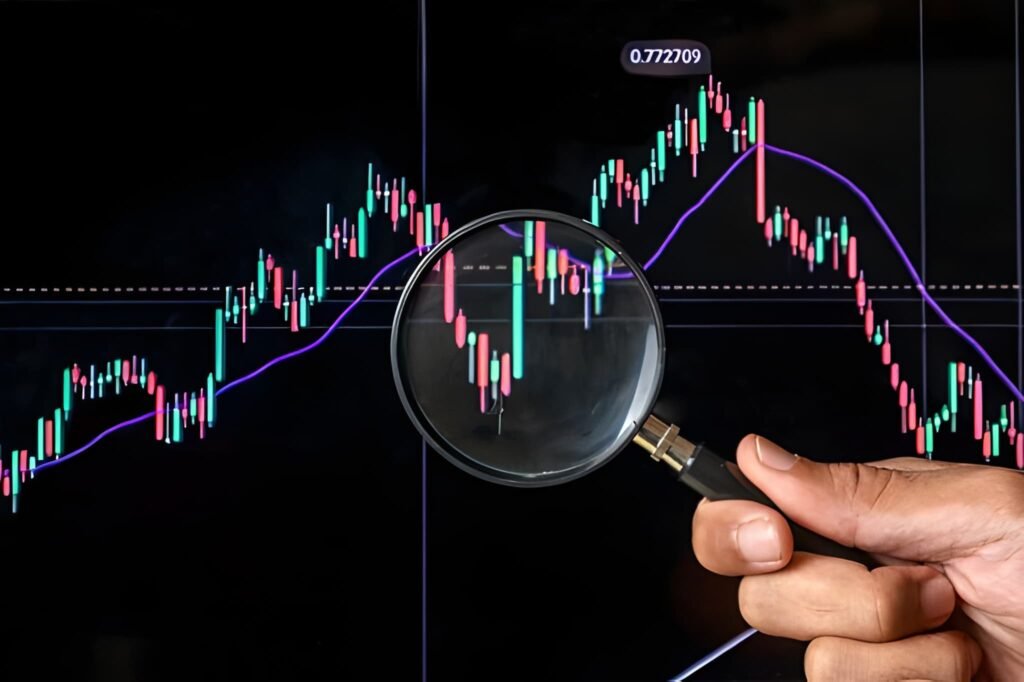
Decoding the Great Divide: Technical Trading vs. Fundamental Analysis
The debate between technical and fundamental analysis is as old as the financial markets themselves. It represents a fundamental disagreement on how wealth is generated in capital markets. On one side, we have the "Fundamentalists" who view a stock as a fractional ownership of a living, breathing business. On the other, the "Technicians" view a stock ticker as a fluctuating numerical variable governed by the immutable laws of supply and demand.
Choosing a path requires more than just picking a set of tools; it requires an alignment with a specific market worldview. Fundamental analysis asks "What is the business worth?" whereas technical analysis asks "When is the market likely to move?" While they are often presented as mutually exclusive, the most sophisticated market participants recognize that they are simply different lenses used to view the same underlying truth: the price of an asset.
The Fundamental Deep Dive: Measuring Intrinsic Value
Fundamental analysis is the study of everything from the overall economy and industry conditions to the financial strength and management of individual companies. The primary goal is to determine the Intrinsic Value of a security. This is the "true" value of the company based on its cash flow, assets, and growth potential, regardless of what the current market price might be.
A fundamentalist believes that in the short term, the market is a "voting machine," susceptible to emotion and noise. However, in the long term, the market is a "weighing machine," where the price will eventually gravitate toward the company's real value. This creates the primary opportunity for fundamental investors: buying assets when the market has incorrectly priced them below their intrinsic worth.
1. Quantitative Factors: These are the measurable financial data points. This includes revenue, net income, debt-to-equity ratios, and free cash flow. We find these in the three main financial statements: the Balance Sheet, the Income Statement, and the Cash Flow Statement.
2. Qualitative Factors: These are the less tangible but equally important aspects of a business. This includes brand recognition, the quality of the management team, proprietary technology (patents), and the competitive landscape (moats).
3. Macro-Economic Context: No company exists in a vacuum. Interest rates, inflation, GDP growth, and geopolitical stability all act as tailwinds or headwinds for the valuation of a firm.
The Mechanics of Technical Action: Sentiment and Flow
Technical analysis operates on a different set of assumptions. To a technician, the intrinsic value is irrelevant because the only price that matters is the price you can actually trade at. They believe that all known information—including earnings, management quality, and economic data—is already "baked into" the current price.
Instead of reading balance sheets, technicians read charts. They look for patterns in price and volume that repeat over time because human psychology is consistent. Greed, fear, and indecision manifest as recognizable shapes on a screen. By identifying these patterns, technical traders seek to trade the momentum of the market rather than the value of the business.
Focuses on market psychology and liquidity. Uses tools like Relative Strength Index (RSI), Moving Averages, and Fibonacci retracements to find where the crowd is likely to turn.
Focuses on business health and compounding. Uses tools like Price-to-Earnings (P/E) ratios, Dividend Yields, and Discounted Cash Flow (DCF) models to find undervalued gems.
Time Horizons and Capital Turn
The most significant practical difference between these two schools is the duration of the trade. Fundamental analysis generally requires a multi-year horizon. It takes time for a business to execute its strategy and for the market to realize its error in pricing. If you buy an undervalued company, you must be prepared to wait through months or even years of stagnation before the value is realized.
Technical trading is designed for capital efficiency. A technical setup might play out in three days or three weeks. The goal is to avoid tied-up capital in "dead" stocks. If a technical trader buys a stock and it doesn't move within the expected timeframe, they exit the position immediately. This allows them to "turn" their capital much faster than a fundamental investor, potentially leading to higher compounded returns if their win rate remains consistent.
| Characteristic | Fundamental Analysis | Technical Analysis |
|---|---|---|
| Primary Goal | Find Intrinsic Value | Identify Trend/Timing |
| Data Source | Financial Statements/News | Price Charts/Volume |
| Time Horizon | Long-term (Years) | Short-term (Days/Weeks) |
| Market View | Value eventually wins | Price discounts everything |
| Main Tool | DCF Models/Ratio Analysis | Indicators/Chart Patterns |
The Efficient Market Debate
At the heart of this conflict lies the Efficient Market Hypothesis (EMH). The EMH suggests that at any given time, asset prices fully reflect all available information. If the market were perfectly efficient, neither technical nor fundamental analysis would work.
Fundamentalists argue the market is "semi-strong" efficient—it prices in public news, but professional deep-diving can still uncover discrepancies. Technicians argue that even if information is priced in, investor behavior is not efficient. People overreact to news and underreact to structural changes, creating the "swings" and "trends" that technical tools are designed to catch.
Modeling Intrinsic Value vs. Probabilities
Let us look at how each side justifies a trade mathematically. The fundamentalist uses a Discounted Cash Flow (DCF) model. They project the cash a company will make in the future and "discount" it back to today's dollars.
Simplified Valuation Formula: Cash Flow / (Discount Rate - Growth Rate) 5,000,000 / (0.10 - 0.08) = 5,000,000 / 0.02 Intrinsic Value: 250,000,000
Now, consider the technical trader's mathematical approach. They don't care about the 250 million dollar valuation. They care about Expectancy.
Expectancy = (0.55 * 1,500) - (0.45 * 1,000) 825 - 450 = +375 per trade
The Emergence of the Hybrid Strategy
In the modern era, the most successful hedge funds and retail traders have moved toward a Hybrid Strategy. They use fundamental analysis to build a "watchlist" of high-quality companies with strong earnings and competitive moats. These are the stocks they *want* to own.
However, they do not just buy them blindly. They use technical analysis to time the entry. They wait for these high-quality stocks to experience a technical "correction" or hit a major support level. This combines the safety of fundamental value with the precision of technical timing.
Comparative Risk and Reward Profiles
Risk in fundamental analysis is usually valuation risk—the possibility that you were wrong about the company's future growth or that a competitor has disrupted their business model. This risk is often slow-moving but can lead to a permanent loss of capital.
Risk in technical trading is execution risk—the possibility that a breakout was a "fakeout" or that volatility gapped past your stop loss. This risk is fast and frequent, but if managed through strict position sizing, it rarely leads to the total destruction of an account.
Fundamental Analysis is better for individuals who have a high-income career and want to grow wealth passively over decades. It requires patience and the ability to ignore the daily fluctuations of the market.
Technical Trading is better for those who want to be active participants in the market. It requires high emotional discipline, quick decision-making skills, and a willingness to accept small losses as a cost of doing business.
Ultimately, the choice between fundamental and technical analysis depends on your temperament and your goals. A fundamentalist seeks the truth about a business, while a technician seeks the truth about the crowd. Both truths can lead to profitability if pursued with consistency and a rigorous management of risk.
As you build your investment process, remember that the most dangerous approach is inconsistency. Do not buy a stock for technical reasons and then "turn into" a fundamental investor because you are too afraid to sell when the technical setup fails. Be clear about your thesis, respect your mathematical models, and allow the market's natural cycles to work in your favor.