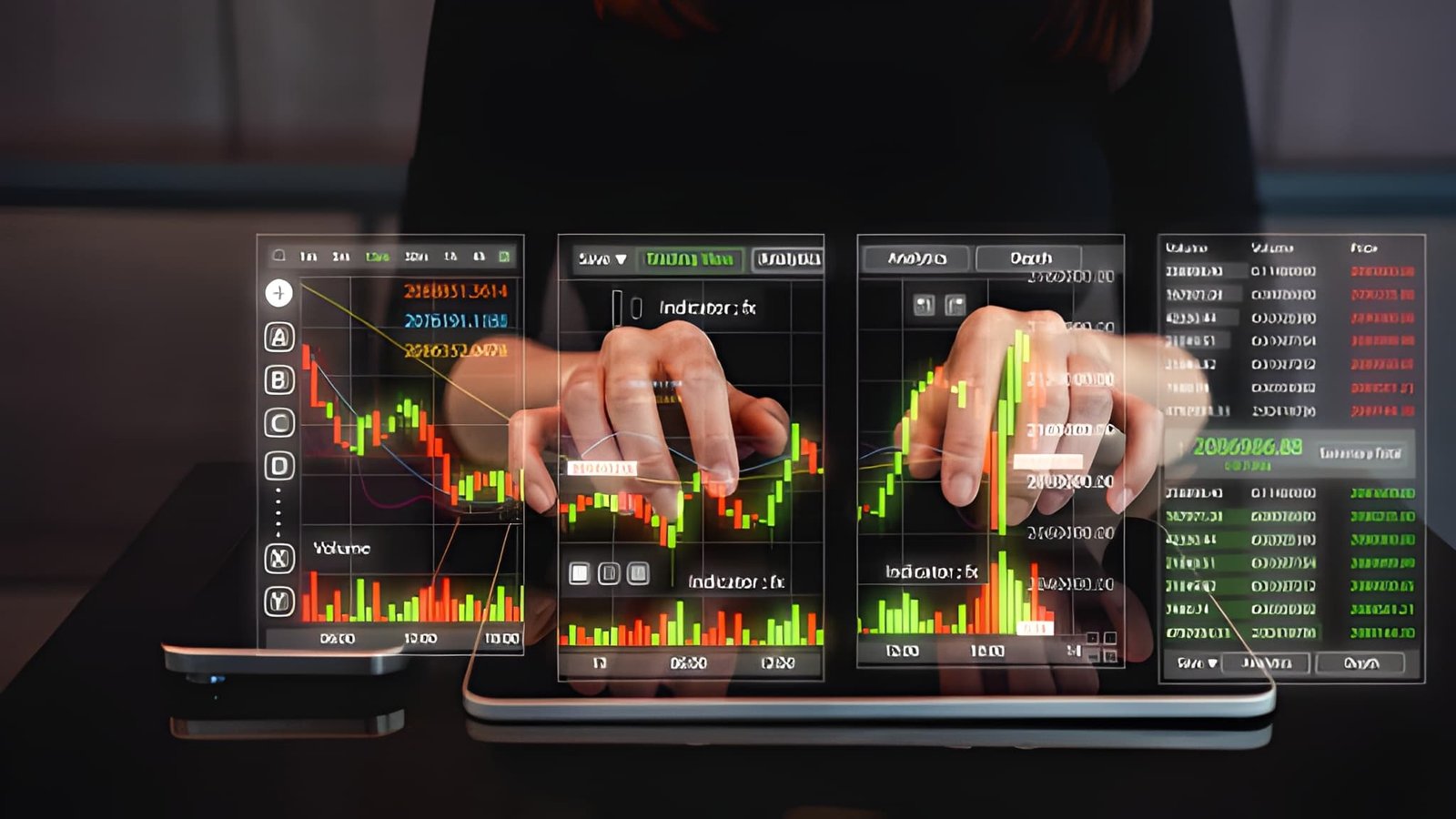
The Expert Guide to Technical Indicators for Futures Trading
Optimizing Alpha in Leveraged Markets through Volume, Volatility, and Institutional Order FlowThe Futures Market Advantage
Trading futures requires a distinct technical toolkit compared to the equities or spot currency markets. Because futures contracts are leveraged and often trade around the clock, indicators must account for centralized volume data and significant price gaps during session transitions. Unlike the fragmented liquidity of the stock market, futures exchanges like the CME provide a unified stream of every contract bought or sold, making volume-based indicators exceptionally accurate.
A professional approach to futures ignores lagging retail signals and focuses instead on where smart money is positioning. Technical indicators in this space should answer three primary questions: Where is the value currently being established? Is the current price movement backed by aggressive participation? And how much room does the market need to breathe before a trade is considered invalid?
VWAP: The Institutional Benchmark
The Volume Weighted Average Price (VWAP) is arguably the most critical indicator for any intraday futures trader. It represents the "true" average price paid for a contract throughout the day, weighted by the volume at each price level. Institutions use VWAP to measure their execution quality; therefore, the price often reacts violently when it approaches this level.
Professional traders utilize Standard Deviation Bands anchored to the VWAP. These bands function as dynamic support and resistance zones. When the price moves two or three standard deviations away from the VWAP, it is often considered "overextended," leading to mean-reversion opportunities or high-velocity trend continuations.
The market is considered in a bullish regime. Traders look for pullbacks to the VWAP line as high-probability entry points for long positions.
When price hits the 3rd standard deviation band, it signifies an extreme move. This often precedes a "snap back" to the mean price.
Volume Profile and Value Areas
While traditional volume is shown at the bottom of a chart over time, Volume Profile displays volume at specific price levels. This creates a vertical histogram on the side of the chart. The most important area is the Point of Control (POC), which is the price level with the highest traded volume for the session.
Traders also focus on the Value Area, which represents the price range where 70% of the day's volume occurred. If the market opens outside of the previous day's value area, it signals a potential trend day. If it opens inside, the market is likely to remain in a range-bound, "choppy" environment.
ATR for Volatility Management
The Average True Range (ATR) does not predict price direction; instead, it measures the volatility velocity. In futures trading, where one tick can equal $12.50 or more per contract, setting a stop loss too tight can result in being "stopped out" by normal market noise.
A common professional strategy is to set stop losses at a multiple of the ATR (e.g., 2 times ATR). This ensures that the trade is only closed if the market moves significantly against the volatility-adjusted norm, rather than just hitting a random price level.
Current ATR (14-period): 4.50 points
Trade Multiplier: 2.0
Stop Distance = 4.50 * 2.0 = 9.00 points
Contract Value: $50 per point
Dollar Risk = 9.00 * $50 = $450 per contract
Cumulative Volume Delta
Cumulative Volume Delta (CVD) measures the net difference between buying and selling pressure at the market level. It ignores limit orders and focuses only on aggressive participants who hit the bid or lift the offer.
CVD is most powerful when it diverges from price. If the price of Crude Oil is making a new intraday high, but the CVD is making a lower high, it suggests that aggressive buyers are exhausting their capital, and a reversal is likely imminent. This "absorption" is a hallmark of institutional turning points.
Momentum and RSI Divergence
The Relative Strength Index (RSI) is frequently misused by retail traders who simply sell at 70 and buy at 30. In the high-trend world of futures, an RSI can stay overbought for hours during a massive squeeze.
Instead, utilize the RSI to identify Momentum Divergence. When price makes a "lower low" but the RSI makes a "higher low," it indicates that the downward velocity is decelerating despite the lower price. This is often the first signal of a trend bottom.
| Indicator Type | Best Application | Signal Strength |
|---|---|---|
| VWAP | Intraday Directional Bias | High (Institutional) |
| Volume Profile | Identifying Support/Resistance | Excellent for Levels |
| CVD | Spotting Trend Exhaustion | Best for Turning Points |
| ATR | Risk and Position Sizing | Essential for Survival |
The Contextual Moving Average
Moving averages should be used as filters, not signals. The 200-period Exponential Moving Average (EMA) on an hourly chart is a standard benchmark for the long-term trend. If the price is above the 200 EMA, professional traders generally avoid taking short positions, regardless of what other oscillators suggest.
Another effective tool is the 8-period EMA, often called the "trigger line." In a high-momentum trend, the price will often ride the 8 EMA without closing below it. A close below the 8 EMA is often the first sign that the immediate trend is cooling off.
Commitment of Traders (COT)
For swing traders in the futures market, the weekly Commitment of Traders report is the ultimate "macro" indicator. Published by the CFTC, it shows the positions of different market participants: Commercials (hedgers), Non-Commercials (large speculators), and Non-Reportables (retail).
Large Speculators: These are hedge funds and commodity pool operators. They follow trends. When their positioning is at a 3-year extreme, the market is likely "overcrowded" and ready for a reversal.
Calculations for Tick-Based Risk
Because futures have different "tick" values, risk must be calculated per contract. Every indicator signal must be filtered through a capital preservation model.
Max Risk per Trade (1%): $1,000
Gold (GC) Tick Value: $10.00 (1 tick = 0.10 points)
ATR Stop Distance: 5.0 points (50 ticks)
Risk per Contract: 50 ticks * $10.00 = $500
Max Position Size: $1,000 / $500 = 2 Contracts
Executing with Precision
The best indicators in the world cannot save a trader who lacks execution discipline. In futures, the order flow moves fast. Once your indicators align—for example, a bounce off the VWAP combined with a positive Cumulative Delta divergence—the execution must be immediate.
Professional trading is the process of eliminating subjectivity. By using indicators like Volume Profile to find levels and ATR to manage risk, you remove the "fear" from the equation. You are no longer guessing; you are simply executing a high-probability mathematical model based on the unified volume data of the global futures exchange.