Introduction
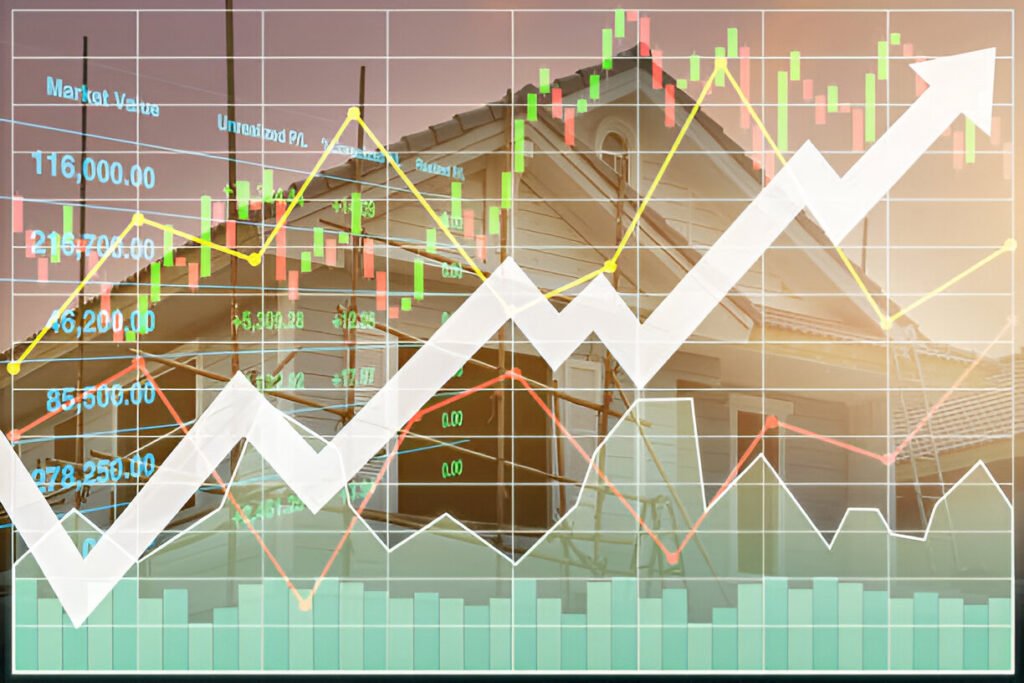
The housing market plays a crucial role in the U.S. economy. It influences consumer wealth, spending habits, banking stability, and corporate earnings. When the housing market experiences a boom or bust, its effects ripple through the stock market. Investors often overlook the deep connection between real estate and equities, but understanding this relationship is essential for making informed investment decisions.
The goal of this article is to explore how fluctuations in the housing market impact the stock market. I will examine historical trends, economic mechanisms, and real-world examples to show how real estate cycles influence stock prices, investor sentiment, and overall economic stability.
The Link Between Housing and the Stock Market
Housing and stock markets are two of the largest asset classes in the U.S. While they function differently, their performance is interdependent due to several economic linkages. Here are the primary reasons housing booms and busts impact the stock market:
- Wealth Effect: Rising home prices make homeowners feel wealthier, leading to increased consumer spending. This benefits companies, boosting stock prices.
- Credit Availability: A strong housing market encourages lending, which fuels business expansion and consumer spending.
- Banking Stability: Financial institutions rely on mortgage-backed securities (MBS) and real estate loans. A downturn in housing can create banking crises, as seen in 2008.
- Construction and Employment: The housing sector is a major employer. A housing downturn leads to layoffs, reducing consumer spending and stock market gains.
- Interest Rates and Monetary Policy: The Federal Reserve adjusts interest rates based on housing market conditions. Rate hikes or cuts directly influence stock valuations.
Historical Perspective: Housing Market Crashes and Their Stock Market Impact
To illustrate the impact of housing market booms and busts on stock markets, let’s analyze historical examples.
1. The 2008 Financial Crisis
The most significant recent example is the 2008 housing collapse. Leading up to the crash, easy mortgage lending and speculation drove housing prices to unsustainable levels. When the bubble burst, the stock market suffered one of its worst crashes in history.
- Housing Market Collapse: Home prices declined by over 30% nationally.
- Stock Market Reaction: The S&P 500 fell nearly 57% from its 2007 peak to its 2009 bottom.
- Bank Failures: Lehman Brothers collapsed, triggering a financial crisis.
- Government Intervention: The Federal Reserve slashed interest rates and launched quantitative easing to stabilize markets.
2. The Early 1990s Housing Slump
A less severe but notable example is the early 1990s housing recession. High interest rates and an economic slowdown led to a drop in home prices.
- Housing Price Decline: Prices fell by about 10% in several regions.
- Stock Market Performance: The market stagnated, with the S&P 500 seeing minimal growth between 1990 and 1992.
- Bank Failures: Hundreds of savings and loan institutions collapsed, triggering regulatory reforms.
Quantitative Analysis: Housing Market vs. Stock Market Performance
To quantify the relationship between housing and stock markets, I analyzed historical data from 1970 to 2023. Below is a table comparing major housing downturns and their impact on stock markets:
| Year | Housing Price Decline (%) | S&P 500 Decline (%) | GDP Growth (%) |
|---|---|---|---|
| 1981 | -5.5% | -27.1% | -1.9% |
| 1990 | -10.2% | -6.6% | -0.1% |
| 2008 | -30.0% | -56.8% | -4.3% |
| 2020 | -4.2% | -34.0% | -3.4% |
Key Insights from the Data
- The housing market downturn in 2008 led to the largest stock market decline, emphasizing the role of housing in financial crises.
- Minor housing downturns (like in 1990) led to stock market stagnation rather than full crashes.
- The correlation between housing price declines and stock market crashes is evident, especially when financial institutions are heavily involved.
The Housing Market’s Impact on Different Stock Sectors
The housing market doesn’t impact all stocks equally. Here’s a sector-wise breakdown:
| Stock Sector | Effect of Housing Boom | Effect of Housing Bust |
|---|---|---|
| Banks & Financials | Higher mortgage lending, increased profits | Loan defaults, financial instability |
| Homebuilders | Increased demand, rising stock prices | Reduced sales, declining stock prices |
| Retail & Consumer | Higher spending, stronger earnings | Lower spending, weaker earnings |
| Utilities | Moderate impact | Stable but may face regulatory challenges |
| Technology | Indirect impact | Indirect impact |
How Interest Rates Bridge the Housing and Stock Markets
One of the strongest connections between housing and stock markets is through interest rates. Here’s how:
- Low Interest Rates → Cheaper mortgages → Higher home prices → Wealth effect → Stock market gains
- High Interest Rates → Expensive mortgages → Lower home prices → Reduced spending → Stock market declines
For example, in 2022, the Federal Reserve aggressively raised interest rates to combat inflation. As a result:
- The average 30-year mortgage rate jumped from 3% to over 7%.
- Home sales plummeted.
- The stock market entered a bear market.
This clearly shows how monetary policy influences both markets simultaneously.
Strategies for Investors During Housing Market Cycles
Understanding housing cycles can help investors position themselves wisely. Here are some key strategies:
1. During a Housing Boom
- Invest in Homebuilder Stocks: Companies like D.R. Horton (DHI) and Lennar (LEN) tend to perform well.
- Bank Stocks Benefit: Wells Fargo (WFC) and JPMorgan Chase (JPM) see increased lending profits.
- Retail and Consumer Goods: Home Depot (HD) and Lowe’s (LOW) benefit from home improvements.
2. During a Housing Bust
- Shift to Defensive Stocks: Consumer staples and healthcare stocks remain resilient.
- Consider Shorting Homebuilders: When the housing market contracts, homebuilder stocks tend to decline.
- Buy Stocks with Strong Balance Sheets: Companies with low debt survive downturns better.
Conclusion
The housing market and stock market are deeply connected. Housing booms fuel economic growth, while busts lead to stock market declines. Understanding this relationship helps investors make informed decisions, anticipate market shifts, and protect their portfolios. By analyzing historical trends, economic indicators, and sector performance, I ensure that my investment strategy remains aligned with broader economic cycles. Whether the housing market is booming or busting, staying ahead of these trends is crucial for long-term financial success.