Temporal Resolution: Finding the Best Chart Interval for Day Trading
Analyzing Data Density, Market Noise, and Execution Precision Across Intra-day Timeframes
- Defining the Concept of Chart Intervals
- The Noise-to-Signal Ratio in Intra-day Charts
- The "Holy Trinity" of Day Trading Intervals
- Aligning Timeframes with Trading Personalities
- Mathematical Breakdown of Candle Data Points
- The Multi-Timeframe Analysis (MTA) Protocol
- Beyond Time: Tick and Range Chart Intervals
- Adjusting Intervals for Market Volatility
- Strategic Summary and Professional Recommendation
In the high-stakes arena of day trading, the chart interval you select acts as the lens through which you perceive market reality. Just as a microscope requires different magnifications to observe distinct cellular structures, financial markets require varying temporal resolutions to identify actionable patterns. Selecting the "best" chart interval is not a matter of universal consensus; rather, it is a strategic decision that determines how much "market noise" you are willing to tolerate in exchange for execution speed. For a professional trader, the interval is the foundational anchor for their statistical expectancy and risk management protocols.
A chart interval represents a fixed slice of time—one minute, five minutes, or even a tick—during which the software aggregates every transaction into a single data point or candle. This compression is both a necessity and a hazard. While shorter intervals provide the most immediate feedback, they often produce "false breakouts" that can liquidate an undisciplined account. Conversely, longer intra-day intervals offer a smoother view of the trend but may result in late entries that diminish the reward-to-risk ratio. This article explores the mechanical requirements, psychological hurdles, and mathematical logic behind selecting the optimal interval for your day trading business.
Defining the Concept of Chart Intervals
A chart interval is the "heartbeat" of your technical analysis. Every time a new candle appears, it represents the conclusion of a fixed period of negotiation between buyers and sellers. In the US equity markets, which operate for 390 minutes per session (9:30 AM to 4:00 PM EST), your choice of interval determines how many "opportunities" or "signals" your system will generate. If you utilize a 1-minute chart, you are processing 390 distinct data points every day. If you utilize a 15-minute chart, that number drops to 26.
The choice of interval fundamentally changes the Average True Range (ATR) of your candles. A 1-minute candle might have an ATR of $0.15, whereas a 15-minute candle might have an ATR of $0.75. This affects your stop-loss placement, your position sizing, and your mental state. Understanding that a chart interval is merely a filter for data is the first step toward professional-grade execution. You are not changing what the market is doing; you are only changing how often you look at the summary of its activity.
The Noise-to-Signal Ratio in Intra-day Charts
The term "market noise" refers to price movements that are random, non-directional, and driven by small-scale retail orders or minor algorithmic adjustments. On very short intervals (1-minute or less), noise is dominant. A stock might drop 5 cents on a 1-minute chart simply because a small order hit the bid, only to recover instantly. If your stop-loss is placed based on this noise, you will be "whipsawed" out of a potentially winning trade.
As you increase the chart interval, the "Signal"—the true directional intent of institutional money—becomes clearer. This is because larger institutions execute orders using VWAP or TWAP algorithms that drip-feed volume over longer periods. A 15-minute candle captures the cumulative result of these institutional buy or sell programs, filtering out the random noise of the 1-minute timeframe. A professional trader seeks the "Golden Mean": an interval fast enough to provide a decent entry but slow enough to filter out the static.
The "Holy Trinity" of Day Trading Intervals
While an infinite number of intervals exist, the professional day trading community has largely gravitated toward three primary timeframes. These intervals serve as the industry standard for specific trading styles and provide the necessary liquidity and participation levels for technical patterns to hold true.
The 1-Minute Chart (The Scalper's Lens)
Provides the highest data density. Used for identifying precise "Tick-by-Tick" reversals and breakout entries. Requires extreme focus and rapid reflexes. Highly susceptible to algorithmic traps.
The 5-Minute Chart (The Trend Follower's Baseline)
The most popular intra-day interval. It balances speed with stability. Most classic patterns like "Flags," "Pennants," and "Head and Shoulders" are most reliable on this timeframe.
The 15-Minute Chart (The Swing Trader's Intra-day Anchor)
Used for capturing large daily arcs. It filters out almost all random volatility. Ideal for traders who manage multiple positions or prefer a less stressful, "slower" pace of execution.
Aligning Timeframes with Trading Personalities
Your choice of interval must align with your biological and psychological limits. If you have a naturally slow reaction time or find high-speed price action stressful, trading a 1-minute chart will lead to emotional errors and "revenge trading." Conversely, if you are highly energetic and prefer fast-paced environments, a 15-minute chart will feel like watching grass grow, leading to "boredom trades" where you enter positions that aren't actually there.
| Trader Type | Recommended Interval | Average Hold Time | Psychological Demand |
|---|---|---|---|
| Scalper | 1-Minute / 30-Second | 2 - 10 Minutes | Extreme focus; instant decision making. |
| Momentum Trader | 2-Minute / 5-Minute | 15 - 60 Minutes | Patience to wait for the "meat" of the move. |
| Trend Follower | 5-Minute / 15-Minute | 1 - 4 Hours | Fortitude to hold through minor pullbacks. |
| All-Day Holder | 15-Minute / 60-Minute | Full Session | Clinical detachment from intra-day noise. |
Mathematical Breakdown of Candle Data Points
Understanding the "Resolution" of your chart requires a look at the math of the session. The fewer candles you have, the more significant each candle becomes. This is a concept known as Data Weighting. In a professional framework, we calculate how many opportunities a specific interval offers within the US trading session.
1-Minute Interval: 390 / 1 = 390 Candles
5-Minute Interval: 390 / 5 = 78 Candles
15-Minute Interval: 390 / 15 = 26 Candles
Strategic Impact: A 5-minute trader processes 80% less data than a 1-minute trader, significantly reducing cognitive load while still capturing 90% of the daily trend.
The Multi-Timeframe Analysis (MTA) Protocol
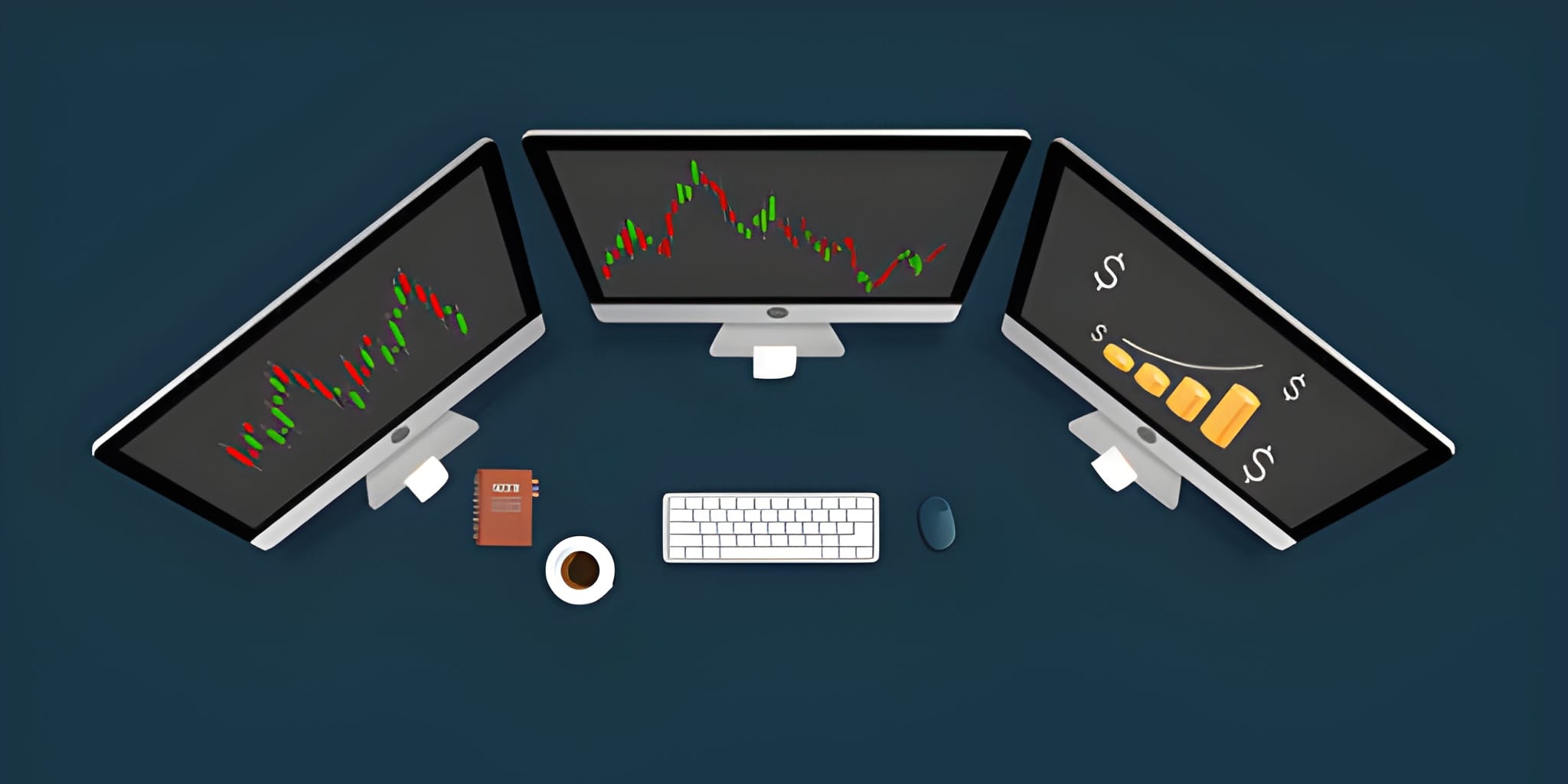
Expert traders rarely rely on a single interval. Instead, they use a "Top-Down" approach known as Multi-Timeframe Analysis. This protocol involves using a slower chart to determine the Context and a faster chart to determine the Execution. By aligning the signals across three different timeframes, you create a "confluence" that increases your win rate.
A common professional setup involves the following three screens:
- The Daily Chart (The Anchor): Used to identify major support/resistance and the overall market regime (Bullish/Bearish).
- The 15-Minute Chart (The Trend): Used to identify the intra-day "Higher Highs" and "Lower Lows." This is your strategic map.
- The 2-Minute or 5-Minute Chart (The Entry): Used to find the specific "Candlestick Trigger" (like a Hammer or Engulfing pattern) to enter the trade with a tight stop.
Beyond Time: Tick and Range Chart Intervals
Standard chart intervals are based on time, but time is not the only way to measure market activity. Some professionals prefer "Non-Time Based" charts, such as Tick Charts or Range Charts. These intervals are based on Volume and Price Movement rather than the clock.
A tick chart prints a new candle after a fixed number of trades occur (e.g., a 2000-tick chart). During the high-volume market open, candles form rapidly. During the quiet lunch hour, they form slowly. This interval is superior for identifying institutional participation, as it moves only when the "Smart Money" is active.
A range chart prints a new candle only when the price moves a fixed distance (e.g., 50 cents). If a stock stays in a tight $0.10 range for two hours, a range chart will not print a single new candle. This completely eliminates market noise during consolidation, as the chart only moves when the price action is meaningful.
Adjusting Intervals for Market Volatility
Markets are dynamic; an interval that works during a "Low Volatility" summer might be too slow during a "High Volatility" earnings season. When the VIX (Volatility Index) is high, prices move faster and more violently. In these regimes, professional traders often "Step Up" to a longer interval (e.g., moving from the 1-minute to the 5-minute) to avoid being stopped out by the wider intraday swings.
Conversely, in very "Quiet" markets with low volume, price can drift aimlessly for long periods. In these scenarios, a trader might "Step Down" to a 2-minute chart to identify micro-trends that would be invisible on a 15-minute chart. The "Best" interval is the one that allows you to see the current market's volatility clearly without being overwhelmed by it. Flexibility is the hallmark of the surviving trader.
Strategic Summary and Professional Recommendation
Selecting the optimal chart interval is the first tactical decision in building a profitable day trading system. For the vast majority of retail participants, the 5-minute chart remains the superior choice for execution, as it offers the most balanced noise-to-signal ratio. When paired with a 15-minute chart for trend confirmation and a Daily chart for context, the 5-minute interval provides a robust framework for capturing intraday momentum while maintaining psychological composure.
Ultimately, the interval is just a tool. Whether you choose to process 390 candles or 26 candles per session, your success depends on your ability to execute your plan with clinical discipline. By aligning your interval with your personality, your strategy, and the current market volatility, you transform the chart from a chaotic visual into a surgical instrument of wealth generation. In the world of high-frequency finance, those who can see the signal through the noise are the ones who walk away with the profit.