
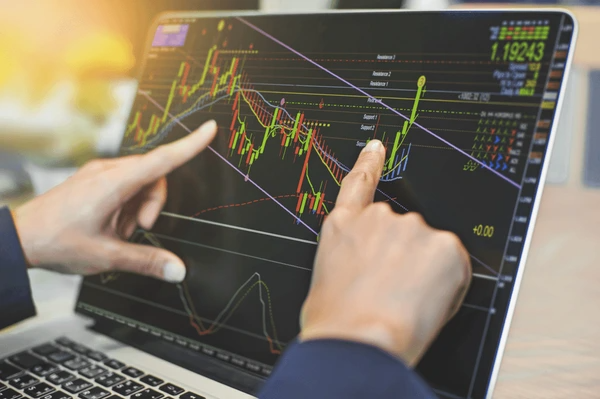
Neural Network Architectures for Quantitative Trading
Deep Learning Strategies for Volatile Global MarketsNavigational Intelligence
The Shift Toward Non-Linearity
The global financial system operates as a chaotic, high-dimensional engine where traditional linear models frequently reach their limits. In the past, analysts relied heavily on autoregressive integrated moving average (ARIMA) models or Generalized Autoregressive Conditional Heteroskedasticity (GARCH) frameworks. While these tools provided a solid foundation for understanding variance and mean reversion, they are fundamentally limited by their assumption of linear relationships and stationary data distributions.
Artificial Neural Networks (ANNs) represent a seismic shift in how we approach market prediction. By mimicking the biological structure of the human brain, these models function as universal function approximators. They can ingest thousands of disparate data points—from order book depth and social media sentiment to macroeconomic indicators—and identify subtle, non-linear correlations that remain invisible to standard statistical tests.
The power of deep learning in finance lies in its ability to adapt. As market conditions evolve, neural networks can be retrained to recognize new patterns, effectively shifting their internal weights to prioritize relevant signals. This adaptivity is crucial in the United States equity markets, where algorithmic participation now drives nearly 80% of daily volume, creating a self-referential environment that demands increasingly sophisticated predictive tools.
Multilayer Perceptrons (MLP)
The Multilayer Perceptron is the bedrock of the deep learning movement. It is a feed-forward neural network where information moves in one direction: from input to output. Despite its age, the MLP remains a powerful tool for cross-sectional data analysis. When an investor wants to compare the valuation metrics of 500 different stocks simultaneously, the MLP excels at finding the non-linear combination of factors that historically leads to outperformance.
However, the MLP has a critical weakness: it is memoryless. It treats each observation as an isolated event, making it inherently ill-suited for the temporal sequences that define financial markets. To an MLP, a price spike today has no context regarding the price action from yesterday.
Each input is multiplied by a weight that reflects its importance. These weights are adjusted during the "backpropagation" process to minimize error.
Non-linear functions like ReLU or Sigmoid allow the network to model complex relationships that a straight line cannot represent.
While MLPs can learn features, quants often feed them pre-processed technical indicators to speed up convergence and improve accuracy.
Recurrent Memory and LSTM Dynamics
To solve the time-dependency problem, researchers introduced Recurrent Neural Networks (RNNs). Unlike MLPs, RNNs have loops that allow information from previous steps to influence the current state. But standard RNNs suffer from the "vanishing gradient" problem—the model effectively "forgets" events that happened more than a few steps in the past.
Long Short-Term Memory (LSTM) networks were engineered to fix this by introducing a "Cell State." Think of the cell state as a long-term memory belt that runs through the network. Three specific gates control this belt:
Convolutional Visual Patterns
Convolutional Neural Networks (CNNs) are the kings of image recognition, but their application in finance is revolutionary. Instead of looking at price lists, a CNN "sees" the market. Quants often convert time-series data into 2D images, such as Gramian Angular Fields or simple candlestick charts.
The CNN scans these images for spatial patterns. It can identify a "Head and Shoulders" pattern or a "Double Bottom" across different time scales with incredible precision. Because CNNs are translation-invariant, they can recognize a bullish setup regardless of where it appears in the historical window, making them exceptionally robust against the "drift" that often breaks other models.
The Transformer Revolution
The current state-of-the-art in both language processing and financial forecasting is the Transformer architecture. Unlike the sequential processing of LSTMs, Transformers utilize Self-Attention mechanisms. This allows the model to look at the entire history of a stock at once and "attend" to the most relevant periods.
In a trading context, a Transformer might realize that the Federal Reserve meeting from three months ago is actually more relevant to today's bond yield move than the minor data release from yesterday. This ability to capture "long-range dependencies" without the bottleneck of sequential computation makes Transformers significantly faster and more accurate for processing massive institutional datasets.
| Architecture | Primary Usage | Computational Efficiency | Memory Depth |
|---|---|---|---|
| MLP | Static Factor Analysis | Very High | None (Memoryless) |
| LSTM | Short-term Momentum | Medium | Sequential Memory |
| CNN | Pattern/Chart Recognition | Medium | Spatial Memory |
| Transformer | Multi-horizon Forecasting | Low (High Cost) | Global Attention |
Autonomous Trading via Reinforcement Learning
While other networks are trained to predict prices, Deep Reinforcement Learning (DRL) agents are trained to trade. A DRL agent does not receive "correct" labels; instead, it receives a "Reward" based on its profit, loss, and risk-adjusted performance.
This approach allows the model to learn complex behaviors such as "Order Slicing" to minimize market impact or "Stop-Loss Hunting" prevention. The agent interacts with a simulated market environment, trying millions of different paths until it develops a Policy that maximizes the cumulative return while respecting the constraints of the risk management system.
Daily_Return = (Portfolio_V1 - Portfolio_V0) / Portfolio_V0;
Volatility_Penalty = Standard_Deviation(Returns) * 0.1;
Final_Reward = Daily_Return - Volatility_Penalty;
// The agent learns to maximize Final_Reward over time.
Ensuring Backtesting Integrity
The single greatest risk in neural network trading is Overfitting. Because these models are so flexible, they can easily "memorize" the noise in historical data. A model that looks like a money-printing machine on historical data but fails instantly in live markets is the result of poor validation.
Professional quant teams utilize "Walk-Forward Analysis" and "Cross-Validation" tailored for time-series. They also apply Dropout—a technique where random neurons are disabled during training—to force the network to develop a more robust, generalized understanding of the market rather than relying on a few fragile correlations.
Regime Detection and Future Trends
The future of AI-driven finance lies in Explainable AI (XAI) and Regime Switching. Investors are moving away from "Black Box" models that they don't understand. New techniques allow quants to visualize which features (e.g., interest rates vs. sentiment) the network is currently prioritizing.
Furthermore, "Hybrid Models" are becoming the standard. A CNN might be used to extract visual patterns from charts, which are then fed into an LSTM for temporal analysis, and finally optimized by a Reinforcement Learning agent for execution. This multi-layered approach ensures that the strategy is robust across different market regimes, from low-volatility "bull runs" to high-volatility "flash crashes."
As we move deeper into this decade, the distinction between a "trader" and a "data scientist" will continue to dissolve. The independent investor now has access to the same architectures as the major banks. The winner in this new era will be the one who can best balance the raw power of neural networks with the timeless principles of risk management and capital preservation.


