
Operational Blueprint
- 1. Defining Leverage in Modern Markets
- 2. Margin Mechanics: The Cost of Borrowing
- 3. Options Mechanics: Contractual Convexity
- 4. Linear Risk vs. Finite Time Decay
- 5. Mathematics of Capital Efficiency
- 6. Regulatory Frameworks and PDT Rules
- 7. Strategic Use Cases for Professional Traders
- 8. Synthesis: Selecting Your Tool
Leverage is the catalyst of professional speculation. It is the ability to control a large financial position with a disproportionately small amount of capital. In the retail and institutional landscape, leverage is primarily accessed through two divergent channels: Margin Debt and Derivative Contracts. While both allow for amplified returns, they reside on opposite ends of the structural spectrum.
Margin trading is a debt-based instrument—you are borrowing cash from your broker to purchase more linear equity. Options trading is a contract-based instrument—you are purchasing the right to price action without necessarily owning the underlying asset. Understanding the "Friction" of each—interest rates for margin and time decay for options—is the prerequisite for long-term survival. This guide dissects these mechanics to provide a clinical comparison for the serious trader.
1. Defining Leverage in Modern Markets
To trade effectively, you must distinguish between "Buying Power" and "Notional Exposure." Buying power is the amount of capital available to you; notional exposure is the total value of the assets you control. If you have 10,000 dollars and buy 20,000 dollars worth of stock, your leverage is 2 to 1.
Leverage does not create an "edge"; it only magnifies the results of your existing edge. If you have a winning strategy, leverage accelerates your compounding. If you have a losing strategy, leverage accelerates your bankruptcy. A professional treats leverage as Inventory Management, ensuring they never over-extend their "Mathematical Risk of Ruin."
2. Margin Mechanics: The Cost of Borrowing
Margin trading is linear. When you use margin, you are taking out a collateralized loan. In the United States, Regulation T (Reg T) allows for 2 to 1 leverage for overnight positions and 4 to 1 for intraday day trades.
- Linear P&L: If the stock goes up 1 dollar, you make 1 dollar per share. If it drops 1 dollar, you lose 1 dollar per share.
- Margin Interest: Brokers charge an annual percentage rate (APR) on the borrowed amount. This is a "Carry Cost" that erodes your profit over time.
- Maintenance Requirement: You must keep a specific percentage of equity in the account. If the stock drops and your equity falls below this level, you receive a Margin Call.
Unlike options, where you can only lose what you paid for the contract (when buying), margin allows for losses that can exceed your initial deposit if a stock gaps down violently. The broker has the right to liquidate your positions without your consent to protect their loan.
3. Options Mechanics: Contractual Convexity
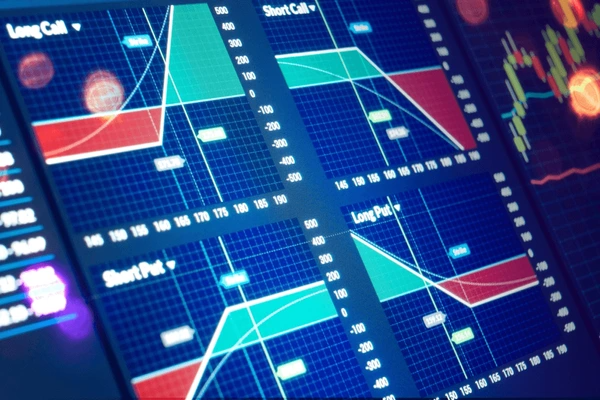
Options are non-linear derivatives. Buying a call option gives you exposure to 100 shares of a stock for a fraction of the price. This is "Built-in Leverage."
The primary "Cost" of an option is not interest, but Theta (Time Decay). An option is a wasting asset. Every second that the stock fails to move in your direction, the value of your contract decreases. This creates a "Race against the Clock" that margin traders do not face.
4. Linear Risk vs. Finite Time Decay
The risk profile of these two methods represents the core choice for the speculator.
| Feature | Margin Trading (Equities) | Options Trading (Long) |
|---|---|---|
| Risk Limit | Theoretically Unlimited (Downside) | Limited to the Premium Paid |
| Primary Expense | Interest Rates on Debt | Time Decay (Theta) |
| P&L Structure | Linear (Symmetrical) | Non-Linear (Convex) |
| Stay in the Game | Indefinite (as long as equity > margin) | Finite (Hard Expiration Date) |
| Complexity | Low (Standard Price Action) | High (Mastery of the Greeks) |
5. Mathematics of Capital Efficiency
To illustrate the difference in capital efficiency, consider a scenario involving a 150.00 dollar stock.
While options are 15 times more efficient with your cash, you are paying for that efficiency with a Lower Probability of Profit. The margin trader can wait for a year for the stock to move; the option trader has a deadline.
6. Regulatory Frameworks and PDT Rules
The choice between margin and options is often forced by the Pattern Day Trader (PDT) rule.
- Margin and PDT: To day trade frequently with margin, you MUST have 25,000 dollars in equity. If you have 5,000 dollars, you are limited to 3 trades per 5 days.
- Options and Cash: You can day trade options in a Cash Account with no frequency limit. Because of T plus 1 settlement, you can trade your entire account balance every single day. This makes options the preferred vehicle for undercapitalized traders seeking high-velocity growth.
7. Strategic Use Cases for Professional Traders
Successful speculators do not view one as "better" than the other; they view them as specific tools for specific market conditions.
Use margin for Linear Trend Following in high-liquidity stocks where you want to stay in a position for weeks or months. Margin is ideal for capturing long-term growth in companies like Apple or Microsoft without the headache of expiring contracts or volatility crush.
Use options for Binary Events or High-Volatility Scalping. Options are superior for earnings plays, where you want to limit your risk to a fixed amount while maintaining unlimited upside. They are also the only choice for "Stagnant Market" strategies, like selling Iron Condors to profit from a stock doing nothing.
8. Synthesis: Selecting Your Tool
Margin trading is a tool for the Patient Accumulator. It requires a larger capital base to navigate the PDT rule and the emotional fortitude to handle linear drawdowns. It is simpler but carries the lurking danger of the margin call.
Options trading is a tool for the Precision Speculator. it allows for extreme capital efficiency and is the only path for day trading with a small account in a cash structure. However, it requires a significant academic investment in "The Greeks" to ensure that time and volatility do not steal your profit.
Master the math of your capital, respect the costs of your leverage, and choose the vehicle that aligns with your specific risk tolerance and timeframe. The market rewards the disciplined use of leverage and ruthlessly punishes the over-extended. Control your exposure, trust your process, and let the compounding of systematic wins build your wealth.



