Intraday Mastery: The Definitive Tutorial for Professional Day Trading
A comprehensive curriculum covering market mechanics, technical execution, and the rigorous mathematical frameworks required for sustainable capital growth.
- 1. Foundational Architecture: The Day Trading Desk
- 2. Market Mechanics: Order Flow and Liquidity
- 3. Strategic Frameworks: Momentum and Mean Reversion
- 4. The Mathematics of Survival: Risk Management
- 5. Step-by-Step Tutorial: Executing Your First Session
- 6. Psychological Resilience and Emotional Intelligence
- 7. Synthesis: The Professional Trading Plan
Foundational Architecture: The Day Trading Desk
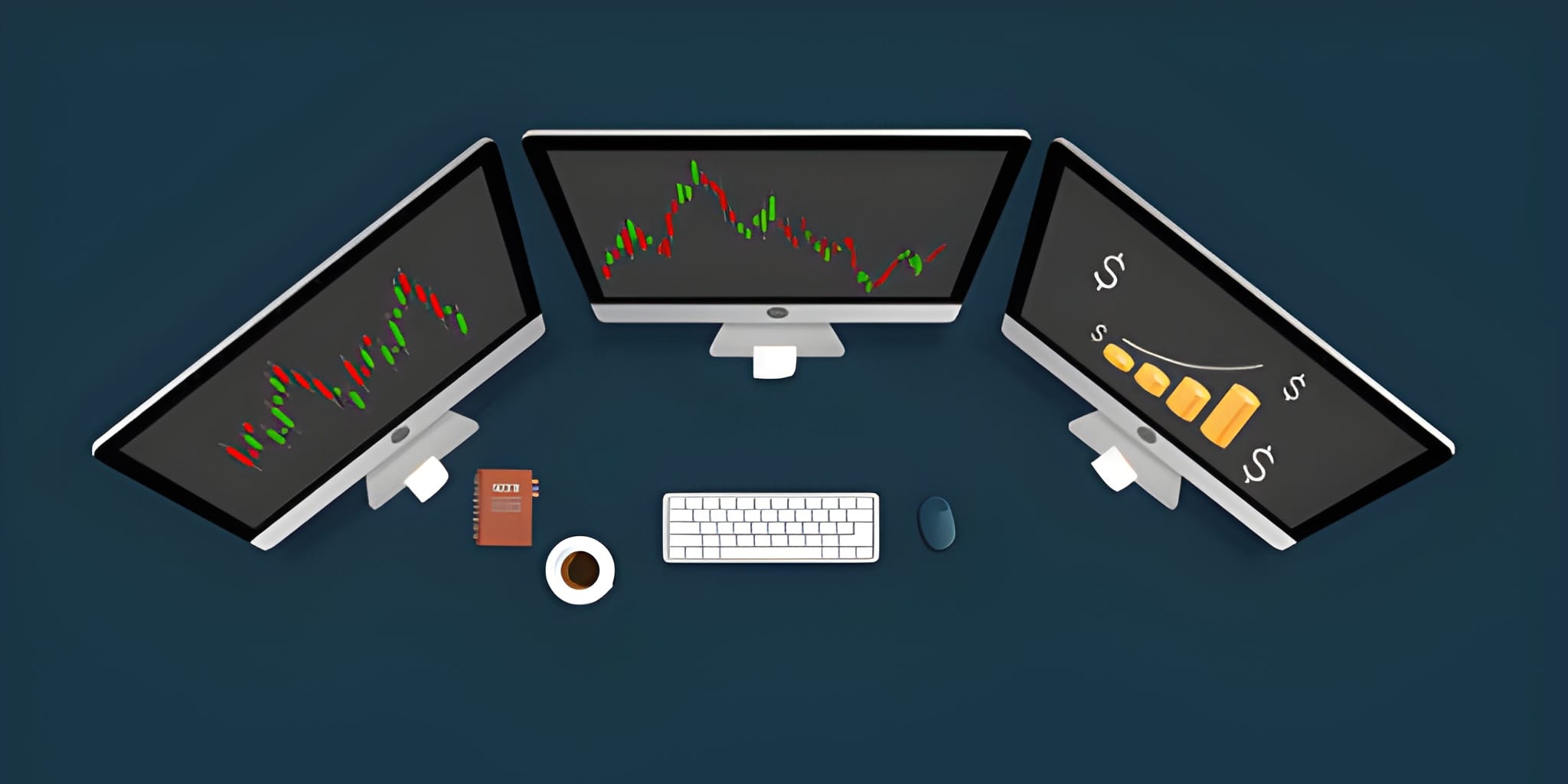
Day trading is a business, not a hobby. To operate at a professional level, you must build an infrastructure that facilitates speed, reliability, and clarity. While the "laptop at the beach" image persists in popular culture, the reality of high-frequency trading involves a dedicated workspace designed to minimize distractions and technical latency.
Hardware and Software Requirements
Your primary tool is your trading platform. For day traders in the United States, direct-access brokers are the gold standard. Unlike retail brokers that may sell your order flow to market makers, direct-access platforms allow you to route your orders directly to specific exchanges like the NASDAQ or NYSE. This results in faster execution and tighter spreads—crucial for strategies where cents matter.
- High-speed fiber-optic internet (Hardwired).
- Professional charting software (TradingView, DAS Trader).
- Dual-monitor setup for multi-asset tracking.
- Reliable Level 2 data feed.
- Minimum 25,000 USD (to bypass PDT rule).
- Emergency reserve for technical overhead.
- Segregated risk capital (Never trade rent money).
- Access to intraday margin (Usually 4:1).
Market Mechanics: Order Flow and Liquidity
Understanding how price actually moves is the difference between an amateur and an expert. Price does not move because a chart pattern appears; it moves because there is an imbalance between Aggressive Buyers and Passive Sellers (or vice versa). This is the realm of order flow.
Bid, Ask, and the Spread
At any given moment, there are two prices for every stock: the Bid (what buyers are willing to pay) and the Ask (what sellers are willing to accept). The difference between these two is the spread. In high-volume stocks like Apple (AAPL) or Nvidia (NVDA), the spread is often just 0.01 USD. In lower-volume "penny stocks," the spread can be massive, representing a high hidden cost of entry. Professional day traders prioritize stocks with high Relative Volume and tight spreads to ensure they can enter and exit positions without significant slippage.
The Level 2 window shows the "depth" of the market—how many shares are waiting to be bought or sold at different price levels. The Time & Sales (The Tape) shows every trade that has actually occurred. If you see a large block of shares being sold on Level 2, but the price isn't dropping, it means a hidden "iceberg" buyer is absorbing the supply. This is a powerful signal for an imminent reversal.
Strategic Frameworks: Momentum and Mean Reversion
Every successful trader has a repeatable edge. Strategies generally fall into two categories: chasing the trend (Momentum) or betting against the trend (Mean Reversion).
1. Momentum Breakouts
This strategy involves identifying a stock that is breaking through a significant resistance level on high volume. The logic is simple: the breakout represents a fundamental shift in sentiment. Traders "buy high and sell higher." This is most effective in the first hour of the trading day, known as the Opening Range.
2. Mean Reversion (The Rubber Band Trade)
Mean reversion assumes that prices will eventually return to their average. When a stock becomes "extended"—meaning it has moved too far, too fast away from its Volume Weighted Average Price (VWAP)—it is likely to pull back. Traders look for signs of exhaustion, such as a "shooting star" candlestick, to bet on a return to the average.
| Strategy | Market Condition | Entry Signal | Typical Hold Time |
|---|---|---|---|
| Momentum | Trending / Gapping | Breakout of High of Day | 5 - 30 Minutes |
| Mean Reversion | Overextended | Divergence from VWAP | 10 - 60 Minutes |
| Scalping | High Volatility | Order Flow imbalance | Seconds - 3 Minutes |
The Mathematics of Survival: Risk Management
Day trading is a game of probability. You do not need to be right every time to be profitable; you simply need to ensure that your winners are larger than your losers. This is achieved through the 1% Rule and Reward-to-Risk Ratios.
The 1% Rule
Never risk more than 1% of your total account equity on a single trade. If you have a 30,000 USD account, your maximum loss per trade should be 300 USD. This ensures that even a string of ten consecutive losses (which will happen) only draws down your account by 10%, leaving you with enough capital to recover.
To determine how many shares to buy, follow this precise formula:
Shares = Max Risk Amount / (Entry Price - Stop Loss Price)
Scenario:
- Account Value: 25,000 USD
- Max Risk (1%): 250 USD
- Stock Entry Price: 50.00 USD
- Logical Stop Loss: 49.50 USD (Risk per share = 0.50 USD)
Position Size: 250 / 0.50 = 500 Shares
Note: Buying 500 shares at 50.00 USD requires 25,000 USD of buying power. If your account is only 25,000 USD, this uses your entire balance, but your total financial risk is still only 250 USD.
Step-by-Step Tutorial: Executing Your First Session
A professional trading day begins long before the market bell rings. Success is found in the preparation, not just the execution.
Scan for "Gappers." These are stocks moving more than 3% in the pre-market on significant volume. Use a news scanner to identify the catalyst: Is it an earnings beat? A product launch? A clinical trial result? Mark your key levels: Pre-market High, Pre-market Low, and yesterday's Closing Price.
This is the period of highest liquidity and volatility. Do not trade the first 5 minutes; let the market establish a direction. Look for an Opening Range Breakout (ORB). If a stock breaks above its initial 15-minute high on increasing volume, consider a long position. This is when institutional money usually enters the fray.
Volume usually dies down between 11:30 AM and 2:00 PM. This is the "danger zone" where false breakouts occur. The market picks up again for "Power Hour" (3:00 PM - 4:00 PM) as day traders close their positions and institutions prepare for the close. Your goal is to be flat (all cash) by 4:00 PM to avoid overnight gap risk.
Psychological Resilience and Emotional Intelligence
The greatest enemy of a day trader is not the market; it is their own brain. Humans are biologically evolved to avoid loss and seek quick rewards—the exact opposite of the mindset needed for trading. To succeed, you must conquer two primary emotional states: FOMO (Fear Of Missing Out) and Revenge Trading.
FOMO leads to "chasing" a move that has already occurred, causing you to buy at the top just before a pullback. Revenge trading happens after a loss when you feel the need to "make it back" immediately, leading to over-leveraging and emotional, non-strategic decision-making. The only antidote is a strict, written trading plan that you follow with robotic precision. If the setup isn't there, the trade isn't there.
Synthesis: The Professional Trading Plan
A professional day trader treats every session as an iterative process. You are not looking for a "home run" trade; you are looking for a series of "base hits" that aggregate over time. Your trading plan must be a living document that includes your entry criteria, your exit rules, and your post-trade review process. Every day after the close, you must journal your trades, reviewing not just the profit/loss, but how well you adhered to your own rules.
Mastery Summary Checklist
- Capital: Ensure at least 25,000 USD to avoid PDT restrictions and maximize liquidity.
- Infrastructure: Use a direct-access broker with a high-speed, hardwired connection.
- Risk: Strictly apply the 1% rule and maintain a minimum 2:1 Reward-to-Risk ratio.
- Journaling: Review every trade for technical accuracy and emotional discipline.
- Continuous Learning: Master the interaction between Level 2, Volume, and Price action.