Introduction
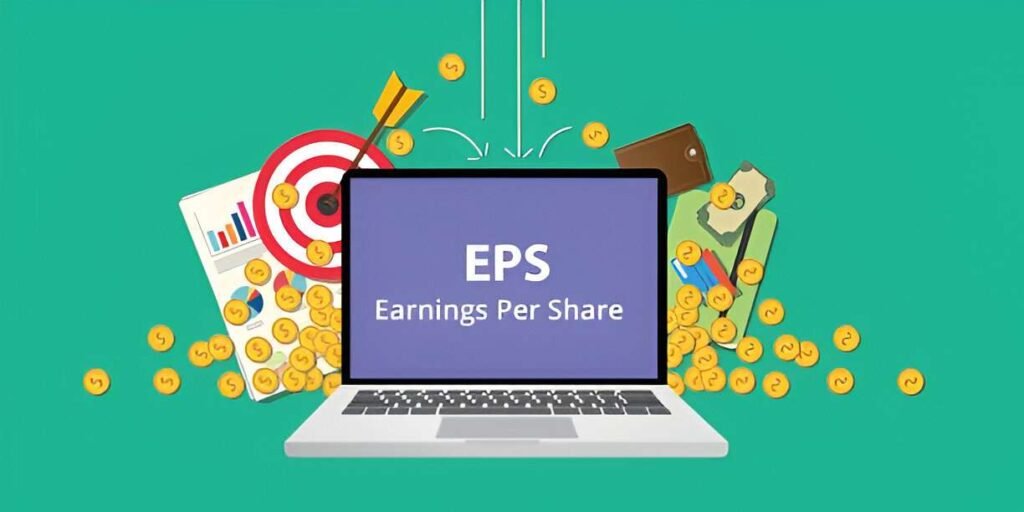
As an investor, I always pay close attention to earnings per share (EPS) when analyzing a company’s financial performance. However, I have learned that not all EPS figures are created equal. One-time charges can significantly distort a company’s reported earnings, which in turn affects stock valuation. Understanding how these charges impact EPS and influence investor perception is crucial for making informed investment decisions.
This article will break down how one-time charges affect EPS, provide real-world examples, and illustrate their impact on stock valuation. I’ll also discuss how analysts and investors adjust for these charges to get a clearer picture of a company’s financial health.
What Are One-Time Charges?
One-time charges are non-recurring expenses or gains that a company incurs outside of its regular business operations. These charges can arise due to various factors such as asset write-downs, restructuring costs, litigation settlements, or natural disasters. While they can distort short-term earnings, they do not necessarily reflect the company’s ongoing profitability.
Some common types of one-time charges include:
- Restructuring Costs: Expenses related to business reorganization, layoffs, or closing facilities.
- Asset Impairment Charges: Write-downs of goodwill or other assets due to reduced value.
- Litigation Expenses: Large legal settlements or regulatory fines.
- Discontinued Operations: Losses or gains from selling off parts of the business.
- Natural Disaster Losses: Costs associated with unforeseen catastrophic events.
While one-time charges can temporarily reduce reported earnings, they do not always indicate a long-term problem. However, repeated “one-time” charges can be a red flag that a company is struggling.
How One-Time Charges Impact EPS
Earnings per share (EPS) is a widely used metric that shows how much profit a company generates per outstanding share of stock. It is calculated as:
\text{EPS} = \frac{\text{Net Income} - \text{Preferred Dividends}}{\text{Weighted Average Shares Outstanding}}One-time charges directly affect net income, which in turn impacts EPS. Let’s consider an example:
Example: The Impact of a One-Time Charge on EPS
Company ABC reports the following financials for the quarter:
| Financial Metric | Without One-Time Charge | With One-Time Charge ($50M) |
|---|---|---|
| Net Income | $200M | $150M |
| Weighted Shares | 100M | 100M |
| EPS | $2.00 | $1.50 |
In this case, a $50 million one-time charge reduces net income and lowers EPS from $2.00 to $1.50. This could lead to a negative market reaction, especially if investors do not properly account for the non-recurring nature of the charge.
Adjusted EPS: A More Accurate Measure
Because one-time charges can distort EPS, analysts often calculate adjusted EPS by removing non-recurring items. The formula for adjusted EPS is:
\text{Adjusted EPS} = \frac{\text{Net Income} + \text{One-Time Charges}}{\text{Weighted Average Shares Outstanding}}Using the previous example:
\text{Adjusted EPS} = \frac{150M + 50M}{100M} = 2.00The adjusted EPS of $2.00 gives investors a clearer view of the company’s core profitability. Many companies report both GAAP EPS (including one-time charges) and non-GAAP EPS (excluding them) to provide transparency.
How Stock Valuation is Affected
Stock prices are often based on EPS, as it is a key input for the price-to-earnings (P/E) ratio:
\text{P/E Ratio} = \frac{\text{Stock Price}}{\text{EPS}}When one-time charges reduce EPS, the P/E ratio increases if the stock price remains unchanged. This can make the stock appear overvalued compared to peers. Conversely, removing one-time charges for valuation purposes may show the stock is fairly valued.
Example: P/E Ratio Before and After Adjusting for One-Time Charges
| Metric | GAAP EPS ($1.50) | Adjusted EPS ($2.00) |
|---|---|---|
| Stock Price ($50) | P/E = 33.3x | P/E = 25.0x |
An investor relying solely on GAAP EPS might see the stock as expensive at a 33.3x P/E ratio, while an investor using adjusted EPS sees a more reasonable 25.0x ratio.
Historical Cases of One-Time Charges Impacting Stocks
Case Study 1: Boeing’s 737 MAX Crisis (2019-2020)
Boeing recorded over $19 billion in one-time charges related to the grounding of its 737 MAX aircraft. These charges significantly reduced EPS, leading to increased stock volatility. However, analysts adjusted EPS to reflect Boeing’s ongoing profitability excluding the crisis.
Case Study 2: Bank of America’s Legal Settlements (2008-2014)
After the financial crisis, Bank of America faced billions in legal settlements, which caused significant swings in GAAP EPS. Investors who looked at adjusted EPS saw a clearer picture of the bank’s recovery over time.
Investor Takeaways
- Understand the Nature of the Charge: Not all one-time charges are the same. Some indicate fundamental problems, while others are temporary setbacks.
- Look at Adjusted EPS: Consider both GAAP and adjusted EPS to gauge true profitability.
- Compare P/E Ratios Thoughtfully: Use adjusted EPS when evaluating stock valuation.
- Watch for Recurring “One-Time” Charges: A company that frequently reports non-recurring expenses may be manipulating earnings.
Conclusion
One-time charges can significantly affect EPS and stock valuation, sometimes causing unnecessary panic among investors. However, by understanding these charges and using adjusted EPS, I can make better-informed investment decisions. Instead of taking EPS at face value, I always dig deeper into financial statements to ensure I’m assessing a company’s true earnings power. This approach helps me avoid overreacting to short-term noise and focus on long-term value.