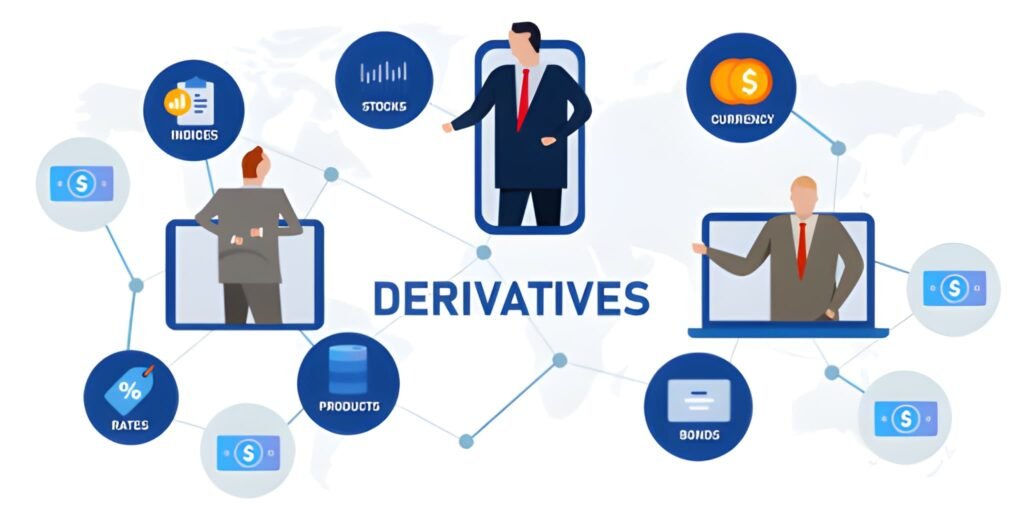
Professional Derivatives Framework
Futures Fundamentals, Strategic Analysis, and Option Mechanics
Professional market participation requires a departure from simple speculation toward a structured understanding of asset pricing and risk transfer. Derivatives, specifically futures and options, serve as the primary conduits for global price discovery and risk management. While the novice trader views these instruments through the lens of leverage alone, the institutional practitioner recognizes them as mathematical expressions of time, volatility, and fundamental equilibrium. This article explores the architecture of these markets, providing a blueprint for integrating fundamental insights with sophisticated execution strategies.
Foundations of Derivative Contracts
The derivative market operates as a zero-sum environment where every contract represents a transfer of risk from one party to another. In futures trading, the clearing house acts as the central counterparty to every transaction, eliminating individual credit risk. This institutional structure allows for the standardization of contracts, ensuring that one contract of WTI crude oil in Chicago represents the exact same quantity and quality as one in London. This fungibility is the bedrock of global liquidity.
Unlike equity markets, where ownership represents a claim on future earnings, a futures contract is a firm legal obligation. The buyer (long) agrees to take delivery, and the seller (short) agrees to make delivery of an asset at a specified future date. Most traders avoid physical delivery through offsetting, which involves entering a trade in the opposite direction before the contract expires. This mechanical efficiency allows for rapid capital rotation and high-frequency price adjustments based on new data.
Direct exposure to price action with linear delta. Requires performance bonds (margin) rather than full payment. Highly efficient for hedging specific physical commodity risks.
Non-linear risk profiles. The buyer pays a premium for the right to buy or sell, while the writer accepts an obligation. Values fluctuate based on time decay and volatility shifts.
Fundamental Analysis in Futures
Fundamental analysis in the futures market differs significantly from corporate stock analysis. Here, the focus shifts to the physical supply chain and macroeconomic catalysts. For a commodity trader, the fundamental reality resides in inventory levels, crop yields, and extraction costs. For a financial futures trader, it resides in central bank policy, yield curve shifts, and currency valuations.
The primary objective of fundamental analysis is to determine the Fair Value of a contract relative to its current market price. When the futures price exceeds the spot price plus the cost of storage and interest, the market is in Contango. Conversely, when the futures price is lower than the spot price due to immediate demand or supply shortages, the market is in Backwardation. These states provide critical signals regarding the physical tightness of the market.
Interpreting COT Data
The Commitment of Traders (COT) report, published weekly by the Commodity Futures Trading Commission (CFTC), provides a transparent look at how different market participants are positioned. This data is the ultimate fundamental tool for gauging sentiment among those who actually produce or consume the underlying asset.
These participants are producers (like miners or farmers) and consumers (like airlines or food processors). They use the futures market to lock in prices for their physical business. When commercials are heavily long, it often indicates a fundamental floor in the market. When they are heavily short, they are likely protecting against an anticipated price drop.
This category includes hedge funds and institutional commodity trading advisors (CTAs). They trade purely for profit and are typically trend-followers. High concentration in this group can often signal a "crowded trade" that may be susceptible to a reversal if the fundamental narrative shifts.
Macroeconomic Supply and Demand
Supply and demand dynamics serve as the gravity of the futures market. No matter how much speculative fervor exists, the price must eventually reconcile with the physical reality of the asset. In energy markets, the Energy Information Administration (EIA) provides weekly data on crude oil and natural gas inventories. A larger-than-expected "build" in inventory suggests oversupply, typically exerting downward pressure on prices.
In the financial sector, the Yield Curve serves as the primary fundamental indicator. A flattening yield curve—where the difference between short-term and long-term interest rates narrows—often signals expectations of an economic slowdown. This fundamentally alters the pricing of S&P 500 futures and Treasury Note futures. Traders monitor Federal Open Market Committee (FOMC) statements to anticipate shifts in the discount rate, which fundamentally changes the cost of carry for every derivative contract in existence.
| Market Sector | Key Fundamental Metric | Primary Data Source |
|---|---|---|
| Energy | Refinery Utilization & Crude Stockpiles | EIA Weekly Status Report |
| Agriculture | Yield Estimates & Ending Stocks | USDA WASDE Report |
| Interest Rates | Inflation Expectation (CPI/PCE) | Bureau of Labor Statistics |
| Equities | Forward Earnings & Risk Premium | Quarterly GDP/Earnings Season |
Advanced Option Greeks
While fundamental analysis determines the direction, the Greeks determine the efficiency of the trade. Professional options traders do not just trade the asset; they trade the Greeks. Understanding these variables allows a trader to hedge specific risks while leaving others exposed to capture profit.
Delta and Gamma: The Speed of Movement
Delta represents the sensitivity of an option's price to the underlying asset. However, Delta is not static. Gamma measures the rate at which Delta changes. If you are long an option, you want high Gamma so that your Delta increases as the trade moves in your favor, effectively "speeding up" your gains. Conversely, sellers of options fear Gamma, as it can turn a small loss into a catastrophic one very quickly.
Theta and Vega: Time and Fear
Theta is the cost of holding an option. Every day that passes erodes the "extrinsic value" of the contract. Vega measures the sensitivity to Implied Volatility (IV). Even if the stock price does not move, an increase in market fear can cause Vega to drive option prices higher. This is why buying options during a crisis is often unprofitable; the IV is already so high that any stabilization in the market causes a "volatility crush" that destroys the option's value.
If IV increases to 25% (+5 points):
New Price = $5.00 + (5 * 0.15) = $5.75
Note: The underlying price did not change, yet the option gained 15% in value.
Directional Spread Execution
Simple call or put buying is often a losing proposition due to the relentless erosion of Theta. Strategic traders utilize Vertical Spreads to mitigate this cost. A vertical spread involves buying one option and selling another of the same type at a different strike price. This reduces the net premium paid and lowers the breakeven point of the trade.
The Debit Spread is used when you expect a moderate move in a specific direction. By selling an out-of-the-money option, you finance the purchase of your primary position. This caps your maximum profit but significantly increases your probability of success. The Credit Spread, on the other hand, is a "probability play" where you sell premium and profit as long as the stock does not reach a certain level. In this scenario, time decay works in your favor every single day.
Volatility and Income Frameworks
Income-focused strategies like Covered Calls and Iron Condors are the hallmarks of professional portfolio management. A Covered Call involves selling a call option against shares you already own. This generates "rent" on your capital. If the stock remains flat or rises slightly, you keep the premium. If the stock rises significantly, you sell your shares at the strike price, realizing a profit while missing the "excess" gain.
The Iron Condor is a market-neutral strategy that profits when volatility is high and expected to decline. It involves selling both a put spread and a call spread. You are essentially betting that the market will stay within a defined range. This strategy excels during periods of economic consolidation where fundamental news is lacking, and price action remains sideways.
Buying both a call and a put at the same strike. Profitable only if there is a massive move in either direction. High cost, high reward, low probability.
Similar to a straddle but uses out-of-the-money strikes. Lower cost than a straddle but requires an even larger price move to become profitable.
Risk Mitigation Protocols
Survival in derivative markets depends on Capital Preservation. Because leverage can amplify small mistakes, professional traders apply strict risk-per-trade limits. The 1% Rule suggests that no single trade should risk more than 1% of the total account equity. This is calculated by taking the difference between the entry price and the stop-loss price, multiplied by the contract size.
Furthermore, traders must manage Correlation Risk. If you are long crude oil futures, long S&P 500 futures, and short the US Dollar, you may feel diversified. However, in a "risk-off" environment, these assets often move in lockstep. True risk management involves understanding how different fundamental drivers—such as rising interest rates—can simultaneously impact every position in a portfolio.
Ultimately, the synthesis of fundamental analysis and derivative mechanics creates a robust framework for consistent performance. By identifying fundamental imbalances through supply-demand data and COT reports, and executing through the lens of Option Greeks and structured spreads, the investor moves beyond the chaos of the ticker tape. Success is not found in predicting the future with certainty, but in managing the probabilities of the present with discipline.