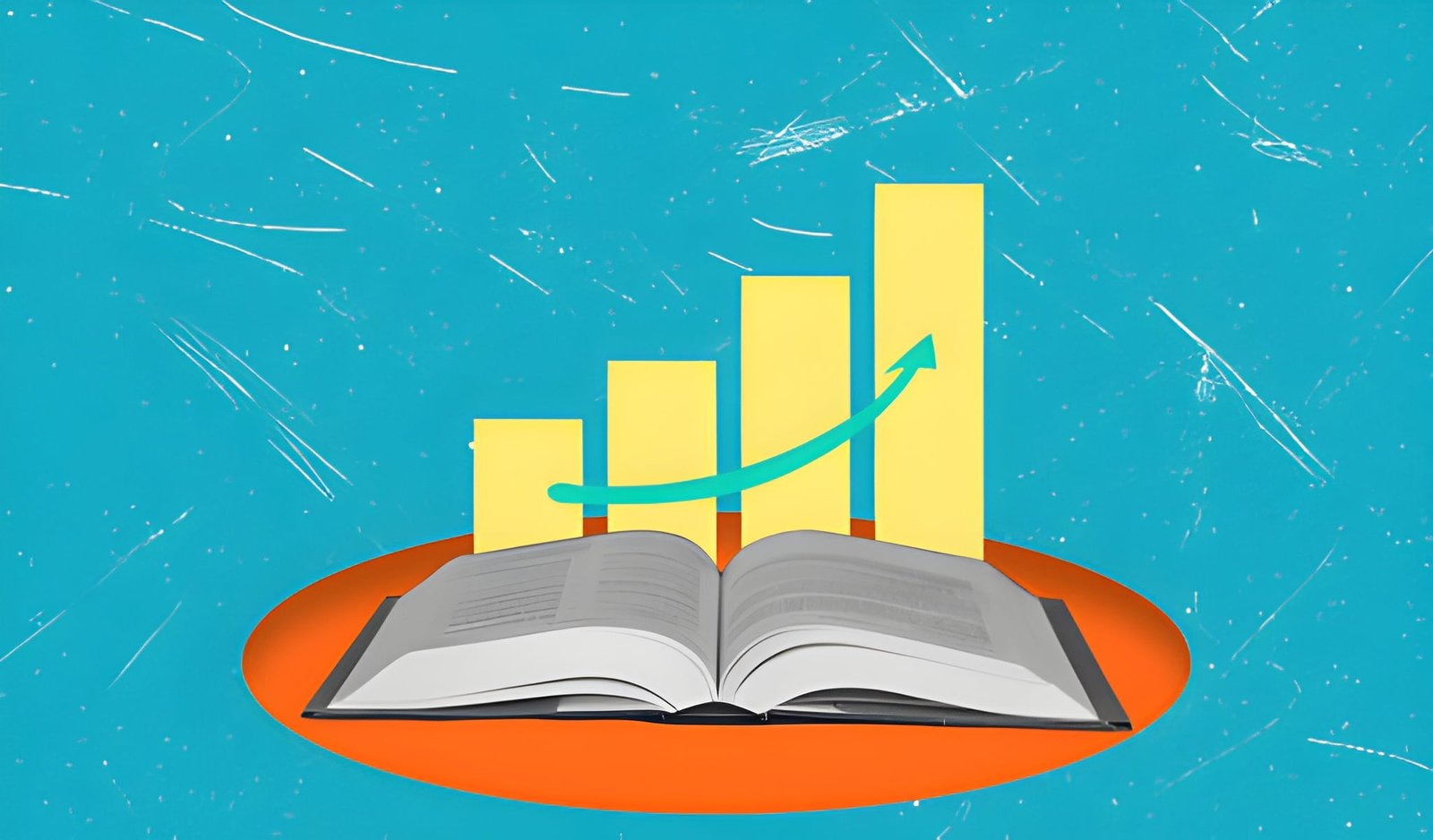
- The Synergy of Value and Convexity
- Fundamental Catalysts as Volatility Events
- Synthesizing Greeks with Economic Data
- Strategy Selection: Direction vs. Volatility
- The Expected Move: Market Sentiment Analysis
- Managing Time: The Fundamental Horizon
- Sector Rotation and Relative Strength
- Capital Preservation and Black Swan Defense
- Strategic Macro Synthesis
The Synergy of Value and Convexity
The integration of Fundamental Analysis and Options Trading represents the highest evolution of the modern investor. While fundamental analysis answers the question of "What" to buy by identifying intrinsic value and economic moats, options trading answers the question of "How" to participate by leveraging the non-linear relationship between price and profit. This fusion creates a Technimental approach: utilizing macro conviction to drive precise derivative execution.
In the traditional equity world, profit is linear—if the stock moves up 10%, you gain 10%. In the options world, we seek Convexity. By utilizing fundamental catalysts as the ignition, we can structure trades where the potential return is exponentially higher than the risk. To trade this way is to move from being a simple speculator to a professional risk-manager who understands that price is merely the byproduct of realized fundamental truth.
Fundamental Catalysts as Volatility Events
Options traders do not view news as just "information"; they view news as Volatility Ignition. A fundamental catalyst—such as an earnings report, a FDA approval, or a central bank interest rate decision—is a period of concentrated information release. This creates the primary opportunity for the option specialist.
Earnings Revaluations
An earnings beat combined with positive guidance forces institutional rebalancing. Options allow you to capture the "Delta" of this revaluation with a fraction of the capital required for the stock.
Macroeconomic Pivots
Shifts in CPI or Federal Reserve rhetoric trigger sector-wide rotations. Index options (SPX/NDX) are the ideal instruments for hedging or speculating on these "Tidals Flows" of capital.
Synthesizing Greeks with Economic Data
To integrate fundamentals with options, you must translate economic conviction into the Option Greeks. Each Greek represents a specific fundamental risk or reward profile.
| Greek | Fundamental Mapping | Strategic Use Case |
|---|---|---|
| Delta | Directional Conviction | Buying Calls/Puts for high-growth fundamental plays. |
| Gamma | Acceleration of Change | Capturing the "Pop" during high-velocity news events. |
| Vega | Sentiment & Uncertainty | Trading the "fear" or "complacency" around catalysts. |
| Theta | The Temporal Horizon | Selling premium against low-growth "value" anchors. |
Strategy Selection: Direction vs. Volatility
The choice of strategy depends on the Quality of the Fundamental News. Is the catalyst likely to drive the price in a specific direction, or simply cause a massive move regardless of direction?
If you have high fundamental conviction that a stock is undervalued, a Bull Call Spread allows you to profit from the move while capping your risk. This is fundamental for "Earnings Plays" where you expect a post-earnings drift higher but want to protect against a sudden market-wide sell-off.
When the outcome of a catalyst is binary (e.g., an FDA clinical trial result), you don't need to know the direction. A Straddle involves buying both a Call and a Put. You win as long as the fundamental shock is large enough to move the stock beyond the "Expected Move" priced by the market.
The Expected Move: Market Sentiment Analysis
One of the most powerful fundamental signals in the options market is the Expected Move. This is the dollar amount the market anticipates the stock will move by a certain expiration, calculated using the cost of the "At-the-Money" (ATM) Straddle.
${Expected Move} {Straddle Price} * 0.85$$
By comparing the Market's Expected Move against your Fundamental Forecast, you identify discrepancies. If the market expects a 5% move on earnings but your fundamental model suggests the revenue miss will cause a 15% drop, you have located a high-alpha trade. You are not just betting on the earnings; you are betting against the market's "mispriced" consensus.
Managing Time: The Fundamental Horizon
In stock trading, time is free. In options trading, time is a cost (Theta). The integration of fundamentals requires aligning the expiration of the option with the "Realization Period" of the fundamental catalyst.
If you are trading a Product Cycle (e.g., the launch of a new iPhone), a 30-day option is likely too short. You need to use LEAPS (Long-term Equity Anticipation Securities) with expirations of 1 to 2 years. This gives the fundamental story enough time to manifest in the financial statements and for the market to adjust the price without your position being destroyed by short-term time decay.
Sector Rotation and Relative Strength
Fundamentals often drive Relative Strength—the tendency of leaders to keep leading. In an inflationary environment, energy and materials typically outperform. An options trader utilizes Inter-market Spreads to capture this rotation.
For example, if you believe Technology (XLK) is overextended but Financials (XLF) are undervalued due to rising interest rates, you can buy XLF Calls and buy XLK Puts. This "Pairs Trade" via options limits your exposure to the general direction of the S&P 500 and focuses purely on the Fundamental Divergence between the two sectors.
Capital Preservation and Black Swan Defense
The greatest benefit of options in a fundamental portfolio is Asymmetric Risk. You can control a massive position with a defined, limited loss.
Protective Put Framework: Professional wealth managers use 2-3% of their portfolio annually to purchase "Out-of-the-Money" (OTM) index puts. This is a fundamental insurance policy against the "Unknown Unknowns" of the global economy.
Integrating fundamental analysis with options trading transforms a trader from a passenger into an architect. By using the "Why" of the economic engine to decide where to deploy capital, and the "How" of derivative structures to manage risk and leverage, you achieve a level of strategic sophistication that few market participants possess.
Success requires the discipline to stay focused on the Primary Catalyst and the mathematical rigor to choose the correct strike and expiration. Remember that an option is a decaying asset; it is a contract on the Timing of a Fundamental Truth. Master the news, respect the Greeks, and ride the convexity to consistent market outperformance.