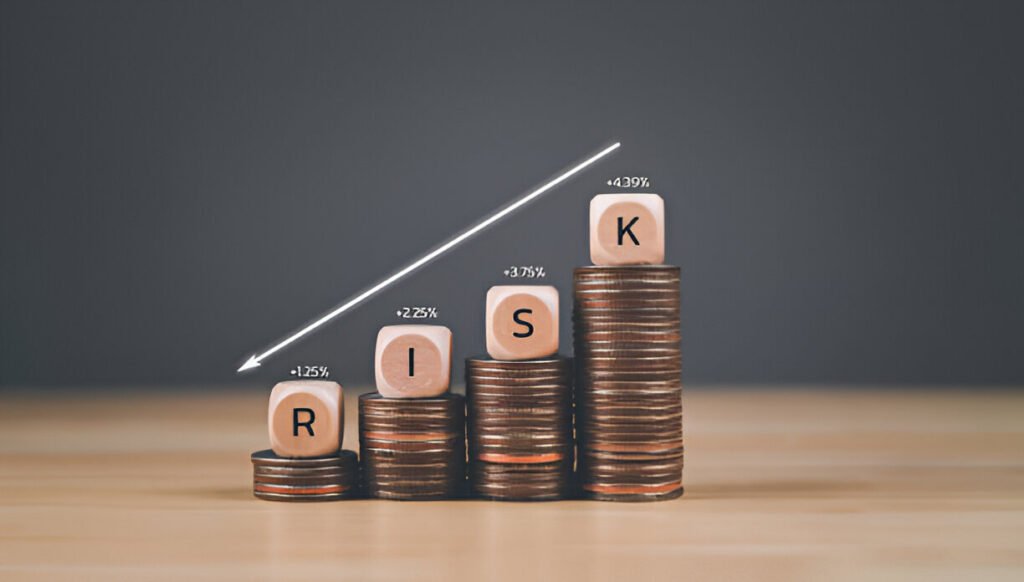
Investing is about making choices in an environment filled with uncertainty. The return on an investment tells us how much money we made, but it does not tell us the whole story. A 10% return on one stock may not be the same as a 10% return on another if one carried significantly more risk. This is where risk-adjusted returns come into play.
Understanding risk-adjusted returns allows me to make more informed investment decisions. By incorporating risk into the equation, I can compare different investments on a level playing field. This concept is essential whether I’m analyzing individual stocks, mutual funds, or entire portfolios.
Why Risk-Adjusted Returns Matter
In finance, risk and return go hand in hand. If I ignore risk, I might be making decisions that expose me to unnecessary volatility or potential losses. Comparing investments based solely on raw returns is like comparing apples to oranges. For instance:
| Investment | Return (%) | Risk (Standard Deviation) |
|---|---|---|
| Stock A | 12% | 15% |
| Stock B | 12% | 8% |
At first glance, both stocks have the same return. However, Stock B achieved this return with less risk. I would prefer Stock B because it delivers the same reward with less uncertainty.
Key Metrics for Measuring Risk-Adjusted Returns
Several financial metrics help me evaluate risk-adjusted returns. Each has its strengths and weaknesses, and I use them depending on the context.
1. Sharpe Ratio
One of the most widely used metrics, the Sharpe ratio, measures excess return per unit of risk. It is calculated as:
Sharpe\ Ratio = \frac{R_p - R_f}{\sigma_p}Where:
- R_p = Portfolio return
- R_f = Risk-free rate (such as Treasury bond yield)
- sigma_p = Standard deviation of portfolio returns
If two investments have the same return, the one with the higher Sharpe ratio is the better choice because it achieved the return with less risk.
Example:
- Investment A: Return = 12%, Risk-free rate = 2%, Standard deviation = 10%
- Investment B: Return = 15%, Risk-free rate = 2%, Standard deviation = 20%
| Investment | Return (%) | Standard Deviation (%) | Sharpe Ratio |
|---|---|---|---|
| A | 12% | 10% | 1.00 |
| B | 15% | 20% | 0.65 |
Investment A has a better risk-adjusted return despite having a lower absolute return.
2. Sortino Ratio
The Sharpe ratio treats all volatility as risk, but I know that only downside risk (negative returns) truly matters. The Sortino ratio adjusts for this by only considering downside deviation:
Sortino\ Ratio = \frac{R_p - R_f}{\sigma_d}Where σd\sigma_d is the standard deviation of negative returns. A higher Sortino ratio indicates a better risk-adjusted return.
3. Treynor Ratio
Another useful measure is the Treynor ratio, which uses beta (systematic risk) instead of standard deviation:
Treynor\ Ratio = \frac{R_p - R_f}{\beta_p}This ratio helps me compare investments based on how much excess return they generate per unit of market risk.
4. Alpha
Alpha measures the excess return of an investment relative to its expected return based on its risk level. A positive alpha means an investment outperformed expectations, while a negative alpha means it underperformed.
Historical Context: Risk-Adjusted Returns in Market Crashes
Risk-adjusted returns become especially relevant during market downturns. In the 2008 financial crisis, high-beta stocks saw massive declines, while lower-beta and well-diversified investments fared better.
During that period, Treasury bonds and defensive sectors like consumer staples had higher Sharpe ratios despite lower absolute returns because they provided stability amid the chaos.
Practical Application: Constructing a Portfolio with Risk-Adjusted Returns
When I build my portfolio, I use risk-adjusted returns to balance high-growth opportunities with defensive assets. Here’s how I approach it:
- Diversification: I select assets with varying risk profiles to reduce overall volatility.
- Sharpe Ratio Optimization: I favor investments with strong risk-adjusted performance.
- Beta Analysis: I ensure my portfolio isn’t overly exposed to market swings.
- Historical Data Review: I analyze past performance under different economic conditions.
For example, in a balanced portfolio:
| Asset Class | Expected Return (%) | Standard Deviation (%) | Sharpe Ratio |
|---|---|---|---|
| US Equities | 10% | 15% | 0.53 |
| Bonds | 4% | 5% | 0.40 |
| Real Estate | 8% | 12% | 0.50 |
| Gold | 6% | 10% | 0.40 |
A mix of these assets smooths out volatility while maintaining reasonable returns.
Conclusion
Ignoring risk-adjusted returns is a mistake. Raw performance alone does not tell me whether an investment was worth it. Metrics like the Sharpe ratio, Sortino ratio, Treynor ratio, and alpha help me make more informed decisions.