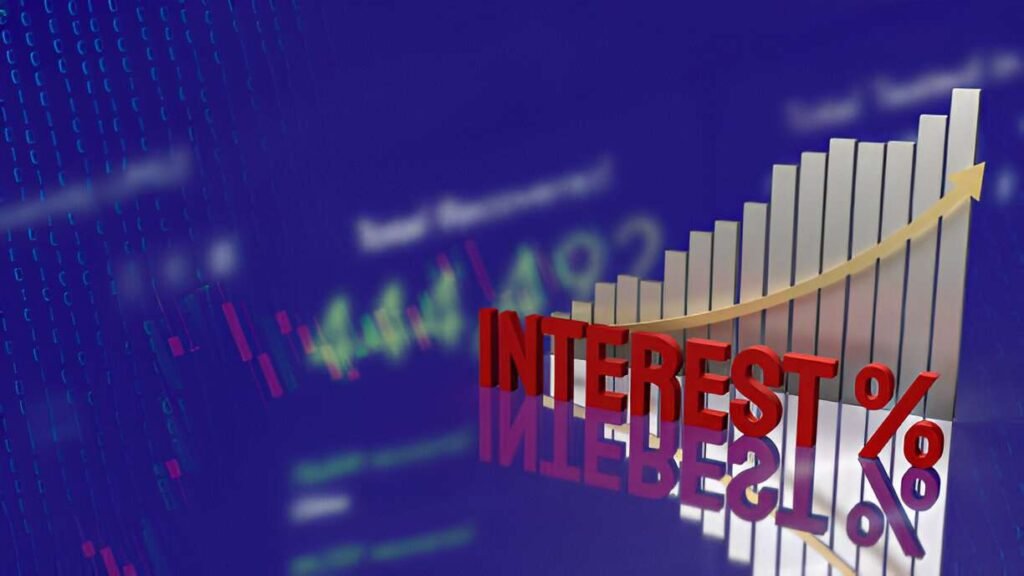
Interest rates are one of the most critical factors influencing the stock market, and as a US investor, understanding this relationship is essential for making informed decisions. In this article, I will explore how interest rates impact stock markets, diving deep into the mechanisms, historical trends, and practical implications for investors. I will also provide examples, calculations, and data-driven insights to help you navigate this complex topic.
Understanding Interest Rates and Their Role in the Economy
Before diving into the stock market, it’s important to understand what interest rates are and how they function in the economy. Interest rates, set by the Federal Reserve (the Fed), represent the cost of borrowing money. When the Fed raises or lowers interest rates, it influences the entire financial ecosystem, from consumer loans to corporate investments.
The Fed adjusts interest rates to control inflation, stabilize the economy, and promote employment. For example, during periods of high inflation, the Fed may raise interest rates to curb spending and borrowing. Conversely, during economic downturns, the Fed may lower rates to stimulate growth.
The Relationship Between Interest Rates and Stock Prices
The relationship between interest rates and stock prices is not always straightforward, but it can be broken down into a few key mechanisms:
1. Cost of Capital
When interest rates rise, borrowing becomes more expensive for companies. This increases their cost of capital, which can reduce profitability and, in turn, lower stock prices. For example, if a company relies heavily on debt to finance its operations, higher interest rates can squeeze its margins.
Let’s take a hypothetical example. Suppose Company A has $1 billion in debt with an interest rate of 5%. If the Fed raises rates by 1%, the company’s interest expense increases by $10 million annually. This directly impacts its net income and, consequently, its stock price.
2. Discounted Cash Flow (DCF) Valuation
Stock prices are often valued using the Discounted Cash Flow (DCF) model, which estimates the present value of a company’s future cash flows. The formula for DCF is:
\text{DCF} = \sum_{t=1}^{n} \frac{\text{CF}_t}{(1 + r)^t}Where:
- \text{CF}_t = Cash flow in period t
- r = Discount rate (influenced by interest rates)
- t = Time period
When interest rates rise, the discount rate (r) increases, reducing the present value of future cash flows. This makes stocks less attractive to investors, leading to potential price declines.
3. Investor Behavior and Risk Appetite
Higher interest rates often lead to a shift in investor behavior. Bonds and other fixed-income investments become more attractive as they offer higher yields with lower risk compared to stocks. This can lead to a sell-off in equities as investors reallocate their portfolios.
For example, if a 10-year Treasury bond yields 2% and the Fed raises rates, pushing the yield to 3%, investors may prefer the safety of bonds over the volatility of stocks.
4. Economic Growth and Corporate Earnings
Interest rates also impact broader economic growth. Higher rates can slow down consumer spending and business investment, leading to lower corporate earnings. Since stock prices are closely tied to earnings, this can result in market declines.
On the other hand, lower interest rates can stimulate economic activity, boosting corporate profits and stock prices.
Historical Analysis: Interest Rates and Stock Market Performance
To better understand this relationship, let’s look at some historical data.
Table 1: Interest Rates and S&P 500 Performance (1990–2020)
| Year | Federal Funds Rate (%) | S&P 500 Annual Return (%) |
|---|---|---|
| 1990 | 8.10 | -3.10 |
| 1995 | 5.83 | 34.11 |
| 2000 | 6.24 | -9.10 |
| 2005 | 4.25 | 3.00 |
| 2010 | 0.18 | 12.78 |
| 2015 | 0.25 | -0.73 |
| 2020 | 0.25 | 16.26 |
From this table, we can observe that periods of low interest rates (e.g., 2010 and 2020) often coincide with strong stock market performance, while high rates (e.g., 1990 and 2000) can lead to declines.
The 2008 Financial Crisis: A Case Study
During the 2008 financial crisis, the Fed slashed interest rates to near zero to stimulate the economy. This led to a massive rally in the stock market, with the S&P 500 gaining over 200% from its 2009 low to the end of 2019.
Sector-Specific Impacts
Not all sectors are affected equally by interest rate changes. Let’s break it down:
1. Financials
Banks and financial institutions tend to benefit from higher interest rates. They earn more on loans and other interest-bearing assets, which can boost their profitability.
2. Technology
Tech companies, especially growth stocks, are often more sensitive to interest rate changes. Many tech firms rely on borrowing to fund innovation and expansion. Higher rates can increase their costs and reduce their valuations.
3. Utilities and Real Estate
These sectors are highly sensitive to interest rates because they are capital-intensive and often carry significant debt. Higher rates can lead to lower stock prices in these sectors.
Practical Implications for US Investors
As a US investor, how should you navigate the impact of interest rates on the stock market? Here are some strategies:
1. Diversify Your Portfolio
Diversification can help mitigate the risks associated with interest rate fluctuations. Consider including a mix of sectors, such as financials, technology, and utilities, to balance your exposure.
2. Focus on Quality Stocks
High-quality companies with strong balance sheets and low debt levels are better positioned to weather rising interest rates. Look for firms with consistent earnings and cash flow.
3. Monitor the Fed’s Policy
Stay informed about the Fed’s monetary policy decisions. The Federal Open Market Committee (FOMC) meetings, held eight times a year, provide insights into future rate changes.
4. Consider Fixed-Income Investments
When interest rates rise, fixed-income investments like bonds become more attractive. Consider allocating a portion of your portfolio to bonds to reduce risk.
Conclusion
Interest rates play a pivotal role in shaping stock market performance, and understanding this relationship is crucial for US investors. By analyzing the mechanisms, historical trends, and sector-specific impacts, you can make more informed investment decisions.
Remember, while interest rates are an important factor, they are just one piece of the puzzle. Always consider the broader economic context, company fundamentals, and your own financial goals when investing.
As I’ve shown, the interplay between interest rates and stock markets is complex but manageable with the right knowledge and strategies. By staying informed and proactive,you can navigate this dynamic landscape and achieve your investment objectives.