Visualizing Alpha: The Professional Guide to Best Charting Software for Day Trading
Analyzing high-fidelity data engines, order flow visualization, and the transition from retail interfaces to institutional execution platforms.
In the arena of day trading, your charting software is the cockpit of your financial operation. It is the primary interface between your cognitive strategy and the raw data of the global limit order book. However, a common fallacy among developing traders is the conflation of charting with execution. While many platforms provide both, the professional quant often decouples them—using one engine for its superior visualization and another for its low-latency routing to the exchange. Selecting the "best" software requires a fundamental understanding of your asset class, your requirement for historical tick data, and your tolerance for technical complexity.
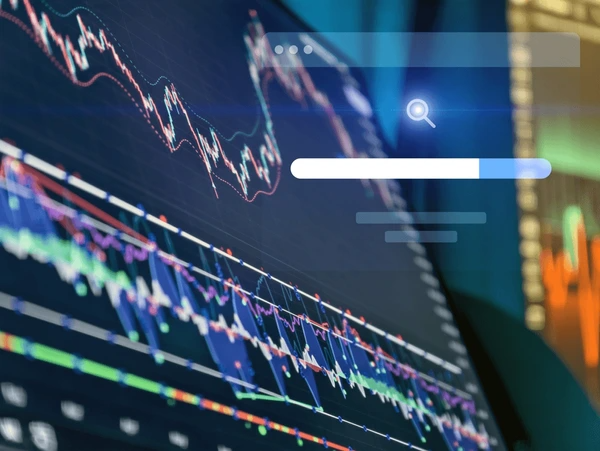
Modern charting has evolved beyond simple candlesticks. Today's professional platforms provide Order Flow visualization, Volume Profiles, and heatmaps that reveal where institutional participants are placing their limit orders. To survive in a market dominated by algorithms, your software must provide a level of granularity that standard retail bank portals simply cannot match. This guide evaluates the industry leaders through the lens of institutional-grade requirements.
TradingView: The Web-Based Standard
TradingView has revolutionized the industry by providing a high-performance charting experience within a standard web browser. It is built on a proprietary language called Pine Script, which allows traders to build custom indicators and backtest strategies with remarkable speed. Its primary advantage is its accessibility and the "social" aspect of script sharing.
- Cloud-based synchronization across all devices instantly.
- Comprehensive coverage of Equities, Forex, and Crypto in one UI.
- Extensive library of community-built indicators (Open Source).
- Execution latency is higher than dedicated desktop apps.
- Limited support for Level 2 and native Order Flow footprints.
NinjaTrader: Futures Mastery
For traders focused on the S&P 500 E-mini or Crude Oil futures, NinjaTrader is the industry benchmark. It is a desktop-native application designed for extreme customization and high-speed execution. NinjaTrader’s ecosystem is built around C# (C-Sharp), allowing for the development of highly complex automated strategies that can be tested against years of historical tick data.
NinjaTrader offers a feature called "Market Replay," which allows you to download tick-for-tick data for any past day and "re-trade" it in real-time. This is the most effective way for day traders to build muscle memory and verify their edge without risking live capital. Furthermore, their "SuperDOM" (Depth of Market) interface is widely considered the gold standard for high-frequency scalping.
Thinkorswim: Comprehensive Retail
Thinkorswim (by Charles Schwab) is the most robust all-in-one platform available for retail traders in the United States. Its strength lies in its analytical depth—specifically for options traders. With its proprietary "thinkScript" language, it allows users to model complex probability curves and volatility smiles directly on the price chart.
While Thinkorswim is exceptional for research and complex options modeling, it is often criticized for its "Lag" during the first 15 minutes of the market open. Professional day traders who require sub-second execution in fast-moving breakouts often use Thinkorswim for their Macro Analysis while executing on a faster platform like DAS Trader Pro.
DAS Trader Pro: Execution Purity
DAS Trader Pro is not designed for aesthetics; it is designed for Speed. It is a Direct Market Access (DMA) platform that routes orders directly to the exchange matching engines. For momentum traders who scalp the "Opening Drive," DAS is the preferred tool because its data processing is un-aggregated, meaning you see every single trade the moment it occurs on the tape.
- Hotkey Execution: Allows for complex order management (e.g., "Buy 500 shares, set stop 10 cents below, send to NASDAQ") with a single button press.
- Multi-Broker Compatibility: Can be linked to various high-speed clearing firms like Interactive Brokers or Guardian Capital.
- Level 2 Accuracy: Provides the cleanest visualization of the "Ax"—the dominant institutional buyer or seller at a price level.
Sierra Chart: Extreme Performance
Sierra Chart is the "heavyweight" of the quantitative world. It is a highly engineered, low-resource application that can handle hundreds of charts and massive data streams without taxing the CPU. It is favored by professional "Order Flow" traders who utilize Footprint Charts and TPO (Time Price Opportunity) profiles.
| Software | Ideal Asset | Architecture | User Level |
|---|---|---|---|
| TradingView | Crypto / FX / Equities | Web-Based (Cloud) | Beginner to Advanced |
| NinjaTrader | Futures | Desktop (C#) | Professional |
| Sierra Chart | Futures / Equities | Desktop (C++) | Institutional / Quant |
| Thinkorswim | Options / Equities | Desktop (Java) | Intermediate |
The Hidden Variable: Data Feed Integrity
The "Charting Software" is only the visual shell. The quality of what you see depends entirely on the Data Feed. Most retail brokers provide "Aggregated Data," which groups multiple small trades into a single candle. For a professional, this is unacceptable. You require "Tick Data"—a record of every individual execution.
Institutional traders often pay for separate data feeds like IQFeed or Rithmic. These feeds are delivered via dedicated fiber paths and are not throttled by the broker's server load. If you are trading using a "free" data feed, you are essentially looking at a delayed or filtered version of reality, which can lead to "phantom" signals that do not exist in the actual order book.
Selection Checkpoints for Professionals
Before committing to a platform, evaluate it against these professional benchmarks:
- Order Flow Capability: Does it support Cumulative Delta and Volume Footprints?
- Hardware Efficiency: Does it crash when 40+ charts are open? (Check CPU/RAM usage).
- API Connectivity: Can you link it to a third-party risk management layer or custom bot?
- Historical Fidelity: Does it provide 10+ years of intraday tick data for backtesting?
Operational Conclusion
The "best" charting software is the one that aligns with the velocity of your strategy. If you are a swing trader, the cloud-based elegance of TradingView is unrivaled. If you are an intraday futures scalper, the raw execution speed and tick-level fidelity of NinjaTrader or Sierra Chart are non-negotiable requirements. Ultimately, professional trading is an industrial process; your software is your manufacturing equipment. Investing in the highest-quality interface is the first step toward achieving a sustainable statistical edge in the global capital markets.