
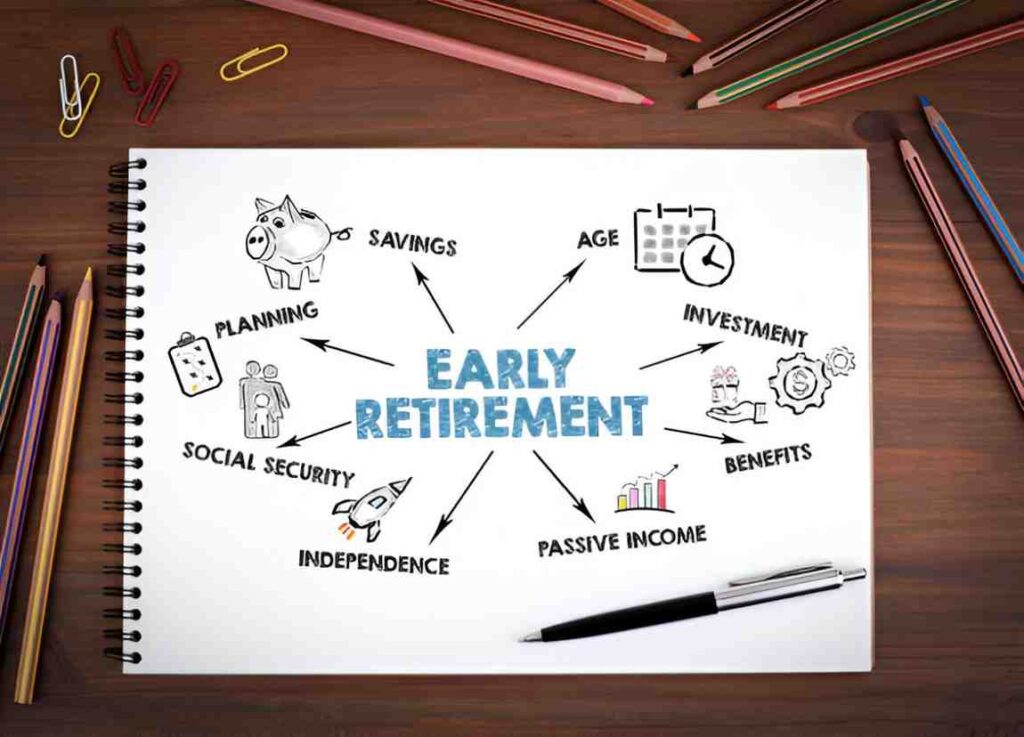
Retirement might seem distant when you’re in your 20s or 30s, but the earlier you start planning, the more control you have over your financial future. I’ve seen too many people delay retirement planning, only to scramble in their 50s with limited options. Early retirement planning isn’t just about saving—it’s about leveraging time, compound growth, and strategic financial decisions to secure freedom later in life.
Table of Contents
Why Early Retirement Planning Matters
Most Americans underestimate how much they’ll need in retirement. Social Security alone won’t cut it—the average monthly benefit in 2024 is around $1,800, which is barely enough to cover basic living expenses. If you want financial independence, you must take matters into your own hands.
The Power of Compound Interest
Albert Einstein reportedly called compound interest the “eighth wonder of the world.” I agree. The earlier you invest, the more your money grows exponentially. The formula for compound interest is:
A = P \times (1 + \frac{r}{n})^{n \times t}Where:
- A = Future value of the investment
- P = Principal amount
- r = Annual interest rate
- n = Number of times interest is compounded per year
- t = Time in years
Let’s compare two investors:
| Investor | Starts At | Monthly Contribution | Annual Return | Value at 65 |
|---|---|---|---|---|
| Alex | 25 | $500 | 7% | $1.26M |
| Jamie | 35 | $500 | 7% | $566K |
Alex, who started 10 years earlier, ends up with more than double Jamie’s retirement fund—despite contributing the same amount monthly. That’s the power of compounding.
Tax Advantages of Early Planning
The U.S. tax code rewards long-term savers. Retirement accounts like 401(k)s and IRAs offer tax-deferred or tax-free growth. For example:
- Traditional 401(k): Contributions reduce taxable income now, but withdrawals are taxed later.
- Roth IRA: Contributions are after-tax, but withdrawals (including gains) are tax-free in retirement.
If you start early, you maximize these benefits. A Roth IRA, for instance, requires five years of contributions before certain withdrawals become penalty-free. The earlier you open one, the sooner you unlock tax-free earnings.
Flexibility and Risk Mitigation
Early planning gives you options. If the market dips in your 40s, you have time to recover. If you start late, a recession near retirement can derail your plans.
Sequence of Returns Risk
This risk refers to the danger of poor market performance in the years leading up to retirement. If you retire during a downturn, your portfolio may not recover. Early planners can adjust contributions or retirement dates to mitigate this.
Healthcare Considerations
Healthcare costs are a major retirement expense. Fidelity estimates a 65-year-old couple will need $315,000 for medical expenses in retirement. Starting early lets you contribute to an HSA (Health Savings Account), which offers triple tax benefits:
- Tax-deductible contributions
- Tax-free growth
- Tax-free withdrawals for medical expenses
Psychological and Lifestyle Benefits
Financial stress is a leading cause of anxiety. Knowing you’re on track for retirement brings peace of mind. Early planners can also pursue coast FIRE (Financial Independence, Retire Early), where they save aggressively early, then scale back work without needing further contributions.
Example: Semi-Retirement at 50
Suppose you save $1M by 50. Even with modest returns (4\% withdrawal rate), that’s $40K annually without touching principal. You might not fully retire, but you gain flexibility to work part-time or pursue passion projects.
Common Mistakes to Avoid
- Underestimating Inflation
Prices rise over time. A dollar today won’t have the same value in 30 years. Adjust your savings goals accordingly. - Ignoring Fees
High expense ratios in mutual funds can eat into returns. A 1% fee over 40 years can cost you hundreds of thousands. - Overlooking Social Security Optimization
Delaying Social Security until 70 increases benefits by 8% annually. Early planners can afford to wait.
Final Thoughts
Early retirement planning isn’t about sacrificing today—it’s about securing tomorrow. The math is clear: starting early maximizes compounding, minimizes risk, and provides flexibility. Whether you aim for traditional retirement or financial independence, the sooner you begin, the better your odds of success.



