
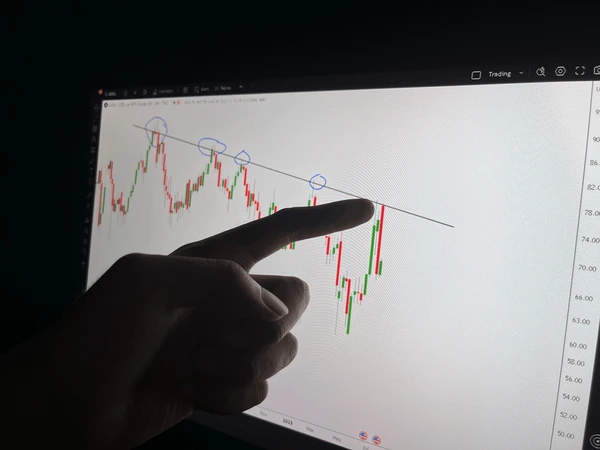
The Time-to-Event Edge: Cox Proportional Hazards in Algorithmic Trading
Predicting trade duration, limit order execution, and regime failure through survival analysis.
Survival Analysis in Finance: Beyond Logistic Regression
Traditional algorithmic models focus primarily on "direction" and "magnitude." Traders spend millions of hours predicting if a stock will go up and by how much. However, a critical third dimension often goes ignored: Time. Survival analysis, a branch of statistics originally designed for medical research and engineering reliability, provides the tools to answer "when." In the context of the trading desk, we are not measuring the survival of a patient, but the survival of a limit order in the book, the duration of a specific market regime, or the time remaining before a volatility spike.
The Cox Proportional Hazards (CPH) Model, developed by David Cox, is the premier tool in this space. It is uniquely powerful because it handles "censored" data—situations where an event hasn't happened yet by the time the observation period ends. If you are tracking how long it takes for a limit order to fill, but the market closes while your order is still active, a traditional regression would discard that data. The Cox model, conversely, uses that information to refine its probability estimates, providing a more accurate reflection of real-world liquidity dynamics.
Mechanics of the Cox Model: Semi-Parametric Power
The CPH model is described as a semi-parametric model. This is its "secret sauce." It does not require the researcher to assume a specific underlying probability distribution for the "baseline hazard" (the inherent risk of the event happening over time). This makes it incredibly robust for financial data, which is notoriously non-normal and prone to fat tails.
The Baseline Hazard
This represents the "natural" rate at which an event happens if all other factors are neutral. In trading, this might be the average time an order stays in the book during a quiet market session.
The Covariates
These are the external factors (like bid-ask spread, order book imbalance, or VIX levels) that shift the hazard up or down. The model calculates how each factor multiplies the baseline risk.
The model assumes that the effect of these covariates is proportional. If a wide spread increases the hazard of an order being cancelled by 20% at the one-minute mark, it is assumed to increase it by the same 20% at the five-minute mark. This simplicity allows quants to rank different market states by their "urgency" without needing a complete physical model of the exchange.
Hazard Ratios and Coefficients: Quantifying the "When"
When an algorithm runs a CPH model, it produces Hazard Ratios (HR). Understanding these ratios is the key to strategic execution. A hazard ratio is the multiplier applied to the probability of the event occurring. It tells us the relative risk associated with a specific covariate.
| Covariate (Market Factor) | Coefficient (Beta) | Hazard Ratio (Exp[Beta]) | Interpretation |
|---|---|---|---|
| Order Book Imbalance | 0.405 | 1.50 | A 50% higher "risk" of immediate fill. |
| Volatility (VIX) | -0.223 | 0.80 | A 20% lower "risk" (longer wait) for execution. |
| Spread Width | 0.693 | 2.00 | Double the chance of order cancellation. |
A Hazard Ratio of 1.0 means the factor has no effect. If HR > 1.0, the factor increases the speed or probability of the event. If HR < 1.0, the factor delays the event. For a high-frequency trading (HFT) desk, these numbers are live inputs that determine whether a limit order should be moved, cancelled, or kept in its current queue position.
Modeling Order Fill Durations: The Liquidity Puzzle
The most immediate application of CPH in algorithmic trading is the Optimal Execution problem. When an institutional investor needs to buy 50,000 shares, they don't hit the "market" button. They use a Smart Order Router (SOR) to place limit orders. The challenge is knowing if that order will ever get filled. If you wait too long (the order "survives" too long), the price might move away from you, leading to "Implementation Shortfall."
A Cox model monitors the order book in real-time. It looks at the depth of the queue, the frequency of "trade prints" at the bid, and the aggressive buying pressure. By calculating the hazard of a "fill event," the SOR can decide to stay passive if the hazard is high, or "cross the spread" and buy at the market if the fill hazard drops below a critical threshold. This prevents the algorithm from being "legged" and ensures the highest possible fill rate at the best possible price.
Predicting Strategy Failure: The Survival of Alpha
Alpha is a perishable commodity. Every quantitative strategy has a lifecycle. It begins with high performance, matures as competitors discover the edge, and eventually "fails" as the market adapts. Quants use Cox Proportional Hazards to model the Life Expectancy of a Strategy. By treating a "drawdown exceeding 10%" as the event (failure), the model can identify which market regimes increase the hazard of strategy collapse.
This allows for a dynamic risk overlay. Instead of waiting for the drawdown to happen, the risk engine monitors covariates like interest rate volatility, sector correlation, and leverage levels. If the "Hazard of Failure" for a specific mean-reversion algo spikes, the engine can automatically reduce its capital allocation. This is the difference between reactive risk management (waiting for a stop-loss) and proactive survival management.
Case Study: Fill Probability Math
Let's walk through the math an algorithm uses to decide if a limit order is likely to execute within the next 30 seconds. We start with the Baseline Hazard Function and apply our specific market coefficients.
Baseline Hazard [h0(t)] at 30s: 0.05
Coefficient for Queue Position [x1]: -0.5 (Being deep in the queue decreases hazard)
Coefficient for Buying Pressure [x2]: 1.2 (High pressure increases hazard)
Formula: h(t) = h0(t) * exp(Beta1 * x1 + Beta2 * x2)
Calculation:
Exponent Part = exp((-0.5 * 1) + (1.2 * 1)) = exp(0.7) = 2.01
Adjusted Hazard = 0.05 * 2.01 = 0.10
Result: The high buying pressure has doubled the hazard of a fill compared to the baseline, despite being deep in the queue. The algorithm decides to keep the order active.
This instantaneous calculation allows the machine to operate with a "temporal awareness" that human traders cannot achieve. It isn't just looking at the price; it is calculating the velocity of probability.
The Proportionality Assumption: The Hidden Trap
The "Proportional" in Cox Proportional Hazards is a strict mathematical requirement. It assumes that the ratio of the hazards for any two individuals is constant over time. If a stock’s volatility doubles the risk of a "flash crash" at the market open, the model assumes it doubles that risk equally throughout the day. In the chaotic world of finance, this assumption is often violated.
To guard against this, quants use Schoenfeld Residuals. If the residuals show a trend over time, the proportionality has failed. In such cases, the algorithm must switch to a "Time-Varying Covariate" model, which allows the coefficients to change as the day progresses. For example, the bid-ask spread may have a huge impact on fill times at the open, but almost no impact during the lunchtime lull. Ignoring this nuance leads to "Model Drift," where the algorithm begins making decisions based on stale statistical assumptions.
CPH vs. DeepSurv Models: The Machine Learning Frontier
As we move into the era of Artificial Intelligence, the traditional Cox model is being enhanced by Deep Learning. Traditional CPH assumes that the relationship between covariates (like spread and volume) is linear. DeepSurv, a deep learning extension of the Cox model, uses neural networks to map non-linear relationships into the hazard function.
In a standard Cox model, if volume increases, the hazard increases linearly. In a DeepSurv model, the network might find that volume increases the hazard only up to a certain point, after which it actually creates "gridlock" in the order book and decreases the hazard of a fill. Deep learning allows the model to capture these "U-shaped" relationships that traditional statistics miss.
Traditional Cox models struggle when you feed them 500 different indicators. They suffer from the "curse of dimensionality." Deep learning architectures can ingest thousands of order-book features, automatically performing dimensionality reduction to find the core drivers of event timing.
Practical Implementation Guidelines for Quants
To successfully deploy a Cox-based trading system, practitioners should adhere to a rigorous validation workflow. The objective is to move from a static backtest to a dynamic, time-aware execution engine. The following steps provide the standard institutional framework.
- Clean Your Durations: Ensure your timestamps are synchronized across exchanges. A millisecond error in "Time-to-Fill" can lead to a 100% error in hazard estimation.
- Handle Censoring Correctly: Never discard a cancelled order. Use it as a right-censored observation to inform the model about the "minimum time" required for liquidity to provide a fill.
- Monitor Proportionality Daily: Use automated tests for Schoenfeld residuals. If the market regime shifts (e.g., from high to low volatility), your proportional assumptions will likely break first.
- Start with the Lifelines Library: For Python-based quants, the lifelines library is the industry standard for implementing CPH and survival analysis with minimal overhead.
Ultimately, the Cox Proportional Hazards model shifts the focus of algorithmic trading from "what" to "when." By quantifying the hazard of events, traders can optimize their execution schedules, manage the lifecycle of their strategies, and identify structural failures before they manifest as deep drawdowns. In a market where every millisecond counts, the ability to model the survival of a trade is the ultimate competitive advantage.


