
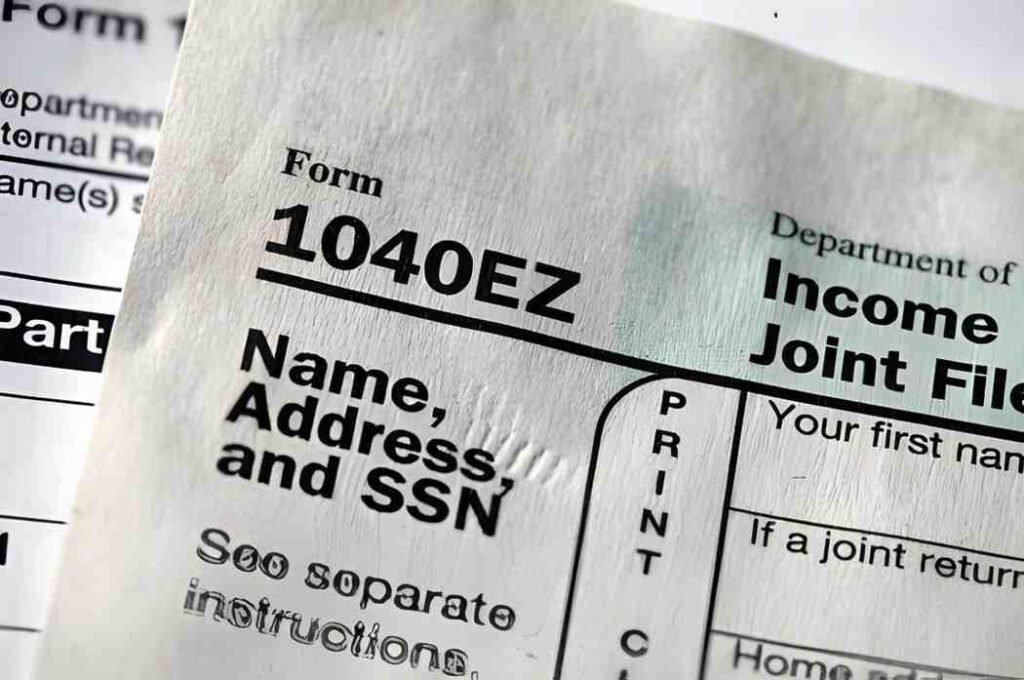
For decades, the Form 1040-EZ represented the simplest path for millions of Americans to fulfill their annual tax obligation. It was a one-page form designed for taxpayers with straightforward financial situations—primarily those with income only from wages, interest, and unemployment compensation. Its very name, “EZ,” promised an uncomplicated process. This simplicity, however, came with significant limitations. A common point of confusion arose for individuals who had contributed to or received distributions from a retirement plan. The question, “Can you do a 1040-EZ with a retirement plan?” was a frequent one. The historical answer was a definitive no. The presence of virtually any retirement plan activity automatically disqualified a taxpayer from using the 1040-EZ. Furthermore, this entire question is now a matter of historical tax policy, as the Form 1040-EZ was eliminated by the Tax Cuts and Jobs Act of 2017, starting with tax year 2018.
This article will explore the specific rules that made the 1040-EZ and retirement plans mutually exclusive, provide examples of common retirement-related transactions that forced taxpayers onto the more complex forms, and explain how the current post-1040-EZ tax filing landscape handles these situations with the streamlined Form 1040.
The Form 1040-EZ Eligibility Criteria: A Wall of Exclusion
The instructions for the final iterations of Form 1040-EZ laid out clear and strict eligibility requirements. To use the form, a taxpayer’s situation had to meet all of the following conditions, among others:
- Your taxable income was less than $100,000.
- Your filing status was Single or Married Filing Jointly.
- You (and your spouse if filing jointly) were under age 65 and not blind.
- You had only wages, salaries, tips, taxable scholarship or fellowship grants, unemployment compensation, or Alaska Permanent Fund dividends, and no more than $1,500 of taxable interest.
The most critical rule for our purposes was:
- You cannot claim any adjustments to income.
This single criterion was the insurmountable barrier for anyone with retirement plan activity. The Form 1040-EZ calculated tax based on your total income (wages, interest, etc.) minus a single deduction for your personal exemption. It provided no mechanism to report “above-the-line” adjustments that reduce your Adjusted Gross Income (AGI).
Retirement Plan Activities That Disqualified You
Virtually every common interaction with a retirement plan requires an adjustment to income or reporting that the 1040-EZ was incapable of handling. Here are the primary examples:
1. Making a Deductible Contribution to a Traditional IRA
One of the main benefits of a Traditional IRA is the potential to deduct contributions from your taxable income. This deduction is claimed as an adjustment to income on the tax return.
- The 1040-EZ Problem: The form had no line to report an IRA deduction. There was no way to subtract this contribution, meaning you would pay tax on income you had legally sheltered.
2. Taking a Distribution from a Retirement Plan
Any distribution from a Traditional IRA, 401(k), 403(b), or similar plan is generally taxable. The payer (the plan administrator) provides you with a Form 1099-R, Distributions From Pensions, Annuities, Retirement or Profit-Sharing Plans, IRAs, Insurance Contracts, etc.
- The 1040-EZ Problem: Form 1040-EZ had no line or schedule to report income from a Form 1099-R. It only had lines for W-2 wages, taxable interest, and unemployment compensation.
3. Taking an Early Withdrawal Subject to Penalty
If you took an early distribution from a retirement plan before age 59½, you not only owed ordinary income tax on the distribution but also an additional 10% penalty.
- The 1040-EZ Problem: There was no way to calculate or report the 10% additional tax on early distributions. This requires specific lines and worksheets found only on the full Form 1040.
4. Converting a Traditional IRA to a Roth IRA
A Roth conversion is a taxable event. The amount converted from the Traditional IRA is added to your taxable income for the year.
- The 1040-EZ Problem: The converted amount is reported on Form 1099-R. As with a regular distribution, the 1040-EZ had no mechanism to report this income.
5. Making a Contribution to a Health Savings Account (HSA) or Archer MSA
Contributions to these accounts are also adjustments to income.
- The 1040-EZ Problem: Again, no line item existed to claim this deduction.
Illustrative Example: The Cost of Using the Wrong Form
Imagine a taxpayer in 2017, John, who had $50,000 in W-2 wages and made a $5,500 deductible contribution to his Traditional IRA.
- Correct Approach (Form 1040): John would report $50,000 in wages and then claim a $5,500 IRA deduction. His Adjusted Gross Income (AGI) would be 50,000 - 5,500 = \$44,500. His tax would be calculated on this lower amount.
- Incorrect Approach (Form 1040-EZ): If John had incorrectly used the 1040-EZ, he would have reported his total income as $50,000. He would have no way to deduct the IRA contribution. His tax would be calculated on the full $50,000. Assuming a 15% marginal tax bracket, this error would cost him 5,500 \times 0.15 = \$825 in extra taxes.
This example clearly shows that attempting to force a retirement plan situation onto a 1040-EZ was not only against the rules but also financially detrimental.
The Modern Landscape: The Post-1040-EZ Era
The Tax Cuts and Jobs Act of 2017 significantly changed the tax code and simplified the core Form 1040. A key part of this simplification was the elimination of Form 1040-EZ and its sibling, Form 1040-A.
Today, all individual taxpayers file using the Form 1040, which has been redesigned as a “postcard-sized” core form. However, this simplicity is achieved by using supplemental schedules.
- The New Simplicity: For a taxpayer with a very simple situation—only W-2 income and no adjustments—filing the new Form 1040 is as straightforward as the old 1040-EZ.
- Handling Complexity: The moment a taxpayer has a retirement plan transaction, they simply attach the required schedule. The most common schedules for retirement-related activities are:
- Schedule 1: Used to report “Additional Income and Adjustments to Income.” This is where you would report IRA deductions (an adjustment) and income from a 1099-R (additional income).
- Schedule 2: Used to report “Tax,” including the 10% additional tax on early distributions from retirement plans.
This modular system is more flexible. Everyone starts with the same simple core form, and you only add the schedules you need. There is no longer a separate “EZ” form that creates confusion about eligibility.
Conclusion: A Streamlined System with Necessary Flexibility
The historical Form 1040-EZ served a purpose for a narrow subset of taxpayers with the simplest financial lives. However, its rigid structure made it incompatible with the realities of retirement planning, which often involve adjustments to income and specialized forms like the 1099-R.
The elimination of the 1040-EZ has ultimately been a positive development for clarity. The current Form 1040 system acknowledges that while many taxpayers desire simplicity, the tax code itself is complex. By using a core form with attachable schedules, the system now gracefully accommodates both the wage earner with no deductions and the retiree taking distributions from multiple accounts. The key takeaway for today’s taxpayer is that any interaction with a retirement plan will require the use of the standard Form 1040 and its associated schedules, ensuring that all income is properly reported and all valuable deductions are correctly claimed.



