
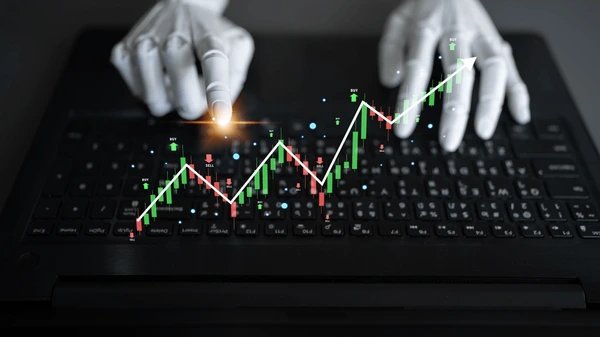
The Shadow of Logic: Analyzing the Externalities of Algorithmic Trading
Framework of Externalities
Hide Contents- Defining Algorithmic Externalities
- Positive Externalities: The Liquidity Dividend
- Volatility as a Systemic Tax
- The Infrastructure Arms Race Subsidy
- Crowding Out Long-Term Capital
- Microstructure Fragility and Toxic Flow
- The Black Box and Regulatory Blindness
- Behavioral Shifts in Market Citizenship
- Case Studies in Algorithmic Failure
- Internalizing the Costs of Code
Defining Algorithmic Externalities
In economic theory, an externality occurs when the production or consumption of a specific good affects a third party who did not choose to incur that cost or benefit. In the sterilized environment of digital capital markets, algorithmic trading acts as a massive engine of unintended consequences. While a firm designs an execution logic to maximize private profit, the collective behavior of thousands of such machines alters the environment for every other participant—from retail investors to global central banks.
The externalities of algorithmic trading represent the Spillover Effects of automation. They exist in the narrow bid-ask spreads that benefit a pension fund manager and in the sudden liquidity droughts that precede a flash crash. For the investment expert, internalizing these externalities is the first step toward building a sustainable financial system. We must move beyond assessing algorithms on a purely P&L basis and begin to analyze their Market Footprint.
This article deconstructs the structural "exhaust" of the algorithmic engine, assessing how the quest for micro-efficiencies introduces macro-fragilities into the global economic fabric.
Positive Externalities: The Liquidity Dividend
The most cited benefit of algorithmic trading is the radical reduction in transaction costs. This "Liquidity Dividend" serves as a primary positive externality for all market participants. Before the era of automation, human market makers required significant compensation to offset the risk of holding inventory. Today, algorithms perform this task for fractions of a penny.
Spread Compression
Algorithms constantly adjust quotes to find the equilibrium price. This process has narrowed bid-ask spreads by over 80% since the floor-trading era, saving billions for passive investors.
Price Discovery Efficiency
Information travels faster through silicon than through human deliberation. Arbitrage algorithms ensure that a price change in London reflects in New York in milliseconds, maintaining global price parity.
Democratized Execution
Retail brokers now offer institutional-grade execution speed to individual investors. The algorithm acts as an equalizer, providing professional-level fills to the smallest accounts.
These benefits contribute to a lower Cost of Capital for corporations. When investors can enter and exit positions cheaply, they demand a lower risk premium, which theoretically fuels real economic growth and corporate investment.
Volatility as a Systemic Tax
While spreads have narrowed, the nature of volatility has undergone a structural shift. The negative externality of algorithmic trading is the creation of Non-Linear Volatility. In the absence of human "speed bumps," price movements can become parabolic, driven by feedback loops where one algorithm's sell signal triggers another's stop-loss.
This systemic tax manifests as Flash Crashes. These events represent a localized breakdown in market logic where liquidity evaporates instantly. For the long-term investor, this introduces a new form of "Gap Risk"—the danger that an asset price moves 10% in seconds, bypassing all traditional risk-mitigation strategies.
The Infrastructure Arms Race Subsidy
The pursuit of Latency Superiority has created a multibillion-dollar arms race. Firms invest massive capital in private microwave towers, sub-oceanic fiber cables, and custom FPGA hardware. While these firms capture a private profit from their speed advantage, the collective cost of this infrastructure represents a massive redirection of societal resources.
The Latency Floor
Economists argue that the marginal benefit of moving a trade signal from 5 milliseconds to 500 microseconds provides zero utility to the real economy. This investment serves only to rearrange who captures the "Alpha" of a trade, rather than creating new value. This redirection of human and financial capital into micro-latency is a significant opportunity cost externality.
Furthermore, this arms race creates a Barrier to Entry. Smaller firms and emerging markets that cannot afford the "entry fee" of co-location and ultra-fast hardware find themselves at a structural disadvantage. This concentrates market power among a handful of well-capitalized high-frequency firms, potentially stifling innovation in broader quantitative research.
Crowding Out Long-Term Capital
A profound negative externality is the potential "Crowding Out" of fundamental, long-term investors. When high-frequency machines dominate 80% of daily volume, price action becomes driven by Micro-Structural Mechanics rather than corporate fundamentals.
Fundamental investors find it increasingly difficult to execute large orders without being "sniffed out" by predatory algorithms. These algorithms detect the footprints of a large buyer and buy ahead of them, increasing the execution cost for the very pension funds and retirement accounts that provide the market's long-term stability. This dynamic discourages the type of patient capital that supports innovation and economic growth.
Microstructure Fragility and Toxic Flow
Algorithmic trading has introduced the concept of Toxic Flow—orders that originate from informed participants who use high-speed data to pick off slower market participants. This creates an adverse selection externality.
When an algorithm knows a price is about to change because it has faster access to the futures market, it "lifts" all the bids from slower participants. These participants (often human market makers or retail traders) are forced to take a loss. Over time, this forces everyone to either automate or exit, further homogenizing the market and increasing fragility.
Algorithms provide liquidity when it is least needed (low volatility) and withdraw it when it is most critical (high volatility). This "Ghost Liquidity" gives a false sense of security to investors, who assume they can exit positions during a crash, only to find the order book empty.
Correlated algorithms using similar data feeds or neural architectures may react to the same signal simultaneously. This creates a "tsunami" of orders that overwhelms the matching engines of exchanges, leading to unintended shutdowns and technical failures.
The Black Box and Regulatory Blindness
As logic migrates to deep learning models, the externality of Opacity becomes paramount. When an algorithm behaves erratically, regulators often find themselves unable to reconstruct the "intent" of the trade. This creates a regulatory lag where technology evolves faster than the oversight designed to protect the public.
The inability to audit "Secret Logic" means that systemic risks can hide in plain sight. If a model develops a predatory bias or a failure mode that only triggers during rare market conditions, the market may not realize the danger until it is too late. The externality here is the Public Risk incurred by the private deployment of uninterpretable code.
Behavioral Shifts in Market Citizenship
Ultimately, the rise of algorithmic trading alters the Market Social Contract. Markets were originally conceived as a means to allocate capital to productive enterprises. Automation has shifted the focus toward a zero-sum game of information extraction.
This shift devalues the concept of "Market Citizenship"—the idea that participants have a responsibility to contribute to the long-term health of the exchange. When an algorithm is programmed solely to optimize for the next microsecond, it abandons any regard for the stability of the system it inhabits. Internalizing this behavioral externality requires a cultural shift in the quantitative finance industry.
Comparative Impact: Humans vs. Algorithms
| Market Dynamic | Human/Manual Era | Algorithmic Era | Externality Type |
|---|---|---|---|
| Transaction Cost | High (Commissions/Wide Spreads) | Near-Zero (Spread Compression) | Positive |
| Liquidity Quality | Reliable (Firm Quotes) | Transient (Ghost Liquidity) | Negative |
| Price Discovery | Slow (Context-Driven) | Instant (Data-Driven) | Positive |
| Tail Risk | Predictable (Human Pace) | Accelerated (Machine Speed) | Negative |
Internalizing the Costs of Code
How do we solve the problem of algorithmic externalities? The solution lies in Structural Internalization. This involves creating mechanisms that force firms to pay for the systemic risks they introduce.
Potential solutions include:
- Minimum Quote Life: Requiring quotes to remain active for a minimum duration (e.g., 100ms) to discourage phantom liquidity.
- Latency Speed Bumps: Introducing a random delay of a few milliseconds to neutralize the microwave-latency arms race.
- Order-to-Trade Ratio Penalties: Charging firms that flood the system with thousands of orders but execute only a tiny fraction.
- Mandatory Logic Auditability: Requiring firms to provide explainable summaries of their model's risk parameters to regulators.
By building a regulatory framework that prioritizes Systemic Robustness over execution speed, we can preserve the liquidity benefits of algorithmic trading while mitigating the moral and financial costs of its "exhaust."
The future of finance is digital, but it must remain human in its purpose. We must ensure that the machines we build to manage our wealth do not inadvertently destroy the stability of the world they were designed to serve. The expert quant of the future will be measured not by the speed of their execution, but by the integrity of their market footprint.


