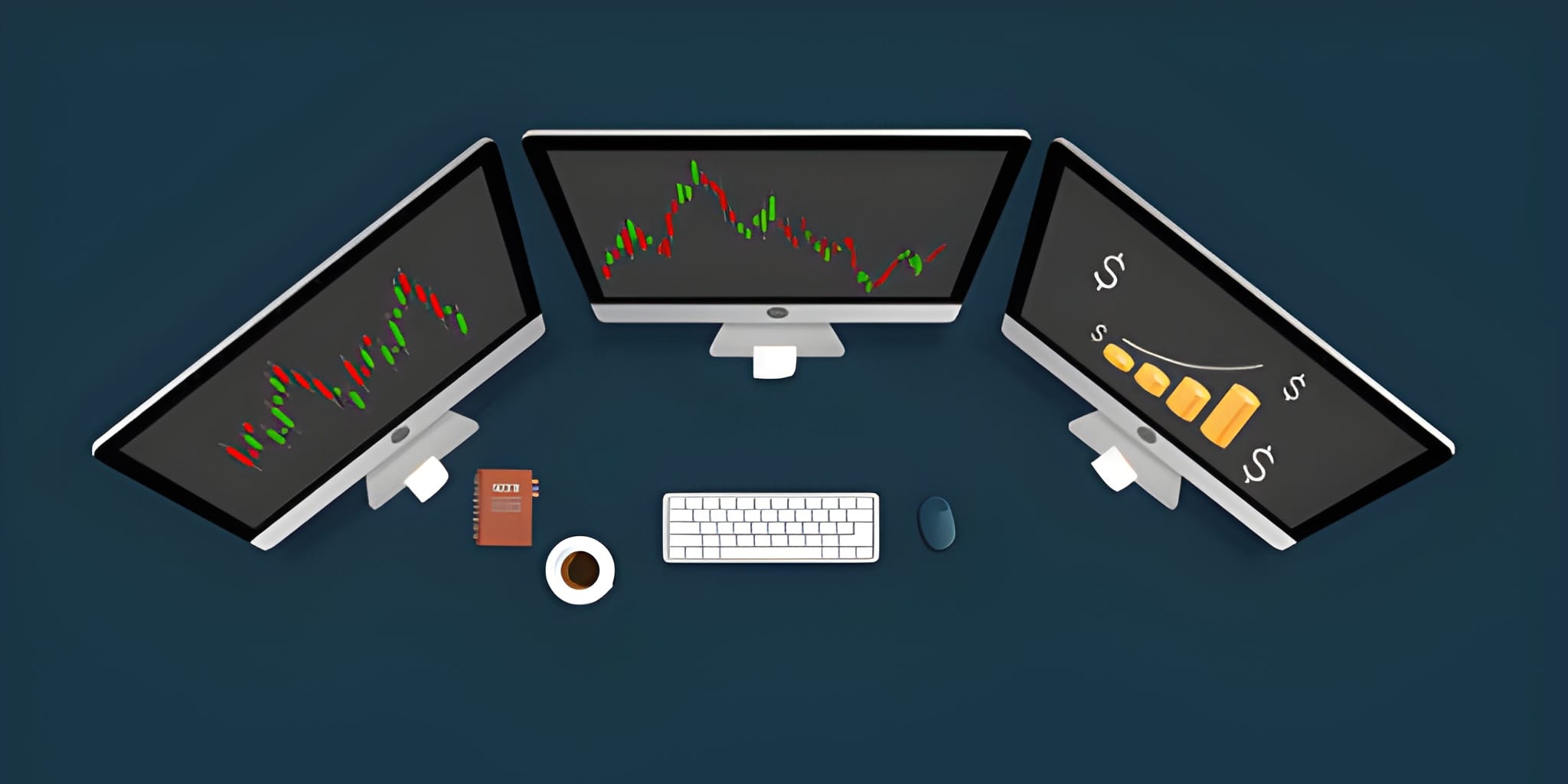
The Profitability Paradox: Can You Make More Money Day Trading or Swing Trading?
An Institutional Comparison of Compound Returns, Capital Turnover, and Temporal Risk
- The Structural Differences: Frequency vs. Trend
- Capital Turnover: The Day Trader's Compounding Advantage
- Swing Trading Efficiency: Capturing the Meat of the Move
- The Mathematics of Friction: Fees, Slippage, and Spreads
- Temporal Risk: The Hazard of the Overnight Gap
- The Psychological Tax: Decision Fatigue and Burnout
- The US Regulatory Landscape: PDT and Tax Implications
- Conclusion: The Scalability Verdict
The debate between day trading and swing trading often centers on the superficial allure of "fast money" versus "passive growth." In the clinical reality of the financial markets, however, the question of which style generates more wealth is a complex function of capital turnover, transaction friction, and risk-adjusted expectancy. Day trading involves entering and exiting positions within a single trading session, seeking to exploit micro-inefficiencies. Swing trading targets multi-day or multi-week moves, aiming to capture the primary arc of a trend. Both methodologies possess the capacity for significant wealth generation, but they achieve it through fundamentally different mathematical engines.
For the professional participant, "more money" is not a static figure; it is a measure of Return on Time and Return on Equity. While a day trader may achieve higher percentage returns on a small account through aggressive compounding, a swing trader often achieves higher absolute dollar returns by managing larger position sizes with lower operational stress. Understanding the mechanical requirements of each style is the first step in determining which profit engine aligns with your capital base and socioeconomic objectives. This article provides a deep architectural analysis of the profitability profiles of both intraday and interday market participation.
The Structural Differences: Frequency vs. Trend
Success in day trading relies on high-frequency execution. The day trader seeks "Alpha" in the noise of the 1-minute or 5-minute charts. Because they end every day in cash, they eliminate the risk of a catastrophic "Gap Down" overnight. This allows for the use of higher intraday leverage—typically 4:1 in the United States—which amplifies small price oscillations into meaningful capital gains. However, this frequency introduces Decision Friction. The more trades you execute, the more opportunities you have to commit an emotional or technical error.
Swing trading, by contrast, relies on the patience to allow a trend to mature. The swing trader operates on daily and weekly charts, ignoring the "Intraday Churn." By holding positions through several sessions, they capture the Non-Linear part of a move—the explosive surges that often occur at the market open or during after-hours news releases. While the swing trader uses lower leverage (usually 2:1), they benefit from a higher reward-to-risk ratio on their setups. A day trader might seek a 2:1 payout, while a swing trader frequently targets 5:1 or higher.
Capital Turnover: The Day Trader's Compounding Advantage
The mathematical advantage of day trading is the velocity of capital. A day trader can "turn over" their entire account balance several times in a single week. This allows for the Daily Compounding of profits. If a trader earns 1% today, that 1% is available to be risked again tomorrow. Over a month, this creates a compounding effect that a swing trader, whose capital is tied up in a single trade for two weeks, cannot match.
This turnover is the primary engine for growing a small account (e.g., $30,000) into a large one. By capturing "small bites" of the market repeatedly, the day trader reduces their exposure to any single event while maximizing the number of times their statistical edge is applied to the market. In a high-volatility environment, this frequency of execution can yield monthly returns that seem astronomical to the traditional investor.
Swing Trading Efficiency: Capturing the Meat of the Move
While the day trader compounds faster, the swing trader captures Efficiency. A major move in a stock like Nvidia or Apple often spans several weeks. A day trader might trade the same stock 20 times during that move, paying commissions and dealing with slippage on every entry. A swing trader enters once at the start of the trend and exits once at the end. The swing trader captures 90% of the move with 5% of the effort.
Swing trading also allows for Scaling. It is significantly easier to execute a $500,000 swing trade in a liquid stock than it is to execute a $500,000 intraday scalp. The slippage incurred when entering a massive position in a 1-minute window can erase the thin profit margins of a day trader. Therefore, as an account grows into the high six or seven figures, swing trading often becomes the "more profitable" style simply because it accommodates the size required to generate institutional-scale wealth.
Intraday Precision
Day traders excel at identifying immediate supply/demand imbalances. They thrive on volatility spikes and high-volume breakouts that occur during the first and last hours of the session.
Trend Persistence
Swing traders exploit the "Momentum Effect"—the tendency for stocks that are rising to continue rising. They use moving averages and structural support to ride the primary wave.
Risk Segregation
Day traders face "Execution Risk" (slippage/tech failure). Swing traders face "Event Risk" (overnight earnings/macro shocks). Success requires choosing which risk you are better equipped to manage.
The Mathematics of Friction: Fees, Slippage, and Spreads
Profitability is a "Net" calculation. An amateur trader ignores Trading Friction, which is the silent killer of day trading accounts. Because day trading requires high frequency, the cost of the "Bid-Ask Spread" and "Slippage" accumulates rapidly. Even in a zero-commission environment, every time you buy at the "Ask" and sell at the "Bid," you are paying a hidden tax to the market makers.
Avg. Trades Per Year (Day Trader): 1,000
Avg. Trades Per Year (Swing Trader): 50
Avg. Slippage/Spread Cost per Trade: $20
Day Trader Friction: 1,000 * $20 = $20,000 (40% of Account)
Swing Trader Friction: 50 * $20 = $1,000 (2% of Account)
Result: A day trader must generate an extra 38% return just to match the starting position of a swing trader. This is why day trading requires a significantly higher "Edge" to remain viable.
Temporal Risk: The Hazard of the Overnight Gap
The primary profit engine of swing trading—holding overnight—is also its greatest risk. In the modern 24/7 global news cycle, a company can release an earnings warning, a regulatory filing, or a CEO resignation at 6:00 PM EST. By 9:30 AM the next morning, the stock might gap down 20%, bypassing your stop-loss and resulting in a loss far larger than your intended risk.
Day traders pay for their safety through lower potential payouts per trade. By being "Flat" every night, they sleep without the anxiety of a global catastrophe. However, they also miss the "Morning Gift"—the gap up that often occurs in a strong bull market where the stock opens 2% higher than it closed. Historically, a significant portion of the S&P 500's long-term returns has occurred between the close and the next day's open. Swing traders are the only participants who capture this passive revenue.
The Psychological Tax: Decision Fatigue and Burnout
Profitability is not sustainable if the operator suffers from Decision Fatigue. Day trading requires hundreds of high-stakes decisions every week. The brain's "Executive Function" is a finite resource. After several hours of staring at flickering candles and Level 2 data, the probability of an impulsive or irrational decision increases. This is the "3:00 PM Error," where day traders give back their morning gains due to mental exhaustion.
The US Regulatory Landscape: PDT and Tax Implications
For US-based participants, the legal environment creates a structural bias. The Pattern Day Trader (PDT) rule requires a $25,000 minimum equity balance for unrestricted intraday trading. For those starting with $5,000, swing trading is not a choice; it is a regulatory necessity. Trying to day trade a sub-PDT account leads to "Frozen Capital" and missed opportunities.
Furthermore, tax efficiency favors the swing trader. While both styles typically result in Short-Term Capital Gains (taxed as ordinary income) if held for less than a year, swing traders can more easily transition into "Long-Term" status if a trade develops into a multi-month investment. Additionally, the lower frequency of swing trading makes for a significantly cleaner 1099 form, reducing the administrative overhead and accounting costs associated with high-frequency business lines.
| Feature | Day Trading Profile | Swing Trading Profile | Winner (Profit Potential) |
|---|---|---|---|
| Capital Compounding | Daily Velocity; High Speed | Weekly/Monthly; Moderate Speed | Day Trading |
| Operational Costs | High (Slippage/Spreads) | Very Low | Swing Trading |
| Risk Profile | No Overnight Exposure | Gap/Event Risk | Day Trading (Safety) |
| Account Scaling | Limited by Liquidity | High Scalability | Swing Trading |
| Decision Intensity | High; Rapid Fatigue | Low; Systematic | Swing Trading (Longevity) |
Conclusion: The Scalability Verdict
So, can you make more money day trading or swing trading? The answer depends on your Account Lifecycle. For a trader starting with limited capital ($30,000 to $100,000) and high discipline, Day Trading offers the greatest wealth generation potential due to the sheer velocity of compounding. The ability to apply a statistical edge 500 times a year instead of 50 times creates an exponential equity curve that swing trading cannot replicate at small scales.
However, for the trader managing a large capital base ($500,000+) or seeking a sustainable, lifelong business model, Swing Trading is the more profitable choice. The reduction in friction, the ability to manage larger position sizes without moving the market, and the preservation of mental capital allow for superior long-term growth. Most elite traders follow a natural evolution: they day trade to build their initial wealth and transition to swing trading to protect and scale it.
Many professional desks utilize a hybrid model. They maintain a "Core Position" as a swing trade to capture the primary trend, while simultaneously "Trading Around" that core using intraday techniques to reduce their cost basis and capture minor oscillations. this strategy maximizes capital efficiency while providing the safety of intraday liquidity management.
When measuring profitability, you must subtract the cost of your health. If day trading earns you 50% a year but leaves you with chronic stress, while swing trading earns 30% a year and allows you to enjoy your life, the swing trader is "Wealthier" in every meaningful sense. Never sacrifice your long-term operational capacity for short-term percentage gains.
Ultimately, trading is a business of Probabilities and Process. Whether you choose the high-speed compounding of the day session or the structural efficiency of the swing trend, your profitability will be determined by your adherence to a proven system. The market does not care about your chosen timeframe; it only rewards the participant who can manage risk with clinical precision and execute their edge with boring, repetitive discipline. Master the math of your style, and the revenue will inevitably follow.