
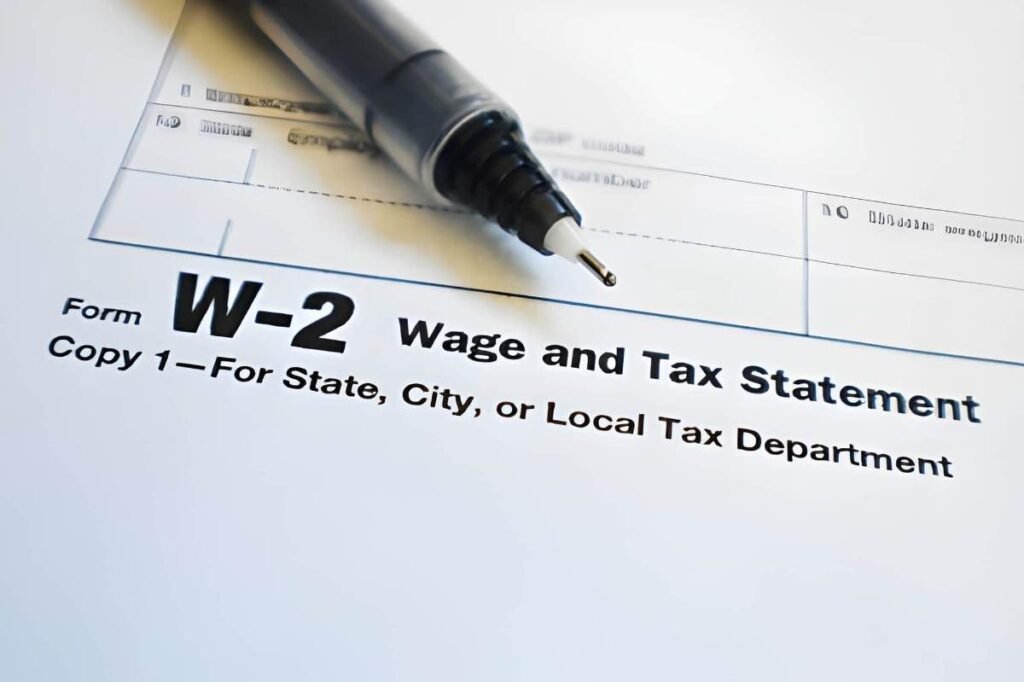
The modern workforce is no longer a monolith of Monday-through-Friday, nine-to-five employees. A growing segment of professionals, from nurses and substitute teachers to IT consultants and project-based workers, operate on a per diem basis. They receive a W-2 form at the end of the year, yet their work lives are defined by daily assignments and fluctuating income. This unique position often leads to a pressing and valid question: Can a per diem W-2 employee have a retirement plan? The answer is an unequivocal yes. However, the path to a secure retirement is more complex and requires a deeper understanding of the rules than it does for a traditional full-time employee.
This article will deconstruct the retirement planning landscape for the per diem W-2 worker. We will clarify the critical distinction between W-2 and 1099 status, explore the employer-sponsored plans you may be offered, delve into the powerful world of Individual Retirement Accounts (IRAs), and provide a strategic framework for building a robust retirement plan amidst income variability.
The Foundational Distinction: W-2 vs. 1099
Before discussing retirement plans, we must solidify what it means to be a per diem W-2 employee. This classification is the cornerstone of your benefits and tax situation.
- W-2 Employee: When you are a W-2 employee, even on a per diem basis, the company you work for is your employer. They control your work to a significant degree, provide the tools and location for the job, and, most importantly, they withhold taxes from your paycheck. They pay a portion of your Social Security and Medicare taxes (FICA), and you pay the other half. You are part of the company’s workforce, albeit without a guaranteed schedule.
- 1099-NEC Independent Contractor: A 1099 worker is self-employed. They are running their own business. They receive full payments without any tax withholding, are responsible for paying the entire 15.3% FICA tax themselves (through self-employment tax), and have far more autonomy over how and when they complete their work.
Why This Matters for Retirement: Your status as a W-2 employee means you are eligible to participate in employer-sponsored retirement plans if they are offered. A 1099 worker is never eligible for these plans; their retirement universe consists solely of plans for the self-employed, like a SEP IRA or Solo 401(k). For the per diem W-2 employee, the retirement planning conversation is bifurcated: what your employer provides and what you can do for yourself.
Employer-Sponsored Plans: The First Layer of Savings
If the organization you per diem for offers a retirement plan to its employees, you likely have the right to participate. The law protects you from being excluded solely based on your part-time or per diem status, but with specific caveats.
The SECURE Act’s Critical Change: Historically, employers could require employees to work 1,000 hours in a year to become eligible for their 401(k) plan. For a per diem worker, this was often an impossible barrier. The SECURE Act of 2019 changed this landscape dramatically.
Now, employers must allow employees who complete at least 500 hours of service per year for three consecutive years to participate in the plan. Furthermore, once you meet this requirement, you must be allowed to participate in the plan no later than the first day of the next plan year.
Example: You work as a per diem nurse for Hospital A.
- Year 1: You work 600 hours.
- Year 2: You work 550 hours.
- Year 3: You work 700 hours.
You have now met the “500 hours for 3 consecutive years” test. If the plan year at Hospital A runs from January 1 to December 31, you must be allowed to join the 401(k) plan by the following January 1 of Year 4.
What to Expect in an Employer Plan:
If you are eligible, you can typically contribute to the plan through salary deferral. This means a percentage of each paycheck you earn is automatically sent to your retirement account before taxes are taken out. This is a powerful wealth-building tool due to:
- Tax Deferral: You don’t pay income tax on the money you contribute now. You will pay taxes when you withdraw it in retirement, presumably at a lower tax bracket.
- Automatic Savings: The “set-it-and-forget-it” nature of payroll deduction builds discipline and consistency.
- Potential Employer Match: This is the golden ticket, but it is less common for per diem employees. Employers can design their plans to require 1,000 hours of service in a year to receive the employer match contribution, even if you are allowed to make your own contributions under the 500-hour rule. Always check the summary plan description (SPD) for details.
The Indispensable IRA: Your Personal Retirement Engine
Given the potential hurdles and delays with employer plans, the Individual Retirement Account (IRA) is the most important and accessible tool for a per diem W-2 employee. It is entirely separate from your employer. You open it yourself at a brokerage firm like Vanguard, Fidelity, or Charles Schwab.
The Two Main Types of IRAs:
- Traditional IRA: Contributions you make may be tax-deductible in the year you make them, depending on your income and whether you are covered by a workplace plan. The investments grow tax-deferred. You pay ordinary income tax when you withdraw the money in retirement.
- Roth IRA: Contributions are made with after-tax dollars. You get no tax deduction today. The critical benefit is that all growth and qualified withdrawals in retirement are 100% tax-free.
Contribution Limits and Rules:
For 2024, the total annual contribution limit across all your IRAs (Traditional and Roth combined) is $7,000, or $8,000 if you are age 50 or older.
The ability to contribute to a Roth IRA phases out at higher incomes. For single filers in 2024, the phase-out range begins at $146,000 and ends at $161,000 of Modified Adjusted Gross Income (MAGI). For married couples filing jointly, the phase-out range is $230,000 to $240,000.
The Supreme Advantage for Variable Incomes: The IRA’s greatest feature for a per diem worker is flexibility. You are not tied to a payroll deduction schedule. You can contribute lump sums at any time during the tax year or even up until the tax filing deadline of the following year (typically April 15). This allows you to smooth out your savings over time. You can have a goal to max out your IRA each year, but you can wait until you have a clearer picture of your annual earnings before deciding how much to contribute and when.
Strategic Integration: Building a Complete Plan
The most effective approach for a per diem W-2 employee is to layer these options into a cohesive strategy.
Step 1: Foundation – The Emergency Fund
Before any retirement savings, build a robust emergency fund. Income variability demands a larger cash buffer than a salaried employee might need. Aim for 3-6 months of essential living expenses held in a liquid savings account. This fund prevents you from raiding your retirement savings during a slow work period.
Step 2: Priority One – Capture the Employer Match
If your employer offers a 401(k) and you are eligible for a matching contribution, prioritize contributing enough to that plan to get the full match. It is an instant, guaranteed return on your investment. There is no better deal in finance.
Step 3: Core Holding – Max Out Your IRA
After capturing any match, direct your retirement savings to your IRA. You have more control, a wider range of investment choices (low-cost index funds, ETFs, etc.), and typically lower fees than in many employer-sponsored plans.
Step 4: Max Out Employer Plan
If you have maximized your IRA contributions and still have surplus cash you wish to save for retirement, circle back to your employer’s 401(k) or 403(b) and contribute beyond the match amount. The 2024 contribution limit for these plans is significantly higher—$23,000, with a $7,500 catch-up for those 50+.
Step 5: The HSA – A Stealth Retirement Account
If you are enrolled in a High-Deductible Health Plan (HDHP) through your employer, you are eligible for a Health Savings Account (HSA). This is arguably the most tax-advantaged account available. Contributions are tax-deductible (or pre-tax via payroll), growth is tax-free, and withdrawals for qualified medical expenses are tax-free. After age 65, you can withdraw funds for any purpose without penalty (you only pay income tax on non-medical withdrawals, making it function like a Traditional IRA). It is a triple-tax-free vehicle and an excellent supplement to your retirement savings.
Navigating the Variable Income Challenge
Saving with a fluctuating income requires a different mindset and tactics.
- The Percentage Method: Instead of a fixed dollar amount, commit to saving a specific percentage of every paycheck you receive. For example, decide you will save 15% of every single payment. This automatically scales your savings up in good months and down in slower months, maintaining consistency.
- The “Base Plus” Budget: Establish a baseline monthly income from your per diem work. Fund your essential expenses and your targeted retirement savings percentage from this base. Then, any income earned above this baseline in a given month is treated as a surplus. Allocate this surplus using a rule, such as 50% to extra retirement savings and 50% to your emergency fund or other financial goals.
- Quarterly Check-Ins: Regularly assess your year-to-date earnings and savings. This allows you to course-correct. If you had a strong first quarter, you might increase your IRA contribution. If it was weak, you can plan to ramp up savings later in the year.
Illustrative Calculation: The Percentage Method in Action
Assume you are a per diem worker aiming to save 15% of your income for retirement. Your pay for three different months varies.
| Month | Gross Income | 15% Retirement Savings |
|---|---|---|
| January | $4,500 | 4,500 \times 0.15 = 675 |
| February | $3,200 | 3,200 \times 0.15 = 480 |
| March | $5,800 | 5,800 \times 0.15 = 870 |
| Q1 Total | $13,500 | 13,500 \times 0.15 = 2,025 |
This method ensures you are consistently saving in proportion to your earnings, making the process sustainable through income peaks and valleys.
The Tax Implications: A Crucial Consideration
Your retirement contributions have immediate tax consequences.
- Traditional 401(k) and IRA: Contributions reduce your taxable income for the year. A $5,000 contribution lowers your Adjusted Gross Income (AGI) by $5,000, potentially reducing your tax bill.
- Roth 401(k) and IRA: Contributions are made with after-tax dollars. They do not lower your current-year taxable income, but you reap the benefit of tax-free withdrawals later.
- The Saver’s Credit: This is a often-overlooked tax credit for moderate- and low-income individuals who contribute to a retirement plan. As a per diem worker, your variable income might place you in the eligible range in some years. For the 2024 tax year, the credit can be worth 10%, 20%, or 50% of your contributions up to $2,000 ($4,000 if married filing jointly), depending on your AGI. It is a direct dollar-for-dollar reduction of your tax liability.
Conclusion: Empowerment Through Proactive Planning
The life of a per diem W-2 employee offers flexibility and variety, but it demands a proactive and disciplined approach to financial planning. The notion that this path excludes you from saving for retirement is a myth. You have a clear, multi-layered path forward.
Your strategy rests on two pillars: understanding your rights to participate in any employer-sponsored plan available to you and taking personal ownership of your future by establishing and funding an IRA. By embracing strategies like percentage-based saving and conducting regular financial check-ins, you can transform the challenge of a variable income into an opportunity for disciplined wealth building. Your retirement security is not determined by your employment classification but by your knowledge of the tools available and your commitment to using them consistently over time.



