The Intraday Architect: A Comprehensive Guide to Beginning Your Day Trading Career
- The Modern Day Trading Landscape
- Market Sectors and Asset Classes
- The Hardware and Connectivity Layer
- The Critical Importance of Data Fidelity
- Survival Math: Risk Management First
- Core Intraday Trading Strategies
- The Transition to Systematic Trading
- Regulations: The PDT Rule and Leverage
- Psychology: Managing Emotional Capital
- Expert Verdict on Professional Longevity
The Modern Day Trading Landscape
Day trading has evolved from a frantic shouting match on exchange floors to a silent, high-precision endeavor conducted via fiber-optic cables and powerful workstations. For the modern beginner, the entry point into the financial markets is more accessible than ever, but the competition is more sophisticated. You are no longer trading against other individuals; you are interacting with high-frequency algorithms, institutional desks, and massive quant funds.
To begin day trading professionally, you must view yourself as a business owner, not a gambler. The objective is to identify recurring statistical anomalies—inefficiencies in the way price moves throughout a single trading session—and capture them with surgical discipline. Success in this field requires a multidisciplinary approach blending finance, statistics, and software engineering. This guide deconstructs the essential components needed to transition from a retail enthusiast to a professional market participant.
Market Sectors and Asset Classes
The first decision a beginning day trader must make is the "Arena." Not all markets are suitable for day trading. A market must possess high liquidity (ease of entry and exit) and sufficient volatility (price movement to profit from).
The Hardware and Connectivity Layer
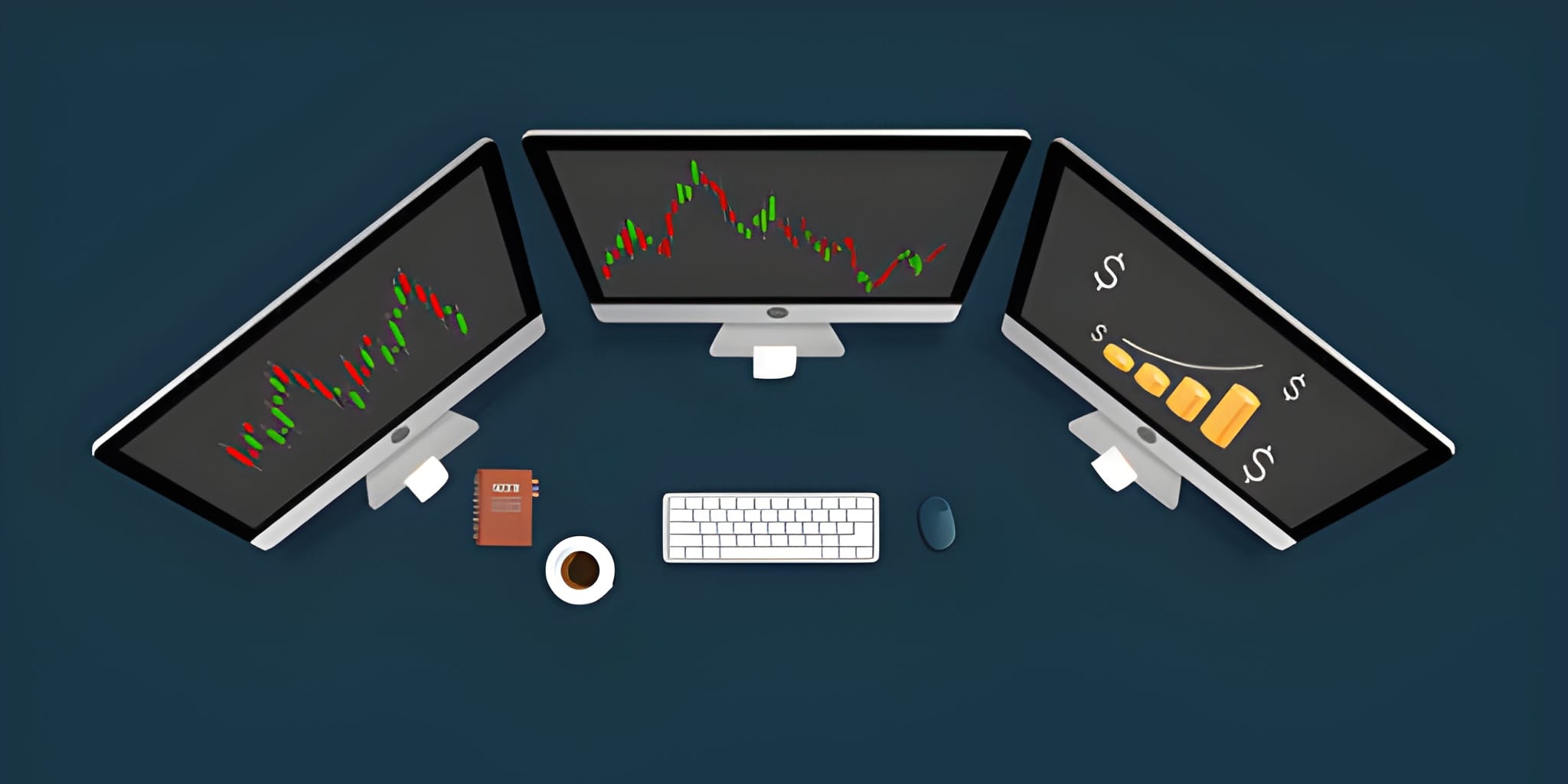
In day trading, your computer is your factory. You cannot afford "blue screens" or "WiFi drops" during a trade. A professional beginner should invest in a dedicated workstation.
- The CPU: Focus on single-core clock speed. Trading software like NinjaTrader or Sierra Chart performs heavy calculations on a single thread. Aim for high-frequency processors (i9 or Ryzen 9).
- The Internet: A wired Ethernet connection is non-negotiable. Fiber optic is the industry standard. Wireless connections introduce "jitter" and latency, which can lead to "slippage"—the difference between your intended price and the actual fill price.
- Redundancy: Professional traders have a backup internet source (cellular hotspot) and a UPS (Uninterruptible Power Supply) to ensure they can exit a position if the local power grid fails.
The Critical Importance of Data Fidelity
An algorithm or a human trader is only as good as the information they consume. Retail brokers often provide "sampled" or "filtered" data. This means you aren't seeing every trade; you are seeing a summary. For day trading, you require Direct Exchange Data (Level 2).
Level 2 data provides the Limit Order Book, showing not just the current price, but all the pending buy and sell orders. This allows you to see where institutional "walls" are sitting. Using providers like IQFeed, Rithmic, or Polygon.io ensures you have a true, unfiltered tick-by-tick firehose of the market.
Survival Math: Risk Management First
The "Holy Grail" of day trading is not an entry signal; it is a mathematical risk framework. Before you place a single trade, you must calculate your Risk of Ruin.
Logic: The 1% Rule and Profit Factor
Professional traders never risk more than 1% of their total account on a single trade. If you have 30,000 USD, your maximum loss per trade is 300 USD.
The Edge Calculation:
Expected Value = (Win Rate * Avg Win) - (Loss Rate * Avg Loss)
Suppose your strategy wins 50% of the time. To be profitable, your average win must be significantly larger than your average loss.
Profit Factor = (Gross Profits) / (Gross Losses)
Institutional desks look for a Profit Factor of at least 1.5 to 2.0. If your backtest shows a Profit Factor of 1.1, the strategy is too fragile to survive real-world commissions and slippage.
Core Intraday Trading Strategies
Most successful day trading strategies fall into two primary logical buckets. A beginner should master one before attempting to trade both.
The Transition to Systematic Trading
As you gain experience, you will realize that the human brain is poorly evolved for day trading. We suffer from fear, greed, and fatigue. This is why many professional day traders transition to Systematic or Algorithmic trading.
By coding your entry and exit rules, you ensure that the strategy is executed with 100% fidelity. Automation allows you to "backtest" your idea against ten years of history in minutes, revealing the true viability of the strategy before you risk real capital. For beginners, learning Python or a platform-specific language like NinjaScript (C#) or Pine Script provides a significant edge in the modern digital arena.
Regulations: The PDT Rule and Leverage
For US-based equity traders, the Pattern Day Trader (PDT) rule is the primary barrier. Any investor who executes four or more day trades within five business days must maintain a minimum account balance of 25,000 USD. If the balance falls below this, the account is restricted from trading.
Beginning traders with less than 25,000 USD often move to the Futures or Forex markets, which do not have this requirement. However, these markets offer significantly higher leverage (the ability to trade 50x or 100x your capital), which can magnify both gains and losses. Leverage is a "double-edged sword" that requires advanced capital management to avoid total liquidation.
Psychology: Managing Emotional Capital
The greatest enemy in day trading is not the market; it is your own ego. A "Winning Streak" can lead to overconfidence and reckless position sizing, while a "Losing Streak" can lead to "Revenge Trading"—the destructive attempt to "win back" money from the market.
Professional beginners implement a Daily Loss Limit. If your account loses a certain amount (e.g., 500 USD), you close your workstation and stop for the day. This protects your "Emotional Capital." Trading while frustrated leads to poor decision-making and catastrophic losses. In the world of day trading, the ability to walk away after a loss is the ultimate professional skill.
| Day Trading Phase | Objective | Primary Tool |
|---|---|---|
| Simulation | Verify Strategy Logic | Paper Trading / NinjaTrader |
| Micro-Scaling | Manage Real-Money Emotion | Small Lot Sizes / Micro-Futures |
| Professional | Maximize Risk-Adjusted Returns | Co-located VPS / Custom Algos |
Expert Verdict on Professional Longevity
Beginning day trading is a journey toward statistical mastery and self-discipline. It is not a path to "get rich quick"; it is a path to becoming an elite risk manager. As a finance and investment expert, I recommend starting with a "Hybrid Approach": use manual trading to understand the rhythm of the market, but use automation to enforce your rules.
Success belongs to those who prioritize Account Survivability over Profit Maximization. If you can survive the first 12 months with your capital intact, you have already outperformed 90% of your peers. Focus on the plumbing, respect the math of risk, and treat every tick with the cold detachment of a machine. In the digital markets, the disciplined architect will always outperform the impulsive gambler.