The Globalization of Capital
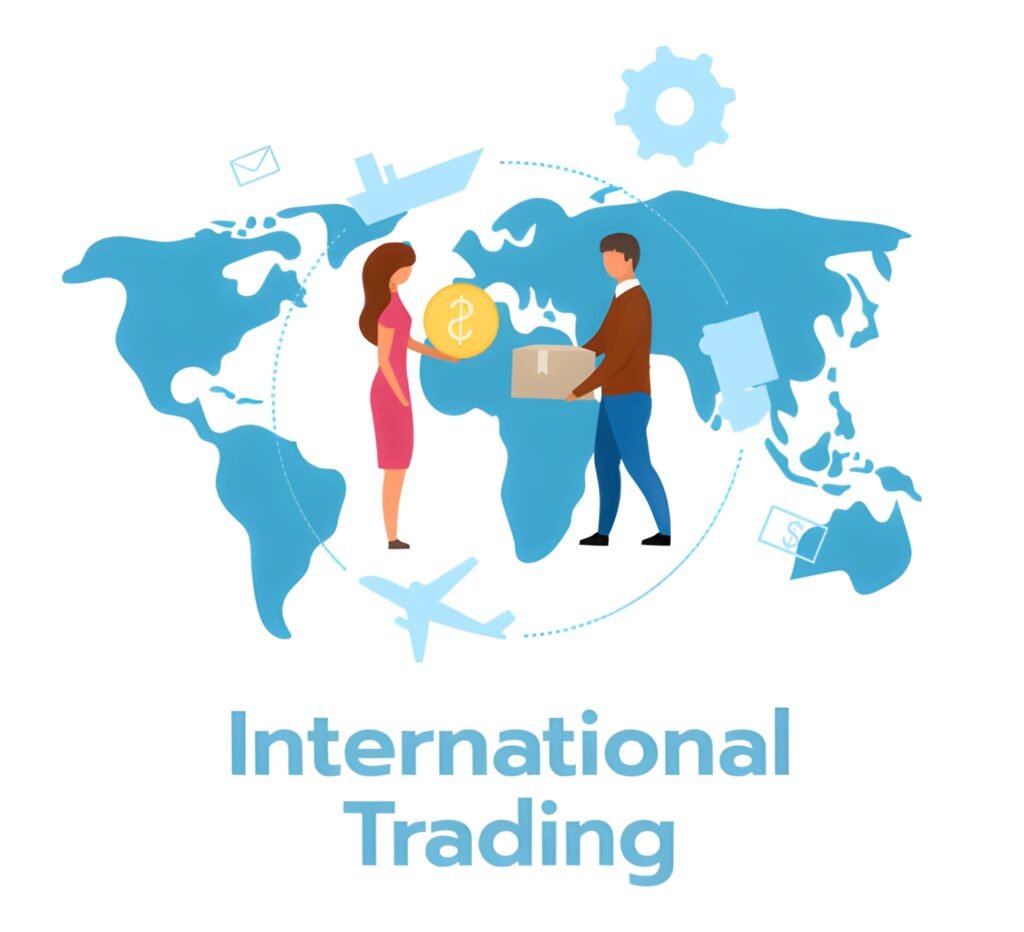
In the modern era, the "home country bias"—the tendency for investors to keep the majority of their capital in domestic assets—is an institutional inefficiency. To be a professional participant is to recognize that opportunity is not geographically constrained. International Trading is the systematic process of accessing foreign capital markets to diversify risk and capture idiosyncratic growth stories that do not exist within domestic borders.
While the principles of fundamental and technical analysis remain constant, the environmental variables shift dramatically when you cross borders. You are no longer just trading a company's cash flow; you are trading a nation's political stability, its central bank's sanity, and its currency's purchasing power. International trading is, at its core, the study of relative sovereign strength.
Global Hubs: NYSE to HKEX
Capital flows are concentrated in a few primary global financial centers. Understanding the "personality" and regulatory environment of these exchanges is vital for execution.
| Hub | Primary Exchange | Dominant Sector | Market Personality |
|---|---|---|---|
| USA | NYSE / NASDAQ | Technology / Finance | Deepest liquidity; transparency leader. |
| UK | London Stock Exchange | Energy / Mining / Banks | Global gateway; commodities-heavy. |
| Japan | Tokyo Stock Exchange | Automotive / Robotics | Sensitive to JPY volatility and BoJ policy. |
| Hong Kong | HKEX | Chinese Tech / Real Estate | High-beta proxy for Mainland China. |
ADRs vs. Direct Local Shares
For the individual trader, there are two primary pathways to international exposure. The choice depends on your requirement for liquidity and your tolerance for custodial complexity.
American Depositary Receipts (ADRs)
Negotiable certificates issued by a U.S. bank representing shares in a foreign company. They trade on U.S. exchanges in Dollars. Pros: Ease of execution; no need for foreign currency accounts. Cons: Limited selection; ADR fees.
Direct Local Shares
Purchasing shares directly on the foreign exchange (e.g., buying BMW on the DAX). Pros: Full market access; usually better liquidity for local names. Cons: Requires multi-currency accounts; higher commission friction.
The Currency Risk: The Hidden Trade
When you trade internationally, you are always making two trades simultaneously: the asset trade and the FX trade. Even if your chosen stock goes up 10%, you can still lose money if the local currency devalues by 15% against your home currency.
Currency Impact Formula:
$\text{Net Return} = (1 + \text{Asset Return}) \times (1 + \text{Currency Return}) - 1$
If you buy a Japanese stock in Yen, and the Yen weakens significantly while you hold it, your "realized" profit in Dollars will be eroded. Professional international desks often use Hedging—shorting the equivalent amount of the foreign currency—to neutralize this risk, allowing them to focus purely on the company's performance.
Developed vs. Emerging Market Logic
The global landscape is bifurcated between Developed Markets (DM) and Emerging Markets (EM). The fundamental logic for each is diametrically opposed.
Includes US, UK, Germany, Japan, France. Characteristics: High regulatory transparency, stable currencies, and mature business cycles. DM trading is a game of incremental efficiency. You are looking for high-quality compounding engines.
Includes Brazil, India, Mexico, Vietnam, Indonesia. Characteristics: High growth potential, but high political and currency risk. EM trading is a game of Regime Change. Success comes from identifying when a nation is moving toward structural reform or benefiting from a commodity super-cycle.
Macro Drivers of Foreign Flows
What makes billions of dollars move from New York to Mumbai? Institutional capital follows Relative Macro Advantage.
- Interest Rate Differentials: As explored in forex_fundamental_analysis.html, capital flows toward higher yields. If the ECB is raising rates while the Fed is pausing, capital will flow toward European equities.
- The Dollar Cycle: Generally, a **Weak Dollar** is a massive tailwind for international and emerging markets. It reduces the debt burden of EM countries and makes their exports more competitive.
- Commodity Correlation: Many international markets are "Commodity Proxies." Australia and Canada are tied to Mining/Energy; Brazil is tied to Agriculture/Oil. Fundamental analysis of the sector identifies the strongest country candidates.
Fiscal and Regulatory Barriers
The "hidden" cost of international trading is Taxation. Different nations have different rules for foreign participants.
Withholding Tax Traps
Many countries (like Switzerland or France) automatically withhold 15% to 30% of dividends paid to foreign investors. While Tax Treaties can often allow you to reclaim some of this, the paperwork is burdensome. Professionals often prefer "Capital Appreciation" stories over "Income" stories when trading internationally to avoid these withholding headaches.
Regulatory Regimes (MiFID II): The European Union's MiFID II regulations have significantly changed how research is paid for and how orders are routed. Understanding the local "Rules of the Road" is necessary to avoid compliance errors, especially if you are trading through a business entity.
Operational Logistics and Timezones
The physical reality of the planet creates the Execution Window. To trade global momentum, you must manage your "Bio-Rhythms."
- The Tokyo Open: 7:00 PM EST (Previous night). Sets the tone for Asian sentiment.
- The London Open: 3:00 AM EST. The core of global liquidity. Most international trends are birthed here.
- The New York Crossover: 8:00 AM – 11:30 AM EST. When both Europe and America are open. This is the peak volatility window for global macro.
Conclusion: Global Strategic Mastery
Mastering international trading fundamentals is the transition from a "Local Player" to a "Global Operator." It requires a sophisticated synthesis of company analysis, macro-economic forecasting, and currency risk management.
By diversifying across the developed compounders of Europe and the high-growth frontier of Asia, you eliminate the single-point-of-failure risk of your home economy. Respect the currency impact, monitor the central bank divergences, and always be aware of the regulatory friction. In a world of interconnected capital, the greatest edge belongs to those who can look past their own borders to identify where the next wave of global momentum is building. The sun never sets on the global markets; your strategy should be equally relentless.