
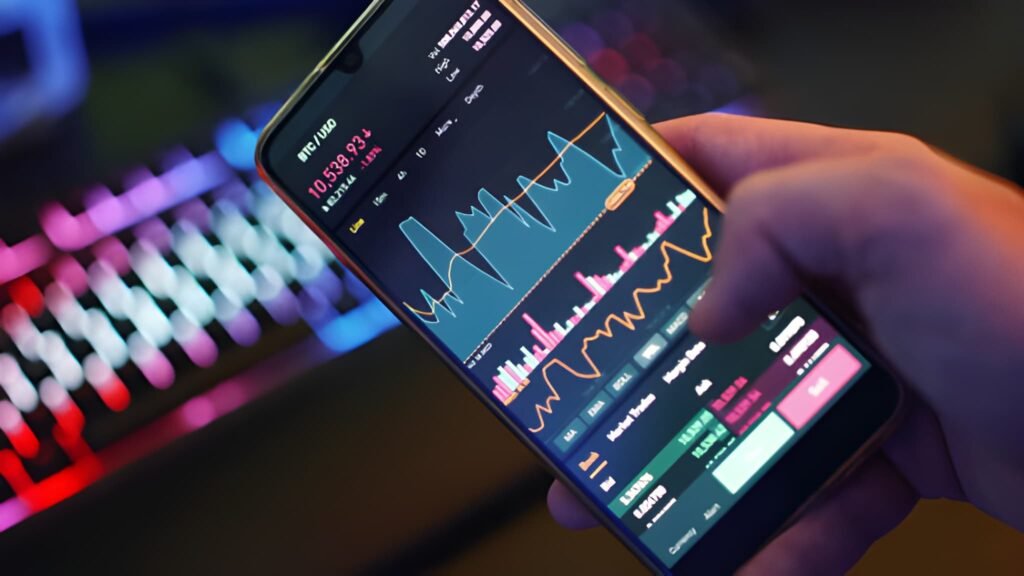
The Digital Frontier: A Professional Guide to Cryptocurrency Algorithmic Trading Apps
Systematic Execution, 24/7 Market Liquidity, and the Architecture of Autonomous Asset Management
The Crypto Algorithmic Landscape
The transition from manual trading to algorithmic execution represents a fundamental shift in how digital wealth is managed. Unlike traditional equity markets, which operate on a strictly defined 9:30 AM to 4:00 PM schedule, cryptocurrency markets are global, decentralized, and persistent. They never close. For a finance and investment expert, this 24/7 nature creates a unique engineering problem: the necessity of constant oversight without the possibility of constant human presence.
Algorithmic trading apps have moved from being niche tools for software engineers to becoming institutional-grade platforms for serious investors. These systems operate as an Order Management System (OMS) that bridges the gap between a trading hypothesis and a live exchange execution. In the current market, over 80% of volume on major exchanges like Binance or Coinbase is generated by autonomous systems, reflecting a landscape where speed and consistency are the only sustainable competitive advantages.
Evaluating Online Trading Ecosystems
The choice of an autotrading platform depends on the user's technical proficiency and the complexity of the intended strategy. Most professional-grade apps function as "Cloud-SaaS" solutions, meaning the algorithm runs on a remote server, ensuring that internet outages at your physical location do not result in unmanaged positions.
Selecting a platform requires a deep audit of its Execution Quality. A platform that claims to be free but has wide slippage is far more expensive than a paid platform that secures the mid-price. Professional investors look for apps that support "trailing features," allowing the bot to follow a trend upward while maintaining a strict exit protocol if the momentum shifts.
Core Strategy Logic: Grid vs. Arbitrage
Most crypto trading apps operate on three foundational logic types. Understanding which logic fits a specific market regime—Bull, Bear, or Sideways—is the difference between capital growth and account liquidation.
Grid trading places a series of buy and sell orders at regular intervals above and below a set price. It profits from the inherent volatility of crypto. Every time the price "wiggles" between these grids, the bot captures a small profit. It is most effective in ranging markets where there is no clear direction.
This strategy exploits price differences between three different assets on the same exchange. For example, trading BTC for ETH, then ETH for SOL, and finally SOL back to BTC. If the exchange's internal order books are not perfectly synced, the algorithm extracts a small "Risk-Free" profit on the round trip.
Based on the statistical principle that price eventually returns to its moving average. When an asset like Bitcoin deviates 10% from its 200-hour average, the algorithm bets on a return to the mean. This strategy uses the RSI (Relative Strength Index) as its primary signal filter.
Grid Range: 60,000 to 70,000 USD (BTC)
Number of Grids: 50
Profit per Grid: (Range / Grids) / Entry Price = 0.28%
Expected Daily Profit = (0.0028 * Trades_per_Day) * Capital_Allocation
If 20 trades per day: 0.056 * 10,000 = 560 USD Daily Alpha.
API Architecture and Security Protocols
In the cryptocurrency world, security is not an IT department's problem; it is a financial survival requirement. Trading apps connect to your exchange funds via API (Application Programming Interface) Keys. This allows the app to send orders without actually "holding" your money.
The professional standard for API security involves the "Principle of Least Privilege." When creating a key, you must ensure that Withdrawal Permissions are disabled. The app should only be allowed to "Read" data and "Trade" assets. Even if the trading app's database is breached, the attacker cannot move your funds to an external wallet.
Metrics of Systematic Success
A professional does not evaluate an algorithm by its total profit. We evaluate it by its Risk-Adjusted Return. An algorithm that makes 50% profit but has a 40% "Drawdown" (peak-to-trough decline) is significantly worse than an algorithm that makes 20% profit with only a 5% drawdown.
| Performance Metric | Description | Ideal Target |
|---|---|---|
| Sharpe Ratio | Return per unit of volatility | Greater than 2.0 |
| Sortino Ratio | Return per unit of "downside" risk | Greater than 3.0 |
| Max Drawdown | The largest equity dip from a peak | Less than 10% |
| Win/Loss Ratio | Average Win / Average Loss | Greater than 1.5 |
Integrating Custom Python Engines
While SaaS apps are convenient, the "Elite Alpha" is often found in custom-built Python engines. Python is the industry standard for quantitative research due to the CCXT (CryptoCurrency eXchange Trading) library. This library normalizes the APIs of over 100 exchanges, allowing a single script to trade across the entire global ecosystem.
A custom Python bot allows for the integration of Machine Learning. By using Scikit-Learn or TensorFlow, a trader can build an algorithm that recognizes "Market Regimes"—automatically switching from a momentum strategy to a mean-reversion strategy based on the current volatility levels.
exchange = ccxt.binance({'apiKey': '...', 'secret': '...'})
# The Logic Loop
if rsi < 30 and price_momentum == 'bullish':
exchange.create_market_buy_order('BTC/USDT', amount)
log_execution(time, price, 'BUY')
Volatility and Margin Risk Management
Cryptocurrency is an "Asymmetric Asset Class," meaning its upside potential is massive, but its volatility can be lethal to leveraged accounts. A professional autotrading app must incorporate Dynamic Position Sizing.
Instead of trading a fixed amount of BTC, the algorithm should trade a fixed percentage of the account's "Risk Capital." If volatility increases (calculated via the Average True Range or ATR), the algorithm automatically reduces the position size to maintain the same absolute dollar-risk. This ensures that a sudden 10% market crash does not result in a margin call.
Regulatory and Tax Guardrails
Finally, a professional must consider the socioeconomic reality of the United States regulatory environment. The SEC and IRS treat every "Trade" as a taxable event. An algorithm that performs 1,000 trades a day can create a nightmare for manual accounting.
The best trading apps now integrate directly with Tax Software like CoinTracker or ZenLedger. They generate "Form 8949" automatically, ensuring that your algorithmic profits do not lead to a legal audit. From a regulatory perspective, staying within the bounds of "Anti-Money Laundering" (AML) and "Know Your Customer" (KYC) requirements is non-negotiable for anyone using these apps to manage institutional or significant personal capital.
In conclusion, cryptocurrency algorithmic trading apps are the tools of a new financial era. They provide the discipline, speed, and 24/7 presence required to thrive in a digital economy. By mastering the infrastructure, respecting the math of risk, and maintaining iron-clad security, the systematic investor transforms the volatility of crypto from a threat into a scalable engine for wealth generation.


