The Digital Exchange Frontier: Selecting High-Velocity Cryptocurrency Trading Apps
Analyzing Liquidity, Latency, and Institutional-Grade Security for Intra-day Participants
- The Structural Anatomy of a Trading App
- Coinbase Advanced: The Regulatory Standard
- Kraken Pro: Liquidity and Security Synergy
- The Mathematics of Trading Friction
- Latency and the Order Book Spectrum
- Cold Storage and API Defense Layers
- Futures and Perpetual Contracts in the US
- Desktop Ecosystems vs. Mobile Agility
- Conclusion: Choosing Your Digital Terminal
Day trading cryptocurrency differs fundamentally from traditional equity markets due to the 24/7 nature of the asset class and the absence of a centralized clearinghouse. For the high-frequency participant, the choice of a trading application is not merely a preference for a user interface; it is a critical decision involving counterparty risk, execution latency, and capital efficiency. In the modern era of digital finance, the distinction between a retail broker and a professional trading terminal has blurred, yet the requirements for profitability remain as clinical as ever. A trader must navigate an environment where liquidity can evaporate in milliseconds and where security breaches can result in the permanent loss of non-custodial assets.
To operate at a professional level, an investor requires an application that offers more than simple market orders. The criteria for an elite crypto trading app include deep order books, competitive maker-taker fee schedules, robust API (Application Programming Interface) connectivity for automated strategies, and a proven track record of regulatory compliance within the United States. This guide explores the multifaceted landscape of these applications, providing a framework for selecting the tool that aligns with your specific risk tolerance and execution style.
The Structural Anatomy of a Trading App
At its core, a cryptocurrency trading application functions as the gateway to a global order book. However, the architecture of these apps varies significantly between centralized exchanges (CEX) and decentralized protocols. For most day traders operating within the US, centralized platforms remain the primary choice due to their superior execution speeds and fiat-to-crypto on-ramps. These platforms aggregate buy and sell orders from around the world, creating a competitive environment where the spread—the difference between the highest bid and the lowest ask—is minimized.
A professional-grade app must provide advanced order types beyond the standard limit and market options. Strategies such as scalping or swing trading require Stop-Limit orders, Trailing Stops, and Fill-or-Kill (FOK) instructions. Furthermore, the application should provide a seamless integration with technical analysis tools, allowing the trader to overlay volume profiles, moving averages, and Fibonacci retracements directly onto the real-time order flow. Without these structural elements, a trader is essentially operating with a blindfold in a high-velocity environment.
Coinbase Advanced: The Regulatory Standard
Coinbase has transitioned from a simple retail portal to a powerhouse for advanced traders. Their Coinbase Advanced interface is specifically designed for participants who require the depth of a professional order book while operating within the most stringent US regulatory framework. Being a publicly traded company in the US (COIN), Coinbase offers a level of transparency and financial reporting that remains unmatched by many of its global competitors.
The Advanced platform features a unified balance system, allowing traders to switch between simple purchases and high-precision trading without transferring funds between internal accounts. For the day trader, the most significant benefit of Coinbase Advanced is its deep liquidity in the USD-to-BTC and USD-to-ETH pairs. This depth ensures that large orders are filled with minimal slippage, a critical factor when attempting to capture small price oscillations in the intraday market.
Institutional Transparency
Coinbase maintains regular audits and holds assets 1:1, ensuring that customer funds are never commingled with corporate capital—a lesson learned from the failures of less regulated entities.
Fee Compression
While standard Coinbase fees are high, the Advanced platform utilizes a maker-taker model that significantly reduces costs for high-volume participants, making it viable for professional scalping.
Stablecoin Integration
Seamless integration with USDC provides a stable harbor during periods of extreme volatility, allowing traders to exit into a dollar-pegged asset without leaving the crypto ecosystem.
Kraken Pro: Liquidity and Security Synergy
Kraken has long been favored by the "OG" crypto community for its unwavering commitment to security and its robust execution engine. The Kraken Pro application is a purpose-built terminal that provides a highly customizable interface, allowing traders to arrange the order book, charts, and trade history according to their specific workflow. Kraken has maintained a clean security record for over a decade, which is a testament to its internal risk management protocols.
One of the standout features of Kraken Pro is its Proof of Reserves. They allow users to verify that their specific assets are accounted for in the exchange's audited balances through cryptographic proofs. For a day trader who may be holding significant capital on an exchange for extended periods, this level of verifiability provides a psychological safety net that allows them to focus entirely on the market rather than the solvency of the platform.
The Mathematics of Trading Friction
In high-frequency day trading, fees are not a minor annoyance; they are a structural drag on the compounding of capital. An amateur trader often ignores the impact of a 0.5% fee, not realizing that a round-trip trade (buy and sell) costs 1%. If you execute 100 trades a year, you must generate 100% profit just to break even after fees. This is the reality of trading friction.
Average Trade Size: $10,000
Trades Per Week: 20 (Intra-day Scalping)
Standard Retail Fee: 0.6% ($60 per trade)
Advanced Maker Fee: 0.1% ($10 per trade)
Annualized Retail Fee Cost: 20 * 52 * $60 = $62,400 (Account Ruin)
Annualized Pro Fee Cost: 20 * 52 * $10 = $10,400 (Sustainable)
Result: Utilizing a pro-tier app saves $52,000 in annual overhead, the difference between success and total liquidation.
Latency and the Order Book Spectrum
Latency—the delay between sending a command and the exchange receiving it—is the silent killer of intra-day strategies. In a fast-moving market, a delay of 200 milliseconds can result in a fill that is significantly worse than the intended price. Professional trading apps optimize this by providing WebSockets and REST API endpoints that allow for direct, low-latency communication between the trader's terminal and the exchange engine.
When selecting an app, a trader should look for "Full Order Book" visibility. Many retail apps only show the top few levels of the bid and ask. A professional requires the full depth to see where large "Buy Walls" or "Sell Walls" are located. This depth provides a visual representation of market sentiment, allowing the trader to anticipate where price might stall or accelerate. If you cannot see the depth, you are trading based on a 1-dimensional view of a 3-dimensional market.
Cold Storage and API Defense Layers
Trading applications must be viewed as potential vectors for attack. An expert trader utilizes every available defense layer. This begins with Whitelisting withdrawal addresses. This ensures that even if an account is compromised, funds can only be sent to pre-approved wallets (like your personal hardware wallet). Furthermore, for those utilizing third-party charting or automated bots, API Key Permissions must be strictly limited. You should never provide "Withdrawal" permissions to an API key; limit it strictly to "Read" and "Trade."
| Security Feature | Mechanism | Investor Protection |
|---|---|---|
| 2FA (U2F) | Hardware Keys (YubiKey) | Prevents remote takeover via SIM-swapping or phishing. |
| Address Whitelisting | 24-hour Withdrawal Delay | Ensures capital cannot be siphoned to unknown wallets. |
| Cold Storage | Air-gapped Multi-Sig Wallets | Protects the bulk of exchange assets from network hacks. |
| Device Management | Authorized Device Approval | Notifies the user immediately of unauthorized login attempts. |
Futures and Perpetual Contracts in the US
For US residents, the landscape of derivative trading (futures and options) is highly restricted compared to the global market. While international traders use platforms like Bybit or Binance Global for 100x leverage, US participants are limited to regulated entities such as Coinbase Financial Markets or Kraken Futures. These platforms offer significantly lower leverage (usually 2x to 10x), which is actually a blessing for the undisciplined amateur but can be a constraint for the professional hedger.
Trading "Perps" (Perpetual Swaps) allows a trader to maintain a long or short position without an expiration date, using a "Funding Rate" to keep the contract price aligned with the spot price. In a bullish market, longs pay shorts; in a bearish market, shorts pay longs. Understanding these funding dynamics is essential for an all-day hold strategy, as the cost of holding a position can fluctuate wildly depending on market sentiment.
Desktop Ecosystems vs. Mobile Agility
There is a massive cognitive difference between trading on a 27-inch monitor and a 6-inch smartphone screen. Desktop environments allow for Multitasking—watching the 1-minute chart, the 1-hour chart, the order book, and a news feed simultaneously. This is the habitat of the professional. Mobile apps, while incredibly powerful and useful for monitoring positions on the go, often force a "Serial" view of the market, where you can only look at one piece of data at a time.
Advanced charting, hotkey execution, and multi-monitor support. Essential for high-frequency strategies where you need to track the correlation between Bitcoin and the S&P 500 in real-time. Desktop terminals provide the "Data Density" required for complex decision-making.
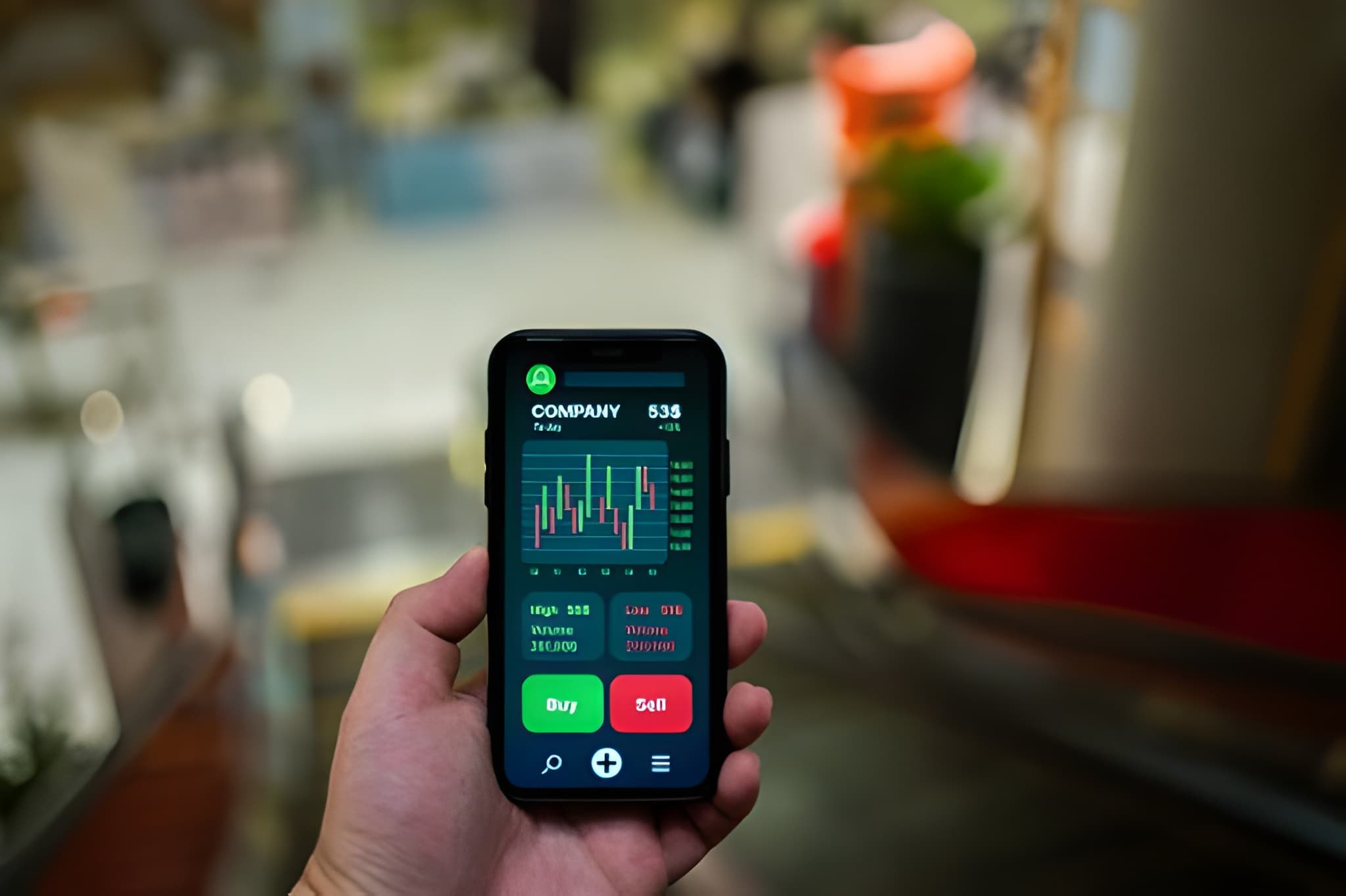
Mobile apps are perfect for setting alerts and managing risk while away from the desk. They act as a secondary "kill switch" for your positions. However, executing a complex breakout trade on a mobile device is prone to "Fat Finger" errors and incomplete data analysis.
Conclusion: Choosing Your Digital Terminal
Selecting a cryptocurrency trading application is a strategic decision that determines the structural boundaries of your investment business. If you prioritize regulatory safety and deep USD liquidity, Coinbase Advanced is the logical anchor. If you seek the highest level of cryptographic verifiability and a heritage of security, Kraken Pro remains a premier choice. For those exploring the fringes of the US market, other compliant alternatives like Gemini or Binance.US may offer specific localized advantages.
Ultimately, the "Best" app is the one that you have mastered technically and trust psychologically. A trader must move beyond the "App" and focus on the "Execution." By utilizing maker-fee incentives, hardware-based security, and low-latency desktop environments, you create a professional foundation that allows you to survive the volatility of the crypto market and capture the generational wealth opportunities it provides. In this space, the most disciplined participant with the best tools always triumphs over the most enthusiastic participant with a smartphone.