
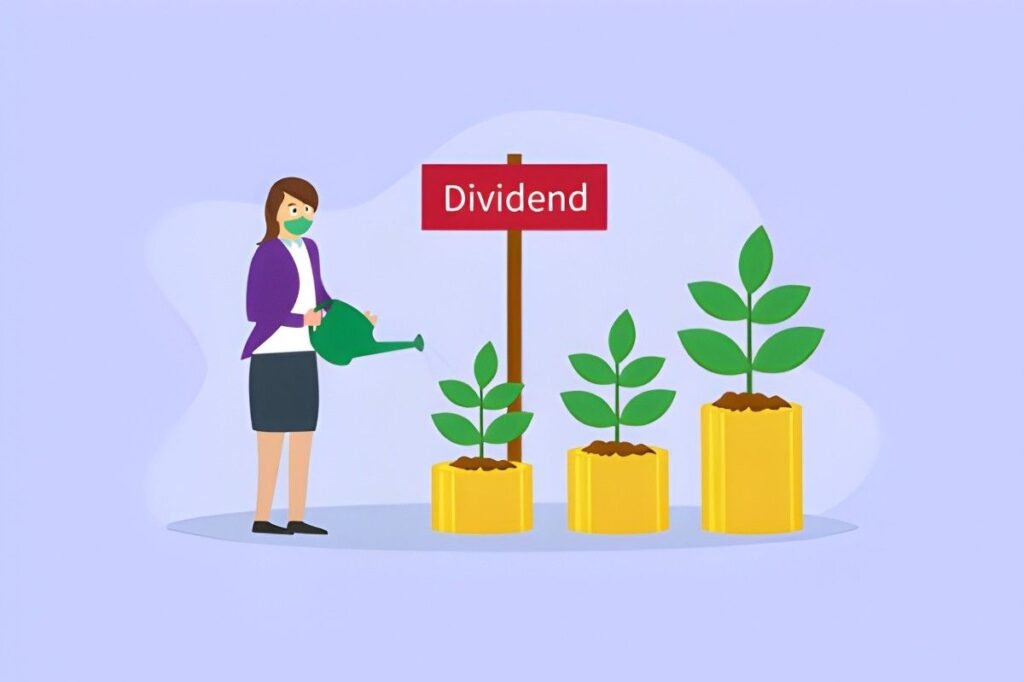
In my practice, I have witnessed a powerful evolution in investor priorities. The question is no longer just “What is the return?” but increasingly, “What is the impact?” For the dividend-focused investor, this creates a unique challenge: how to generate reliable, tax-advantaged qualified dividend income while aligning a portfolio with environmental, social, and governance (ESG) principles. This is not a niche or a passing trend; it is a fundamental shift in how we define risk and value. A company that ignores its environmental footprint today may face regulatory penalties, consumer backlash, and operational disruptions tomorrow. Therefore, what many call “sustainable investing” I view as simply forward-looking risk management. The goal is to build a portfolio of resilient companies built not just for the last decade, but for the next one—companies whose dividends are supported by sustainable business practices.
Table of Contents
The first step is understanding the mechanics. Qualified dividends are a classification from the IRS that receive preferential tax treatment, taxed at the lower long-term capital gains rates rather than ordinary income rates. To qualify, the dividends must be paid by a U.S. corporation or a qualified foreign corporation, and the investor must have held the stock for more than 60 days during the 121-day period that begins 60 days before the ex-dividend date. This tax advantage is significant. For an investor in the 24% income tax bracket, a qualified dividend might be taxed at 15%, preserving more capital for compounding. The pursuit, therefore, is for companies that not only meet these IRS requirements but also demonstrate a genuine commitment to environmental stewardship.
Deconstructing “Environmentally Friendly”: Beyond the Label
The term “ESG” is notoriously broad and often misused—a practice known as “greenwashing.” My approach is to move beyond marketing claims and focus on tangible, measurable factors. I categorize environmentally conscious companies into three tiers:
- Pure-Play Leaders: Companies whose core business model is directly tied to providing environmental solutions. This includes renewable energy producers, energy efficiency technology firms, and water infrastructure companies. Their revenue is inherently “green.”
- Transitioning Incumbents: Large, established companies in traditionally carbon-intensive sectors (like utilities, industrials, or materials) that are demonstrably and meaningfully pivoting their business models. This involves allocating significant capital to renewable energy, setting science-based carbon reduction targets, and transparently reporting on progress.
- Sustainable Operators: Companies across all sectors that may not sell a green product but are leaders in managing their own environmental footprint. This includes superior waste and water management, ambitious greenhouse gas (GHG) emission reduction goals, and obtaining a significant portion of their energy from renewable sources for their operations.
For a dividend investor, Tier 2 and Tier 3 companies are often where the most compelling opportunities lie, as they frequently include the large, profitable, and cash-generating stalwarts that have the capacity to pay and grow dividends consistently.
Building a Diversified Sustainable Dividend Portfolio
A robust portfolio is not a collection of stocks; it is a designed system. I build sustainable dividend portfolios using a mix of individual equities and ETFs to balance impact, yield, and risk.
1. Renewable Energy and Clean Utilities
This sector is the most direct way to invest in the energy transition. Many of these companies operate as YieldCos—entities designed to generate stable, predictable cash flow from operating energy assets and distribute the majority to shareholders.
- Example: NextEra Energy (NEE)
- Profile: The world’s largest utility by market cap and a leader in wind and solar energy generation. It operates a regulated utility in Florida (FPL) and a massive competitive energy generation arm (NextEra Energy Resources).
- Dividend Profile: A Dividend Aristocrat with a long history of annual increases. Its dividend is qualified and its growth outlook is strong, backed by a massive pipeline of renewable projects.
- Why it Fits: NEE is a prime example of a “Transitioning Incumbent” that has become a “Leader.” It demonstrates that environmental focus and shareholder returns are not mutually exclusive.
2. Sustainable Industrial and Materials Leaders
The industrial sector is undergoing a quiet revolution in efficiency and circular economy practices. These companies are critical to enabling sustainability across the global economy.
- Example: Eaton Corporation (ETN)
- Profile: A power management company that provides essential products for electrical systems, aerospace, and vehicle electrification. Their technologies are crucial for managing energy efficiency, renewable integration, and electric vehicle infrastructure.
- Dividend Profile: A consistent and growing qualified dividend payer with a moderate yield. Its business growth is directly tied to electrification and efficiency trends.
- Why it Fits: ETN is a “Sustainable Operator” and an enabler of the energy transition. Its products reduce energy waste, making it a compelling pick for impact and income.
3. Green-Focused ETFs for Instant Diversification
For most investors, selecting individual ESG leaders is complex and requires deep due diligence. A high-quality ETF is the most efficient tool to gain diversified exposure.
- Example: iShares ESG Aware MSCI USA ETF (ESGU)
- Strategy: This ETF tracks an index that includes U.S. companies with high ESG ratings relative to their sector peers. It is a broad-based fund, so it includes large tech and healthcare names alongside more traditional dividend payers.
- Dividend Relevance: It holds many of the classic dividend growers (like Johnson & Johnson, Procter & Gamble) that have strong ESG profiles, ensuring the dividends are qualified and sustainable.
- Why it Fits: It provides a core ESG equity holding. The expense ratio is low (0.15%), which is crucial for preserving dividend returns.
- Example: SPDR S&P 500 ESG ETF (EFIV)
- Strategy: This fund tracks an index that excludes companies involved in controversial businesses (tobacco, thermal coal) and selects those with strong ESG scores from the remaining S&P 500 pool.
- Dividend Relevance: It offers a dividend yield similar to the S&P 500 but with a improved sustainability profile. It is a direct “ESG-screened” version of the world’s most common benchmark.
A Comparative Framework for Evaluation
| Investment | Type | Key ESG Focus | Dividend Yield (Approx.) | Role in Portfolio |
|---|---|---|---|---|
| NextEra Energy (NEE) | Individual Stock | Renewable Energy Generation | ~2.7% | Core growth & income holding |
| Eaton Corp (ETN) | Individual Stock | Energy Efficiency & Electrification | ~1.3% | Growth-oriented sustainability play |
| iShares ESG USA ETF (ESGU) | Broad ESG ETF | Diversified ESG Leaders | ~1.4% | Core diversified US equity holding |
| SPDR S&P ESG ETF (EFIV) | S&P 500 ESG ETF | Best-in-Class ESG Screening | ~1.5% | Core US equity with exclusions |
The Critical Due Diligence Checklist
Before investing, I move beyond the ESG label and ask specific, tangible questions:
- Review the Sustainability Report: Don’t just read the marketing homepage. Find the company’s annual sustainability or ESG report. Look for concrete data, not just aspirations.
- Check Third-Party Ratings: Consult ratings from providers like MSCI, Sustainalytics, and ISS ESG. While not perfect, they provide a standardized assessment of a company’s ESG risk relative to its peers.
- Look for Commitments: Is the company committed to frameworks like the Science Based Targets initiative (SBTi)? This indicates a pledge to set emissions targets in line with climate science.
- Assess Dividend Sustainability: Regardless of ESG merits, the dividend must be sound. I apply the same rigorous financial analysis:
- Payout Ratio: \text{Payout Ratio} = \frac{\text{Dividends Per Share}}{\text{Earnings Per Share}}. A ratio below 60-70% is generally safe.
- Cash Flow: Is the company generating strong, consistent free cash flow to cover the dividend?
- Beware of Greenwashing: Be skeptical of vague claims like “we care about the planet.” Look for specific, measurable goals (e.g., “50% reduction in Scope 1 emissions by 2030 from a 2020 baseline”).
The pursuit of environmentally friendly qualified dividend investments is a journey of alignment. It is about ensuring that the income that funds your future is not derived from practices that degrade the world you will retire into. By focusing on companies that are proactively managing environmental risk and leading the transition to a more sustainable economy, you are not necessarily sacrificing returns. You are investing in the resilience and operational excellence that will likely define the successful corporations of the 21st century. This strategy allows you to compound your capital and your values simultaneously, building a future that is both prosperous and principled.



