
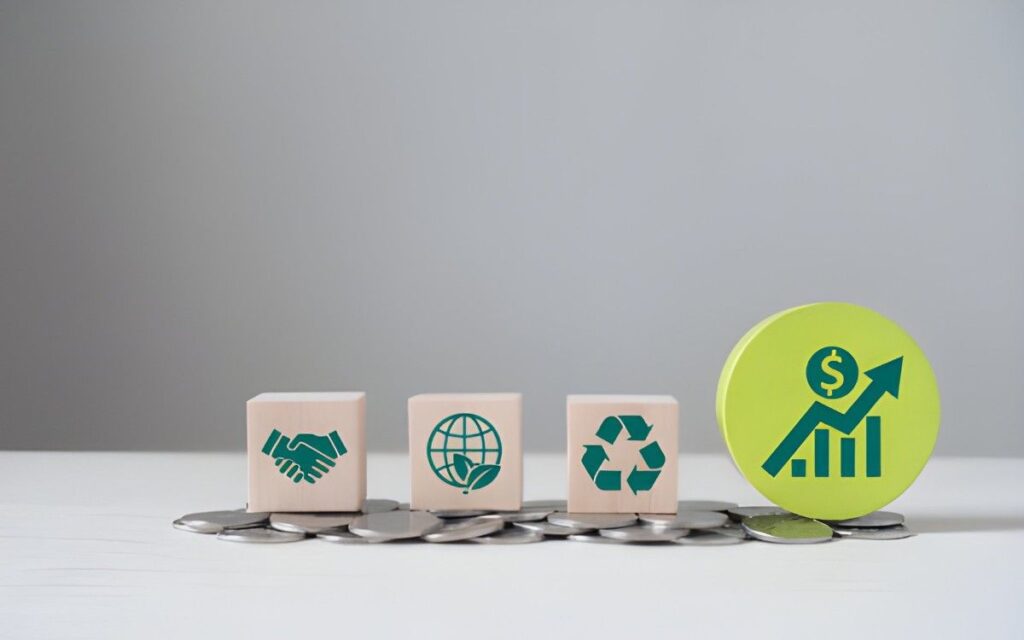
For years, the worlds of income investing and environmental, social, and governance (ESG) principles were often seen as separate, even conflicting, philosophies. The former was the domain of steady, old-economy giants in oil, tobacco, and utilities. The latter was associated with growth-oriented, often profit-light, tech-centric firms. In my practice, I have watched this divide vanish. Today, building a portfolio that generates qualified dividend income while adhering to a strict environmental ethos is not only possible but can be a profoundly robust strategy. It requires a shift in perspective—from seeking the highest yield at any cost to evaluating the quality and sustainability of that yield itself. The companies best positioned to pay dividends decades from now are often those managing their environmental risks and opportunities with the most foresight.
Table of Contents
Deconstructing the Goal: Qualified Dividends and Environmental Responsibility
Before we analyze investments, we must precisely define our terms, as they are the foundation of this strategy.
What is a Qualified Dividend?
This is not just any dividend. Under the U.S. tax code, a qualified dividend is paid by a U.S. corporation or a qualified foreign corporation and held for a specific period. Its supreme advantage is its tax treatment: it is taxed at the long-term capital gains rate, not your higher ordinary income tax rate. For most investors, this is a significant advantage. In 2023, the top marginal income tax rate is 37%, while the top long-term capital gains rate is 20%. This differential makes the search for qualified dividends a core tenet of tax-efficient income investing.
What is “Environmentally Responsible”?
This is the more complex, nuanced part of the equation. “Green” is a broad term. We must move beyond marketing claims—a practice often called “greenwashing”—and into substantive analysis. I categorize environmental responsibility into three tiers:
- Pure-Play Operators: Companies whose primary business is directly tied to providing environmental solutions. Think of solar panel manufacturers, wind farm operators, or water purification firms.
- Transition Leaders: Established companies in traditionally “brown” sectors that are demonstrably and meaningfully pivoting their business models, capital expenditures, and operations toward a lower-carbon future. This includes an electric utility aggressively retiring coal plants for solar and wind, or an automaker leading the transition to electric vehicles.
- Sustainable Stewards: Companies that may not be in a “green” industry but are recognized leaders in operational efficiency, resource management, pollution prevention, and climate risk disclosure. A technology firm powering its data centers with 100% renewable energy or a consumer goods company with a world-class sustainable supply chain fits here.
The most resilient portfolio will likely contain a blend of all three, balancing the growth potential of pure-plays with the stability and yield of transition leaders and stewards.
The Investment Vehicles: Stocks, ETFs, and Mutual Funds
You have several pathways to build this portfolio, each with its own risk, control, and diversification profile.
1. Individual Stocks: The Precision Approach
Selecting individual companies offers the highest degree of control. You can precisely weight your exposure and conduct deep, fundamental research. The key is to analyze these companies through a dual lens: financial strength and environmental integrity.
Financial Analysis Checklist for Dividend Stocks:
- Payout Ratio: This is critical. The ratio is calculated as Payout\ Ratio = \frac{Dividends\ Per\ Share}{Earnings\ Per\ Share}. A ratio above 80% can be a warning sign that the dividend may be unsustainable in an economic downturn. I prefer companies in the 40-70% range, indicating a balance between rewarding shareholders and reinvesting in the business.
- Debt-to-Equity Ratio: A highly leveraged company is more vulnerable to interest rate hikes and economic shocks, which can threaten its ability to pay dividends. Compare the company’s ratio to its industry peers.
- History of Dividend Growth: A long track record of annually increasing dividends is a powerful signal of financial health and management’s commitment to returning capital to shareholders.
Environmental Integrity Checklist:
- Third-Party ESG Ratings: Use resources from providers like MSCI, Sustainalytics, and ISS ESG. Look for high ratings relative to industry peers. A company with an ‘AA’ rating in its sector is a leader; a ‘CCC’ rating is a laggard.
- Carbon Emissions Reporting: Does the company disclose its Scope 1, 2, and 3 emissions? Is it setting science-based targets (SBTi) for reduction? Transparency is the first step toward accountability.
- Capital Allocation Strategy: Review investor presentations and annual reports. What percentage of capital expenditures (capex) is being allocated to green initiatives, renewable energy, or efficiency upgrades? A company betting its future on sustainability is putting its money where its mouth is.
Examples of Potential Candidates (For Illustrative Purposes):
- Transition Leader: NextEra Energy (NEE). A utility that is the world’s largest producer of wind and solar energy. It offers a dividend yield that, while not the highest in the sector, is backed by a phenomenal growth profile and a clear, executable strategy for the future.
- Sustainable Steward: Microsoft (MSFT). While not a high-yielder, it offers a growing dividend. Its leadership in carbon negativity, water positivity, and zero waste commitments, coupled with immense financial strength, makes it a model of corporate stewardship.
- Pure-Play (Higher Risk): Brookfield Renewable Partners (BEP). A global owner and operator of renewable power assets (hydro, wind, solar). It offers a higher yield, reflecting its corporate structure and the higher risk associated with a pure-play. Its cash flows are often underpinned by long-term power purchase agreements (PPAs), providing visibility.
2. ESG-Focused ETFs and Mutual Funds: The Diversified Approach
For most investors, especially those without the time or inclination for deep individual stock analysis, ESG-focused exchange-traded funds (ETFs) and mutual funds are the most practical and efficient tool. They provide instant diversification across dozens or hundreds of holdings, mitigating company-specific risk.
Critical Due Diligence for ESG Funds:
You must look under the hood. The name “ESG” or “Green” is not enough.
- Read the Prospectus and Methodology: How does the fund define “ESG”? Does it use negative screening (excluding sin stocks, fossil fuels), positive screening (selecting best-in-class operators), or thematic investing (focusing on a specific theme like clean energy)?
- Analyze the Holdings: A fund might exclude ExxonMobil but still hold other oil majors or utilities heavily reliant on natural gas. Ensure the fund’s actual holdings align with your personal environmental standards.
- Cost Matters: The expense ratio directly erodes your dividend yield and total return. Compare the fees of similar ESG funds.
Examples of ESG Dividend-Focused ETFs:
- ESG Screened Dividend Fund: iShares ESG Aware MSCI USA ETF (ESGU). While not exclusively a dividend fund, it applies broad ESG screens to the large-cap U.S. market. You can then overlay a dividend focus by selecting from its holdings.
- Sustainable Dividend Fund: Nuveen ESG Large-Cap Growth ETF (NULG) or iShares MSCI KLD 400 Social ETF (DSI). These funds explicitly combine ESG criteria with a focus on companies with shareholder distribution policies.
- Global ESG Dividend: SPDR S&P Global Dividend ETF (WDIV). This ETF tracks an index that includes international companies and incorporates ESG screens, offering geographic diversification.
A Comparative Framework for Evaluation
| Investment Type | Control Level | Diversification | Research Required | Yield Potential | Risk Profile |
|---|---|---|---|---|---|
| Individual Stocks | Very High | Very Low | Very High | Variable | High (Company-Specific) |
| ESG Dividend ETFs | Low | High | Low (Fund Level) | Moderate | Moderate (Market Risk) |
| ESG Mutual Funds | Low | High | Low (Fund Level) | Moderate | Moderate (Market Risk) |
Building and Managing the Portfolio
Constructing this portfolio is an ongoing process, not a one-time event.
- Asset Allocation: Determine what percentage of your overall income portfolio should be allocated to this ESG dividend strategy. It should be a deliberate part of your plan, not your entire plan.
- Sector Awareness: Be aware of natural sector biases. A strict ESG screen will underweight or eliminate traditional energy, utilities, and materials. This can be a conscious choice, but it will affect your portfolio’s performance relative to a broad-market index, for better or worse.
- Rebalancing: Whether you own individual stocks or funds, review your holdings at least annually. Has a company’s ESG rating been downgraded? Has a fund changed its methodology? Has a dividend payout ratio become dangerously high? Sell and rebalance if the original investment thesis is broken.
- Tax Efficiency: Remember, ETFs are generally more tax-efficient than mutual funds due to their in-kind creation/redemption process, which can minimize capital gains distributions. This is a secondary but valuable consideration in a taxable account.
The Long-Term View: Yield as a Function of Sustainability
The core thesis of environmentally responsible dividend investing is that a company’s financial sustainability is increasingly linked to its environmental sustainability. A company facing massive regulatory fines, reputational damage, stranded assets, or supply chain disruptions due to climate change is a poor bet for reliable long-term dividends. Conversely, a company innovating in clean technology, managing its resources efficiently, and transparently disclosing its risks is building a durable competitive advantage. Its cash flows are more secure, and by extension, its dividends are more secure. You are not just investing for income; you are investing in the quality and longevity of that income stream. In the 21st century, that quality is inextricably linked to a company’s relationship with our planet.



