
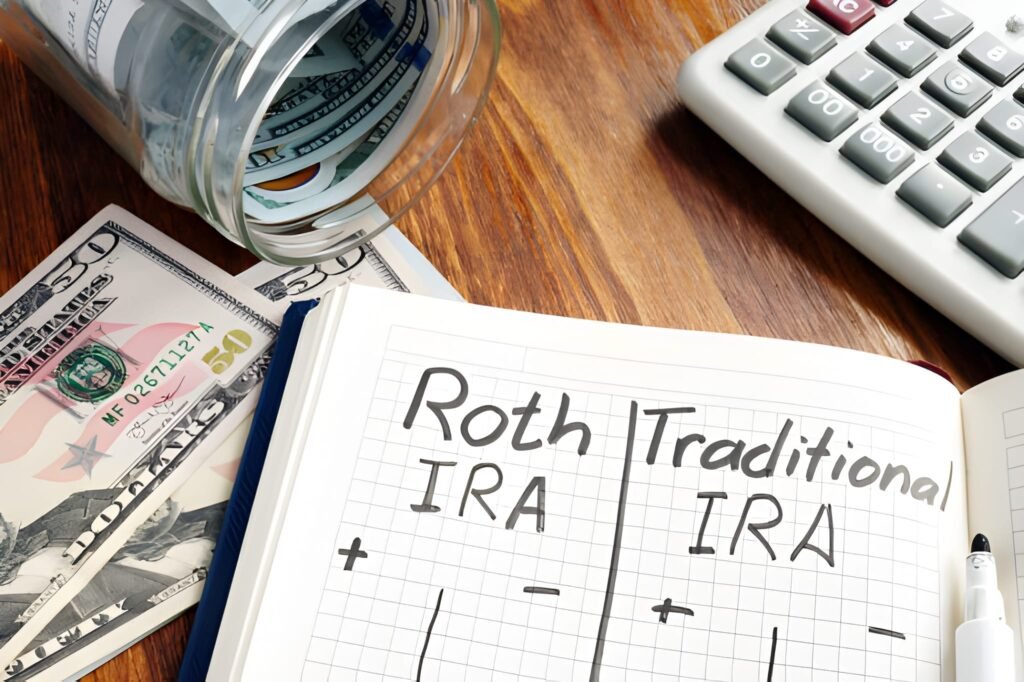
I have guided countless individuals and families through the intricacies of building a secure financial future. In that time, one of the most persistent and nuanced questions I encounter from savvy investors, particularly those who follow the Boglehead philosophy, is this: should my Roth IRA and my Traditional IRA hold an identical mix of investments? The surface-level answer seems like it should be a simple “yes” – after all, they are both IRAs, both pillars of a retirement plan. But I have learned that treating them as interchangeable is a significant oversight. The most effective strategy acknowledges their profound tax differences and uses those differences to build a more efficient, wealth-maximizing portfolio.
The core Boglehead principles of low-cost index fund investing, broad diversification, and steadfast discipline are non-negotiable. They are the foundation. However, the implementation of these principles – the location of your assets – is where we can add a layer of sophisticated, tax-aware strategy. Let’s dissect this question from every angle.
Table of Contents
The Foundation: Understanding the Core Tax Difference
Before we can talk about asset allocation, we must internalize the fundamental nature of these accounts. This isn’t just a minor detail; it is the entire premise of the strategy.
A Traditional IRA is typically funded with pre-tax dollars. You receive a tax deduction in the year you contribute, the money grows tax-deferred, and every single dollar you withdraw in retirement is taxed as ordinary income. The government effectively owns a portion of this account, a portion equal to your future tax rate.
A Roth IRA is funded with after-tax dollars. You receive no upfront tax deduction, but the money grows completely tax-free, and qualified withdrawals in retirement are entirely free of income tax. You have already settled your tax bill. Every single dollar in that account, from your initial contribution to decades of compounded growth, is one hundred percent yours.
This difference is not trivial. It changes the character and potential of every dollar held within each account.
The Basic Boglehead Argument for Identical Allocation
Many investors, and rightly so, start with a simple, unified approach. They view all their retirement accounts – 401(k), Traditional IRA, Roth IRA – as a single, cohesive portfolio. They craft one target asset allocation, say 60% U.S. Total Stock Market, 20% International Stock Market, and 20% Total Bond Market, and then distribute those assets across their various accounts in the most practical way possible.
This approach has undeniable merits:
- Simplicity: It is incredibly easy to manage and rebalance. You have one pie, sliced across several plates.
- Behavioral Benefits: It prevents overthinking and second-guessing, which are often an investor’s worst enemies.
- It’s Perfectly Adequate: This method is miles ahead of having no plan at all or chasing hot stocks. It captures market returns efficiently.
For many investors, particularly those with smaller account balances or those just starting their journey, this is a perfectly rational and effective strategy. The benefits of simplicity often outweigh the potential gains from a more complex tax-aware strategy. But as your assets grow, the potential value of optimization grows with them.
The Case for Strategic Asset Location: A Tax-Aware Approach
This is where we move from basic asset allocation to advanced asset location. Asset location is the practice of placing less tax-efficient investments in tax-advantaged accounts and more tax-efficient investments in taxable accounts. While this most commonly involves a taxable brokerage account, the same logic can be applied between different types of tax-advantaged accounts like a Roth and a Traditional IRA.
The guiding principle is this: Because the Roth IRA is perpetually tax-free, it has a higher expected after-tax value per dollar of pre-tax contribution than a Traditional IRA. Therefore, you want your highest-growth assets in the Roth.
Think of it this way: would you rather have a tax-free account that contains an asset growing at 8% per year or one growing at 3% per year? You want the highest-growth asset in the account where you will never pay taxes again. Conversely, you are somewhat indifferent to the growth rate inside a Traditional IRA because you will pay income tax on all of it eventually. The government shares in both your spectacular gains and your mediocre ones.
Let’s illustrate this with a concrete example. Assume a 22% tax rate both now and in retirement for simplicity.
Scenario 1: High-Growth Asset in Roth IRA
- You invest $6,000 in a Roth IRA in a U.S. Total Stock Market fund. It grows at 8% annually for 30 years.
Future Value: FV = 6000 \times (1.08)^{30} = \$60,376.87
This entire amount is tax-free.
Scenario 2: High-Growth Asset in Traditional IRA
- You invest $6,000 in a Traditional IRA in the same fund, getting a $1,320 tax deduction upfront. It grows at the same 8% for 30 years.
Future Value before tax: FV = 6000 \times (1.08)^{30} = \$60,376.87
After 22% tax on withdrawal: \$60,376.87 \times (1 - 0.22) = \$47,093.96
By simply locating the same high-growth asset in the Roth instead of the Traditional IRA, you keep an extra $13,282.91 for yourself. This is the power of asset location.
Therefore, a strategic Boglehead allocation might look like this:
| Asset Class | Traditional IRA | Roth IRA | Rationale |
|---|---|---|---|
| U.S. & International Stocks (High Growth) | Core Holding | Primary Holding | Maximizes tax-free growth potential. |
| Bonds (Lower Growth) | Primary Holding | Minimal or None | Lower growth is less penalized by future taxation. Provides stable value for Required Minimum Distributions (RMDs). |
| REITs (High-Yield, Tax-Inefficient) | Excellent Location | Avoid | REITs throw off non-qualified dividends; sheltering them in a Traditional IRA is ideal. |
The Critical Role of Time and RMDs
Another angle to consider is the impact of Required Minimum Distributions (RMDs). Traditional IRAs force you to start withdrawing money—and paying taxes on it—at age 73. These RMDs are calculated based on the account’s year-end value. If your Traditional IRA is bloated with high-growth assets that have performed exceptionally well, your RMDs can become very large, potentially pushing you into a higher tax bracket in retirement.
I have seen this happen. It is a fortunate problem, but a problem nonetheless. By tilting the Traditional IRA more towards bonds, you potentially moderate its growth, leading to more manageable RMDs and greater control over your retirement tax liability. The Roth IRA, having no RMDs, can be left alone to compound indefinitely, making it the perfect vessel for aggressive growth assets you never intend to touch.
A Practical Example: Building a Portfolio
Let’s say Sarah, 45, has a total retirement portfolio of $200,000. Her target allocation is 70% stocks (50% U.S. / 20% Int’l) and 30% bonds. She has a $150,000 Traditional IRA and a $50,000 Roth IRA.
The Simple, Unified Approach:
- Traditional IRA ($150k): $75k U.S. Stock, $30k Int’l Stock, $45k Bonds
- Roth IRA ($50k): $25k U.S. Stock, $10k Int’l Stock, $15k Bonds
- Total: $100k U.S. Stock, $40k Int’l Stock, $60k Bonds → 70/30 Allocation.
This is fine. It works.
The Tax-Aware Boglehead Approach:
Sarah decides to maximize the potential of her tax-free Roth space. She shifts all her bond allocation into the Traditional IRA, where its lower growth is less “costly” from a tax perspective. She fills her precious Roth space with only the highest-potential growth assets.
- Traditional IRA ($150k): $90k U.S. Stock, $20k Int’l Stock, $40k Bonds
- Roth IRA ($50k): $50k U.S. Stock (all of it), $0 Bonds
- Total: $140k U.S. Stock, $20k Int’l Stock, $40k Bonds → Wait, that’s 80/20!
Ah, here’s the catch. By moving assets between accounts, she has altered her overall allocation. To maintain her target 70/30 risk profile, she must now rebalance. She sells some stock in the Traditional IRA and buys more bonds to get back to her target.
- Adjusted Traditional IRA: $60k U.S. Stock, $20k Int’l Stock, $70k Bonds
- Roth IRA: $50k U.S. Stock, $0 Int’l Stock, $0 Bonds
- New Total: $110k U.S. Stock, $20k Int’l Stock, $70k Bonds → This is a 65/35 allocation. Closer, but needs more stock.
This is the iterative process of asset location. The final, optimized portfolio might look like this:
| Account | U.S. Stock | International Stock | Bonds | Total |
|---|---|---|---|---|
| Traditional IRA | $50,000 | $20,000 | $80,000 | $150,000 |
| Roth IRA | $50,000 | $0 | $0 | $50,000 |
| Total Portfolio | $100,000 | $20,000 | $80,000 | $200,000 |
| Percentage | 50% | 10% | 40% | 100% |
She has successfully placed 100% of her Roth IRA in high-growth assets and overloaded her Traditional IRA with bonds. Her overall allocation is now 60% stocks and 40% bonds. If she is committed to a 70/30 allocation, she would need to exchange $20,000 of bonds in the Traditional IRA for stocks. The optimal, tax-aware target might be:
- Traditional IRA: $70,000 U.S. Stock, $20,000 Int’l Stock, $60,000 Bonds
- Roth IRA: $30,000 U.S. Stock, $20,000 Int’l Stock, $0 Bonds
- Total: $100,000 U.S. Stock (50%), $40,000 Int’l Stock (20%), $60,000 Bonds (30%)
This keeps the highest-growth portion of her stocks (the U.S. allocation) primarily in the Roth, while the Traditional holds the international and the bulk of the bonds.
Important Caveats and Limitations
This strategy is powerful, but it is not absolute dogma. Several factors can influence your decision.
- Account Size Disparity: If your Traditional IRA is ten times the size of your Roth IRA, you simply won’t have enough Roth space to hold all your desired stock allocation. You do the best you can, filling the Roth with stocks first, then placing the remainder of your stocks and all your bonds in the Traditional IRA.
- Uncertain Future Tax Rates: This entire strategy assumes you will be in a similar or higher tax bracket in retirement. If you are certain you will be in a much lower bracket, the value of the Roth’s tax-free growth is diminished, and a Traditional IRA’s deduction becomes more valuable. However, predicting tax rates decades from is a fool’s errand. I generally advise planning for the more certain outcome: the Roth’s tax-free status is a guaranteed benefit, while the value of a Traditional IRA’s deduction is contingent on future law.
- Behavioral Risk: If this process feels overwhelming or might lead to paralysis or constant tinkering, abandon it. The behavioral cost of making a mistake or abandoning your plan altogether far outweighs the potential tax benefit. The simple, unified portfolio is vastly superior to no plan at all.
The Final Verdict
So, should your Roth and Traditional IRA have the same asset allocation?
My professional conclusion is this: while they can, they probably shouldn’t—at least not precisely. The most sophisticated and efficient Boglehead approach involves viewing your entire portfolio as one entity for determining your risk tolerance and asset allocation, but then deliberately locating the specific assets within that allocation based on the account’s tax structure.
Fill your Roth IRA with your highest-conviction, highest-growth equity assets. Use your Traditional IRA to house your bond allocation and any other assets with lower expected growth or high inherent tax inefficiency. This isn’t a deviation from the Boglehead philosophy; it is a refinement of it. It honors the core tenets of low-cost, diversified, long-term investing while adding a layer of tax intelligence that can compound into a meaningful difference in your wealth over a lifetime. You are not just investing; you are investing with purpose, and every dollar of tax you save is a dollar that remains forever working for you.



