
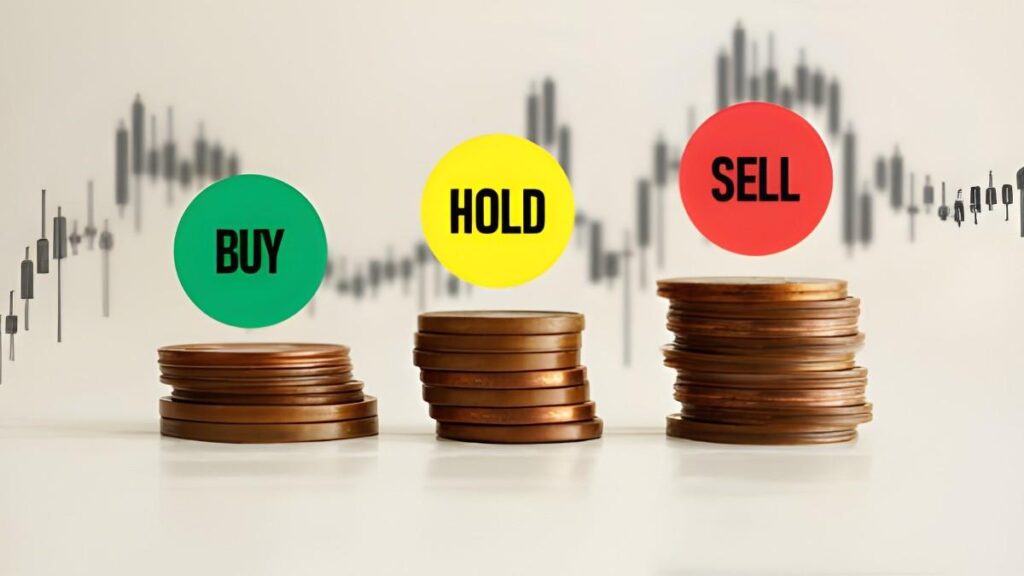
In my years of analyzing markets and advising clients, I have rarely encountered an asset that so starkly divides investors into two opposing camps as Bitcoin. On one side, the “HODLers” preach a gospel of unwavering conviction, advocating for a simple strategy of accumulation and long-term storage. On the other, the traders see Bitcoin not as a revolutionary monetary network but as the most volatile instrument on earth, a playground for technical analysis and short-term profit. This debate is not merely academic; it strikes at the core of how one views the asset itself. I have seen both approaches succeed, and I have seen both fail spectacularly. The choice between buying-and-holding or trading Bitcoin is not about finding the one true path. It is about understanding your own psychology, your goals, and the brutal, unforgiving mathematics of each strategy.
Table of Contents
The Philosophical Divide: Asset vs. Instrument
The first step is to understand that these are not just different strategies; they are different philosophies based on a different underlying thesis.
Buy-and-Hold (HODL) is an investment thesis. It is a belief that Bitcoin’s long-term value trajectory is upward due to its fundamental properties: a fixed supply of 21 million coins, its decentralized nature, its utility as a censorship-resistant store of value, and its growing adoption as a digital gold. Proponents of this strategy are not betting on a price; they are betting on a paradigm shift in global finance. They believe that short-term price fluctuations are irrelevant noise in the context of a multi-year or multi-decade horizon. For them, Bitcoin is a non-sovereign hard asset.
Active Trading is a speculation on price action. It is largely agnostic to the long-term fundamental story. A trader does not need to believe Bitcoin will replace gold or become a global reserve currency; they only need to believe that its price will move, with high volatility, in the near future. They profit from these oscillations, both up and down. For a trader, Bitcoin is a high-beta, volatile financial instrument.
Your alignment with one of these philosophies should be the primary driver of your strategy, not the allure of potential profits from the other.
The Case for Buy-and-Hold: The Power of Simplicity
I often advise the majority of people interested in Bitcoin to adopt a buy-and-hold strategy. This is not because it is guaranteed to be more profitable, but because it is behaviorally superior for most individuals.
1. It Eliminates the Need to Be Right Twice. Trading requires you to be correct on both your entry and your exit. You must call the bottom and the top. This is incredibly difficult to do consistently. The buy-and-hold strategy only requires you to be right once: in your long-term thesis that the value of the network will be higher in the future than it is today. You are not trading; you are simply acquiring a scarce digital property.
2. It Harnesses Volatility Through Dollar-Cost Averaging (DCA). Volatility is the trader’s risk and the accumulator’s opportunity. By investing a fixed amount of money at regular intervals (e.g., $500 every two weeks), you automatically buy more Bitcoin when prices are low and less when prices are high. This smooths out your average purchase price over time. The mathematical outcome of a disciplined DCA strategy is often superior to that of a trader who tries to time the market and frequently fails.
Example: Let’s compare two investors over a volatile quarter.
- Trader Tim tries to time the market. He invests a $3,000 lump sum but buys at a local peak of $60,000 per BTC. He acquires \frac{\text{\$3,000}}{\text{\$60,000}} = 0.05 BTC.
- Investor Ian uses DCA, investing $1,000 per month.
- Month 1: Price = $60,000. He buys \frac{\text{\$1,000}}{\text{\$60,000}} \approx 0.016667 BTC.
- Month 2: Price crashes to $40,000. He buys \frac{\text{\$1,000}}{\text{\$40,000}} = 0.025 BTC.
- Month 3: Price recovers to $50,000. He buys \frac{\text{\$1,000}}{\text{\$50,000}} = 0.02 BTC.
Ian’s total cost was $3,000. He acquired 0.016667 + 0.025 + 0.02 = 0.061667 BTC. His average price per coin is \frac{\text{\$3,000}}{0.061667} \approx \text{\$48,646}. Despite the price ending at $50,000, Ian is in profit because his average cost basis is lower. Tim, who tried to time the market, is still at a loss. DCA is a powerful tool for the long-term holder.
3. It Minimizes Transaction Costs and Taxes. Every trade incurs a cost. There are exchange fees (maker/taker fees), and more significantly, network transaction fees if you move coins between wallets. These small percentages add up over time and act as a constant drag on performance. Furthermore, in jurisdictions like the U.S., every profitable trade is a taxable event. A buy-and-hold strategy generates zero taxable events until you finally decide to sell years later, allowing for compounded, tax-deferred growth and qualifying for favorable long-term capital gains rates.
4. It is Behaviorally Easier. The emotional toll of trading is immense. Watching charts all day, facing the stress of leveraged positions, and dealing with the regret of missed gains or realized losses lead to burnout and poor decision-making. Buy-and-hold is a strategy of patience. It allows you to disconnect from the daily noise and focus on your life.
The Case for Active Trading: The Allure of Amplified Returns
Trading is seductive for a reason. In a bull market, successful traders can dramatically outperform a simple buy-and-hold strategy.
1. Profit from Both Directions. A holder only profits when the price goes up. A skilled trader can profit from downturns by shorting the market or using put options. This ability to be “market neutral” is a significant advantage in periods of consolidation or bear markets.
2. Capital Efficiency. Trading strategies, particularly those using leverage (borrowed funds), can amplify gains from small price movements. Where a holder might see a 10% gain, a leveraged trader might see a 50% or 100% gain on their capital. However, this is a double-edged sword that cuts just as deeply.
3. The Ability to De-Risk. A trader can move to cash or stablecoins during periods of extreme volatility or when technical indicators suggest a high probability of a major downturn. A holder must simply ride out drawdowns that can exceed 80%.
The Brutal Reality for Most Traders
While the potential upside of trading is high, the empirical evidence is overwhelmingly clear: the vast majority of retail traders lose money. The reasons are mathematical and psychological.
1. The Odds Are Stacked Against You. You are not competing against the market; you are competing against other traders, including sophisticated institutions with superior technology, information, and capital. The combination of fees, the bid-ask spread, and slippage creates a negative-sum game. For most participants to lose, a few must win big.
2. Leverage is a Trap. Leverage amplifies losses and can lead to liquidation, where your entire position is automatically sold to cover a margin call. A seemingly small adverse price move can wipe out a leveraged trader completely. The equation for a 100% loss is simple: \text{Leverage} \geq \frac{1}{\text{\% Price Move Against You}}. A 10x leveraged long position will be liquidated on a mere 10% price drop.
3. Psychology is Your Greatest Enemy. Trading forces you to confront greed, fear, and hope head-on. The desire to recoup a loss often leads to “revenge trading,” which compounds losses. The fear of missing out (FOMO) leads to buying at the top. The hope that a losing trade will turn around leads to riding a position into a catastrophic loss. These are not intellectual failures; they are human nature.
A Hybrid Approach: Core-Satellite for the Disciplined
For those who understand the HODL thesis but are tempted by tactical opportunities, a core-satellite approach can be effective. This is the strategy I most commonly recommend for engaged investors.
- The Core (80-90% of your Bitcoin allocation): This is your long-term, buy-and-hold position. You never trade this portion. You secure it in cold storage, you DCA into it consistently, and you forget about it. This is your bet on the long-term thesis.
- The Satellite (10-20% of your Bitcoin allocation): This is your “trading” or “play” portfolio. This is the capital you use to try your hand at swing trading, to take advantage of perceived market inefficiencies, or to experiment with altcoins. You must be mentally prepared to lose this entire portion.
This approach satisfies the desire to be active in the market without jeopardizing your exposure to Bitcoin’s long-term potential. If your trading succeeds, you can periodically transfer profits back to your core holdings. If it fails, you have protected the majority of your capital.
Conclusion: A Question of Identity
The choice between buying-and-holding and trading Bitcoin ultimately comes down to a question of identity and self-awareness.
Are you an investor? You believe in a fundamental, long-term value proposition. Your strengths are patience, discipline, and conviction. You are comfortable with volatility because you understand it is the price of admission for asymmetric returns. For you, the path is clear: dollar-cost average into a position, store your keys securely, and wait. Ignore the charts.
Are you a trader? You are agnostic to the story and focused on price dynamics. Your strengths are discipline, risk management, and the ability to detach from emotion. You understand that you are entering a competitive arena where most fail, and you have a tested edge and a rigorous system. You never trade more than you can afford to lose.
Be brutally honest with yourself. The market will be. For the overwhelming majority, the slow, boring, and incredibly powerful path of buying and holding is the only strategy that aligns with their skills, time constraints, and emotional temperament. It is the strategy that has created the most Bitcoin wealth to date. Trading is a profession, not a hobby. Choose your path accordingly.



